
Vandaag of morgen in huis

Kwaliteit gegarandeerd

Welkomstaanbiedingen ontgrendelen: GRATIS bezorging | Tot 80% korting | Gratis 30 dagen JoyPlus-proefperiode
Download de app
Choosing a new hob can feel like navigating a maze. The market is flooded with terms like ceramic, induction, high-speed zones, and smart features. It's easy to get lost in the marketing jargon and make a purchase you'll later regret. As a Joybuy Product Recommendation Officer, I'm here to help you cut through the noise and focus on what truly matters. Let's uncover the most common pitfalls so you can make a well-informed decision.
Pitfall 1: The myth of the "universal" pan Many people assume their old pans will work just fine on a new electric hob. While a ceramic hob is less particular than an induction hob, a pan with a perfectly flat base is crucial for efficient heat transfer. A warped base leads to energy loss and uneven cooking.
Pitfall 2: Paying for unused smart features Manufacturers often promote hobs with app connectivity, complex menus, or dozens of cooking programmes. Ask yourself: will I actually use this? You often pay extra for features that are rarely touched in practice. A solid model with a good timer and child lock is more than enough for most households.
Pitfall 3: The costly mistake of the wrong power connection This is perhaps the most critical pitfall. A powerful 4-burner hob or larger often requires a 2- or 3-phase power connection (a Perilex socket), whereas many homes have a standard 1-phase connection. Buying a hob that your fuse box can't handle leads to unexpected costs for an electrician.
Before you start comparing models, it's essential to understand three technical aspects. These determine the performance, safety, and compatibility with your kitchen.
Although they may look the same, the way a ceramic hob and an induction hob operate is fundamentally different.
The choice depends on your kitchen setup.
Check your fuse box. The connection value, expressed in Watts (W), determines what kind of connection you need.
Based on these criteria, we have selected a number of models that suit different user profiles.
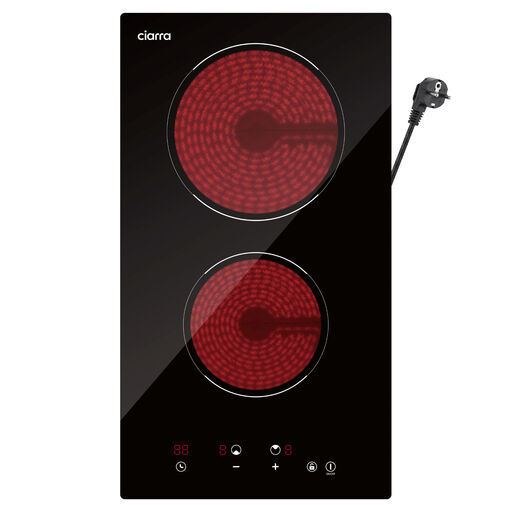
Why This Fits Their Persona: Ideal for studios, small kitchens, or as a supplement to an existing setup. This built-in hob offers full functionality in a compact 30 cm size.
With a power rating of 3000W, this hob is designed for a standard 1-phase connection, avoiding the pitfall of a costly fuse box modification.
Equipped with touch controls, 9 power levels, and a hob with a timer. Essential features without unnecessary frills.
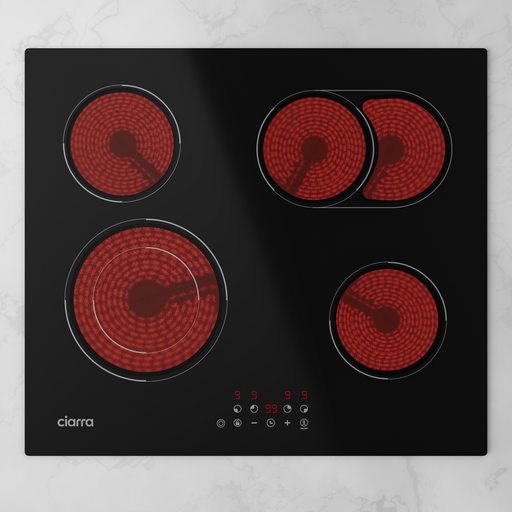
Why This Fits Their Persona: This 4-burner hob is designed for versatility. The flexible zones (oval and dual-ring) adapt to large roasting pans or small saucepans, perfect for preparing family meals.
The flexible zones are a practical feature that gets actual use, unlike abstract cooking programmes. The focus is on safety, with a child lock and residual heat indicator.
Oval and round dual-ring zones for maximum pan compatibility. The high 6600W power rating requires a 2-phase connection but ensures rapid heating times.
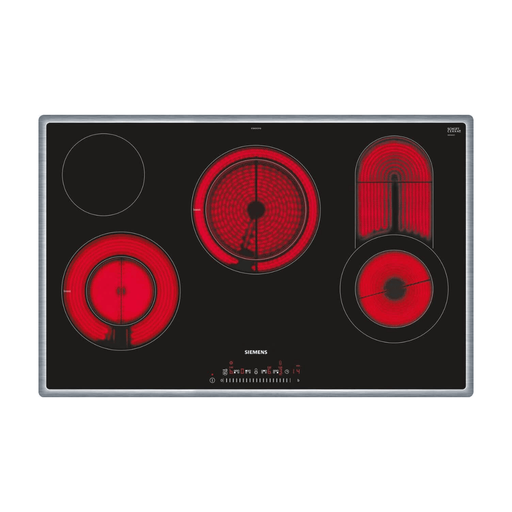
Why This Fits Their Persona: For those who love to go all out in the kitchen. This 80 cm wide Siemens hob offers all the space and flexibility needed for complex dishes, with 5 zones, including an expandable roasting zone and dual-circuit zones.
Its advanced features, like the touchSlider control and powerBoost, are focused on performance and intuitive ease of use, not superfluous connectivity.
The powerBoost function delivers up to 20% more power for faster heating. The timer with a switch-off function ensures precision and safety.
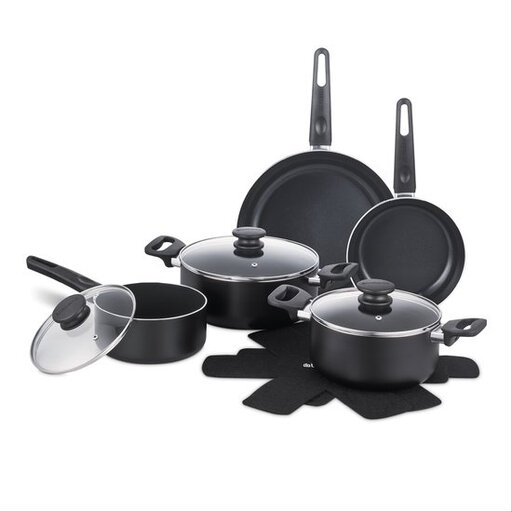
Why This Fits Their Persona: A new hob deserves new pans. This complete set is ideal for anyone wanting to start off right, with a focus on healthy cooking thanks to the ceramic non-stick coating.
You avoid the pitfall of using old, scratched pans with potentially harmful coatings. This PFAS-free pan set provides a healthy foundation for every meal.
The set is made of forged aluminium for fast and even heat distribution and is suitable for all heat sources, including induction.
A new hob is a significant purchase. If you're also looking to upgrade your cookware, we've compiled a list of products that meet our strict selection criteria.
A ceramic hob heats the glass plate, which then transfers the heat to the pan. An induction hob uses magnetism to heat the pan directly. Induction is faster and more energy-efficient but requires special pans. Ceramic works with almost any pan that has a flat bottom.
In theory, yes, as long as the base is completely flat. A pan with a slightly warped or damaged base will make poor contact with the glass plate, leading to inefficient cooking and potentially even scratches. For optimal results, high-quality pans with a thick, stable base are recommended.
An electric hob is generally less energy-efficient than cooking with gas or induction. With a ceramic hob, heat is lost to the surroundings, and the plate itself needs to heat up and cool down. An induction hob is more efficient because all the energy goes directly into the pan. Nevertheless, a modern ceramic hob is considerably more efficient than older electric hobs with cast-iron plates.
