What should you look for when choosing one?
First decide how long you need heat for and where you need it. Then choose a suitable setting and controls, and check that the noise level and placement work for your room.
The following priorities may be important when choosing; the percentages offer a general indication for this particular use case.
| What to consider |
What to look for |
Who should pay particular attention? |
| Quickly warming the room |
Compare the heat settings and thermostat on the exact model; don’t treat the stated room size as a guaranteed result. |
If I only use the room for a short time, I want to be able to choose a setting that suits the space. Around 33% of consumers in this choice scenario prioritise fast heating when buying. |
| Electricity use while the heater is running |
Calculate this using the power of the setting you choose and the expected hours of use: 1 kW for 1 hour is 1 kWh. |
For daily or prolonged use, I want to consider how long the heater will run and its actual power, not just the convenience of a portable heater. Around 25% of consumers in this choice scenario focus mainly on ongoing running costs. |
| Fan noise |
Compare the stated noise level for the setting you intend to use and check whether the figure comes from the manufacturer. |
If I work or read next to the heater, I want to know how much noise the relevant heat setting makes. Around 25% of consumers in this choice scenario prioritise a quiet environment. |
| Placement and controls |
Measure the available space and check the clearance requirements in the manual. Plug an electric heater directly into a wall socket, as advised by Brandweer Nederland. |
In a small flat, I want to know in advance where the appliance can go and how I can operate it. Around 17% of consumers in this choice scenario say placement and controls are their main consideration. |
A thermostat can affect how long the heater is switched on, but it doesn’t reduce the room’s heating requirements. If you plan to use it for many hours, it’s worth considering your existing heating system and the room’s insulation too.
Ceramic heaters at Joybuy
These product picks cover ceramic heaters for providing extra heat. Compare each model’s power, controls and stated conditions of use with your room and planned usage time.
 No image available
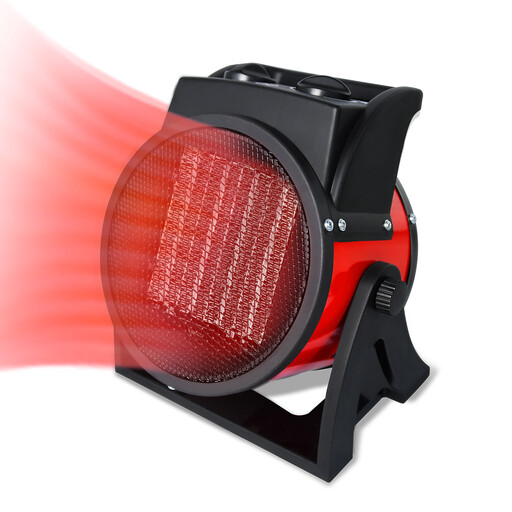
LZQ ceramic heater 2 kW, 3 settings
Worth considering if you’re looking for a thermostat and several heat settings; the product name also mentions use in a flat.
The product name lists 2 kW, a thermostat and 3 heat settings. Check the placement instructions for the exact model.
Joybuy
 No image available
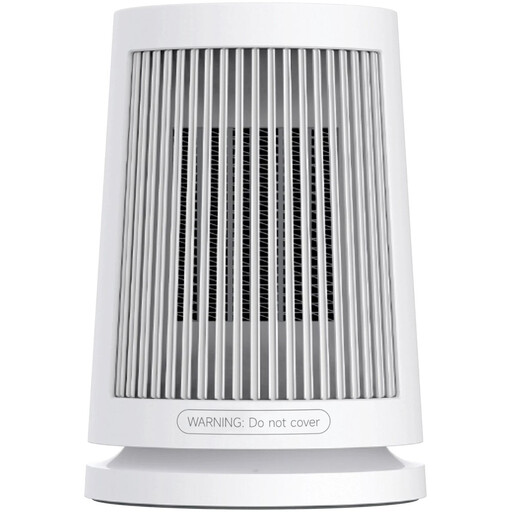
Xiaomi Desktop Heater 600 W PTC
A desktop model to consider if you’re looking for a lower stated power output for a small area. Check whether it can meet the heating needs of your room.
The product name lists 600 W, a thermostat and 45° oscillation.
Joybuy
 No image available
OmniHeat 1800 W ceramic fan heater
Worth considering if you want to compare remote control or a timer as well as heat settings.
The product name lists 1800 W, 4 heat settings, an adjustable thermostat, oscillation, remote control and a 24-hour timer.
Joybuy
 No image available
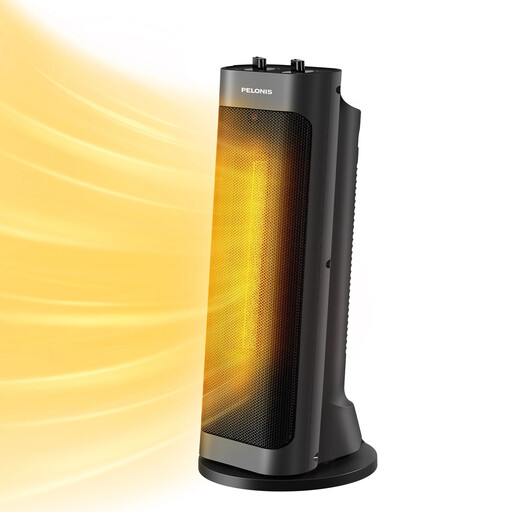
PELONIS 2000 W PTC ceramic fan heater
Compare this model if you’re looking for a fan heater with oscillation; check that the stated coverage area suits your space.
The product name lists a power output of 2000 W, 70° oscillation and a coverage area of 15 m². Tip-over and overheating protection are also mentioned.
Joybuy
 No image available
PELONIS 2000 W ceramic heater, 5 settings
Worth considering if you want to compare a timer and several heat settings; check which controls you’ll need while using the heater.
The product name lists 2000 W, 5 heat settings, a thermostat, an ECO mode and a 24-hour timer. Tip-over and overheating protection are also mentioned.
Joybuy
Frequently asked questions
Can I use a ceramic heater as the main heating source for my flat?
A portable electric heater isn’t automatically a sensible choice for heating an entire flat over long periods. First consider the insulation, existing heating and how long you’ll use it for. Milieu Centraal does not recommend electric heaters as an alternative to heating an entire home.
How do I plug in a ceramic heater and keep it clean?
Plug an electric heater directly into a wall socket, not into a multiway adaptor or cable reel; this is the advice Brandweer Nederland gives for small electric heaters. Keep the appliance free of dust and follow the manual’s instructions on clearance and cleaning.
Does an ECO setting mean a ceramic heater will always cost less to run?
No. An ECO setting doesn’t prove that the heater will cost less to run than another appliance in every situation. Compare the power and how long it will be switched on for your needs. Rowenta bases its savings claim for the SO9266 on a comparison with full power and the maximum thermostat setting, not with every other type of heating.
What should I do if my heater is faulty, and is there a fixed statutory guarantee period?
Report a faulty product to the seller. According to the Dutch government, the Netherlands has no fixed statutory guarantee period; what you can reasonably expect in terms of how long a product lasts depends on the product and the purchase information. A manufacturer’s guarantee does not replace your statutory rights.
Does an electric space heater need an energy label?
According to the European Commission, the energy labelling rules for local space heaters exclude electric models. Ecodesign requirements are covered by a separate regulation, so the absence of an energy label does not in itself prove that the rules have been breached.


