What should you look for when buying?
First, decide whether you want to warm one room for a short time or address a damp or heat-loss problem. Then consider the settings and controls, safe positioning, and what using different settings will mean for your electricity use.
| What to consider |
What should you check? |
Who is this important for? |
| Heating one small room |
Compare the power settings in watts and check whether the heater has a thermostat. Also check the conditions of use for the exact model. |
If I only want to heat the room I’m in from time to time, I want to be able to match the warmth to how I use it. Around 31% of consumers list temporary room heating as their main concern. |
| Safe positioning and connection |
Follow the clearance and positioning instructions in the model’s manual. The Fire Service advises plugging an electric heater directly into a wall socket wherever possible, rather than using a multi-socket adaptor or cable reel. |
With little free floor space or few accessible sockets, I want to know in advance where the heater can be positioned safely and how to connect it. Around 25% of consumers list safe positioning as their main concern. |
| Cold walls, damp and mould |
Look out for recurring mould or condensation, and assess the ventilation too. If the problem persists, there may be a structural cause, such as a leak or cold bridge. |
If the cold wall is accompanied by damp or recurring mould, I don’t want to assume that more heating power will solve the problem. Around 25% of consumers want to address the wall or a possible damp problem first. |
| Electricity use while the heater is running |
Multiply the power in kilowatts by the actual time spent running on that setting, then multiply the result by your own price per kWh. A thermostat can affect how long the heater is switched on. |
If I use the heater more often or on a higher setting, I want to weigh up its energy use against my own electricity tariff. Around 19% of consumers list running costs as their main concern. |
Ceramic heaters at Joybuy
These models are ceramic heaters for anyone looking to warm a room temporarily. Compare their power settings and safety instructions with the space available and how you plan to use them.
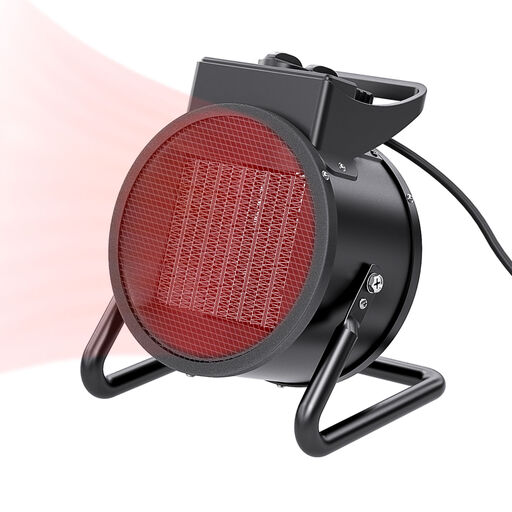 Image unavailable
LZQ ceramic fan heater with thermostat, 2 kW, black
The three power settings may be useful if you want to adjust the warmth while using the heater temporarily.
Stated power: 2 kW. The product name lists three settings and a thermostat.
View at Joybuy
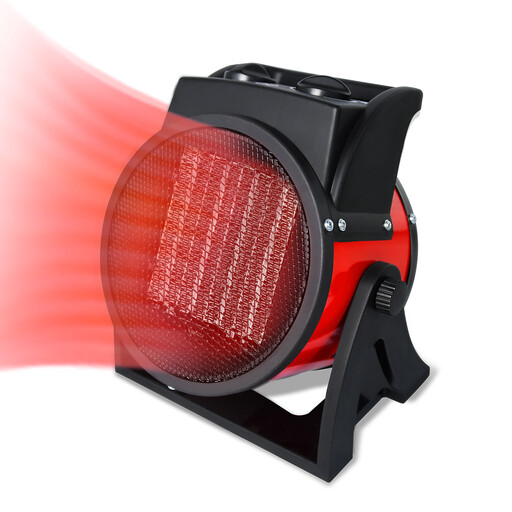 Image unavailable
LZQ ceramic radiant heater with thermostat, 2 kW
The adjustable settings may suit anyone who wants to choose the heating power for temporary use.
Stated power: 2 kW. The product name lists a PTC heating element, three heat settings and a thermostat.
View at Joybuy
 Image unavailable
Philips 2000 Series compact ceramic heater, 1500 W, CX2120/01
The compact design and stated handle may be useful if you want to move the heater around for temporary warmth.
Stated power: 1500 W; the product name lists three settings. The product instructions require it to be plugged into an earthed socket, without an extension lead or adaptor, and kept at least 1 metre from flammable materials.
View at Joybuy
 Image unavailable
OmniHeat ceramic fan heater, 1800 W, with remote control
The adjustable thermostat and timer may be useful if you want to tailor the controls to temporary use.
Stated power: 1800 W. The product name lists four heat settings, a timer, oscillation, and overheat and tip-over protection. According to the product instructions, keep flammable materials at least 1 metre from the air outlet and do not cover the heater.
View at Joybuy
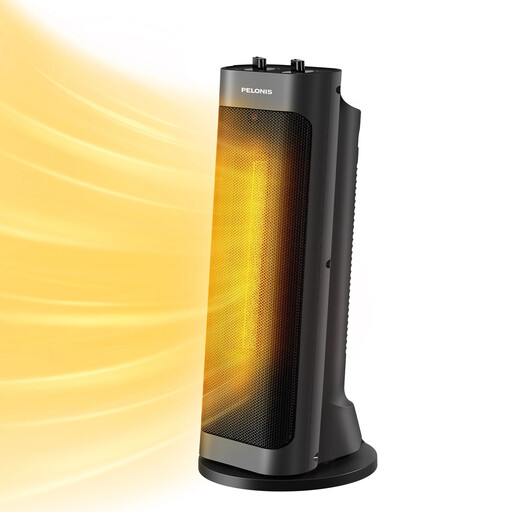 Image unavailable
PELONIS ceramic fan heater, 2000 W, 70° oscillation
The stated oscillation may be useful if you want to spread the warmth more widely while using the heater temporarily.
Stated power: 2000 W. The product name lists tip-over and overheat protection and a portable design. According to the product instructions, keep flammable materials at least 1 metre from the air outlet and do not cover the heater.
View at Joybuy
Frequently asked questions
Will a ceramic heater fix a cold, mouldy wall?
No, a heater won’t get rid of mould on its own. GGD Living Environment advises removing mould, reducing damp, ventilating and heating. Milieu Centraal lists leaks and cold bridges as possible causes; have recurring or extensive problems assessed.
Can I plug an electric heater into a multi-socket adaptor or cable reel?
The Fire Service advises plugging an electric heater directly into a wall socket wherever possible, rather than using a multi-socket adaptor or cable reel. Also follow the manual for the exact model.
What maintenance does a ceramic heater need?
Follow the manual for your model. Rowenta lists a washable filter for the SO9266; check the model-specific cleaning instructions and switch the appliance off before cleaning it.
How do I calculate a ceramic heater’s electricity use?
Divide the power in watts by 1000, then multiply the result by the number of hours the heater actually runs on that setting. For example, running at 1500 W continuously for one hour is equivalent to 1.5 kWh; with a thermostat switching the heater on and off, one actual hour won’t necessarily equal one hour at full power. Multiply the energy used by your own price per kWh to work out the running cost.
What are my rights when I buy a heater online?
For a standard online consumer purchase, you’ll generally have a statutory cooling-off period of up to 14 days after delivery, subject to legal exceptions, according to ACM ConsuWijzer. If a product is faulty, the seller is responsible for the statutory guarantee, according to the Authority for Consumers & Markets; this is separate from any manufacturer’s guarantee.
Does an electric ceramic heater need an EU energy label?
According to the European Commission, electric local space heaters are exempt from the energy-labelling scheme for this product group. Local space heaters are still subject to ecodesign rules, so the absence of this energy label does not in itself prove that a product fails to meet the regulations.


