
Home worker who stays in one spot
You mainly want warmth at your desk, rather than throughout the whole living room. Milieu Centraal suggests an infrared panel as a possible way to provide extra heat in a specific spot for short periods.


For short work sessions, a ceramic fan heater can direct extra warm air towards your desk, but its stated coverage area doesn’t guarantee that it will heat a large living room throughout. Compare placement, heat settings, noise and energy use. If you spend long periods in one fixed spot, you could also consider an infrared panel. Milieu Centraal does not recommend standard electric heaters as an energy-efficient way to heat a room.
You mainly want warmth at your desk, rather than throughout the whole living room. Milieu Centraal suggests an infrared panel as a possible way to provide extra heat in a specific spot for short periods.
You’ll need a suitable place for the heater and an easily accessible wall socket. Fan noise may also be a factor. The Fire Service recommends plugging small electric heaters directly into a wall socket, not into an extension lead or cable reel.
If you often use supplementary heating, you’ll want to weigh the energy use against the benefit of heating only your workspace. Milieu Centraal warns that a standard electric heater is not an energy-efficient way to heat a room.
Suitable when: you want warm air directed towards your desk during a work session.
Bear in mind: fan noise, and the difference between a stated coverage area and heating the whole living room.
Suitable when: you usually sit in the same spot and want to heat that area directly.
Bear in mind: the heat is localised; you won’t feel it in the same way beyond the panel’s range.
Suitable when: you want to keep the entire large living room warm for long periods.
Bear in mind: the right option depends on your home and its insulation.
| What to consider | What should you check? | Who is this most relevant to? |
|---|---|---|
| Targeted heat | Compare warm air with radiant heat, and check the stated coverage area for the exact model. | If I mainly want to heat the spot where I work, rather than the rest of the living room, I’ll consider where the heat is directed; around 31% of consumers prioritise targeted heat. |
| Placement and connection | Read the placement instructions and check whether you can plug the appliance directly into a wall socket. | If my workspace is short on room, I want to know where I can position the heater safely and how to connect it; around 25% of consumers prioritise safe placement and connection. |
| Noise while you work | Compare stated noise levels only when they relate to the same heat setting; they don’t guarantee how loud the heater will be at your desk. | If I need to concentrate, I want to avoid being distracted by fan noise; around 19% of consumers prioritise being able to work in peace and quiet. |
| Energy use with regular use | Calculate energy use based on the power in kW, actual hours of use and your own electricity tariff; allow for thermostat control. | If I often use supplementary heating, I want to weigh the electricity use against the benefit of heating just my workspace; around 25% of consumers prioritise running costs. |
A heater’s stated coverage area doesn’t guarantee comfort in a larger room with a different layout or level of insulation.
First decide whether you want to heat just your seating area or the entire living room. Check the coverage area for the exact model.
A claim about saving energy may be based on a comparison with another setting on the same appliance. In that case, it says nothing about how it compares with other ways of heating.
Check what the claim is based on, then calculate energy use using the power rating, how long you’ll use it for and your own electricity tariff.
Tip-over and overheat protection are no substitute for careful placement and connection.
Check the instructions, leave the recommended clear space around the heater and, following the Fire Service’s advice, plug it directly into a wall socket.
The Safe-t-Heater 1500 and 2000 are freestanding ceramic models with different heat settings.
The compact CX2120/01 is a ceramic heater with a stated maximum power of 1500 W, designed as an option for a limited work area.
The Mini Excel Eco Safe SO9266F0 is a compact ceramic model with settings of 1000 and 2000 W.
The Threesixty² is a ceramic heater with a maximum power of 1800 W, all-round heat distribution and app control.
These ceramic heaters offer adjustable supplementary warmth at a desk. Their stated power or coverage area doesn’t guarantee that they will heat a large living room throughout.
 Image unavailable
A compact option for directing extra warmth towards a regular workspace.
The product information lists settings of 600 and 1500 W, a temperature setting and coverage of up to 15 m². Follow the instructions for using an earthed wall socket and keep the appliance away from flammable materials.
 Image unavailable
The product title describes a compact ceramic heater for extra warmth at your desk.
The product information lists a thermostat and 45° oscillation. Place the appliance on a flat, stable surface, don’t cover it and keep it away from water and flammable materials.
 Image unavailable
An option if you’d like a choice of heat settings and remote control while you work.
The product information lists four settings, an adjustable thermostat, oscillation, a remote control and a timer. The safety information recommends keeping the appliance at least 1 metre away from flammable materials; don’t cover the heater.
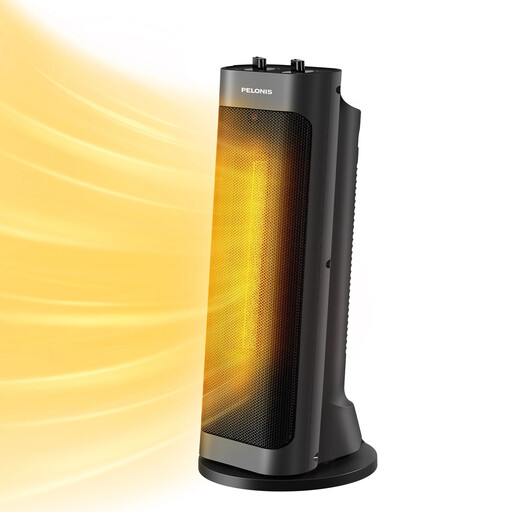 Image unavailable
This portable heater is an option if you want extra warmth at your workspace and oscillation is important to you.
The title lists 70° oscillation and stated coverage of up to 15 m², not a whole large living room. According to the safety information, keep the air outlet at least 1 metre away from flammable materials.
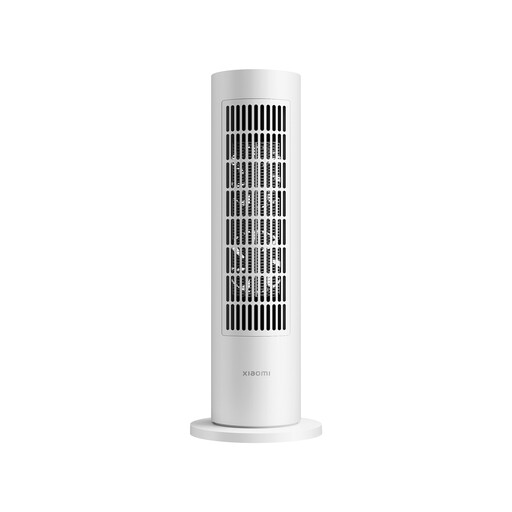 Image unavailable
An option if you want to compare adjustable heat with app or remote control.
The product information lists four modes, a thermostat, a timer, oscillation and a 360° air outlet. Place the appliance on a stable surface, don’t cover it and keep it away from flammable materials.
Don’t judge this by the maximum power rating alone. Check the stated coverage area for the exact model and take the room’s size and insulation into account. Milieu Centraal does not recommend standard electric heaters as an energy-efficient way to heat a room.
The Fire Service recommends plugging high-powered appliances, such as small electric heaters, directly into a wall socket rather than an extension lead or cable reel. Also follow the placement and cleaning instructions for your chosen model, and check that the cable and required clear space will fit your workspace.
For a setting that heats continuously, multiply the power in kW by the number of hours of use. At 1500 W, one hour on that setting uses 1.5 kWh as a mathematical calculation. Actual use may be lower if you use another setting or the thermostat pauses the heating; multiply the kWh by your own tariff to work out the cost.
If you bought the product in the Netherlands, it must meet the standard you can reasonably expect. The Dutch government says there is no fixed statutory guarantee period; if the product is faulty, contact the seller. Any manufacturer’s guarantee is separate from this.
Applicable electrical products must carry the CE mark. Household electric local space heaters covered by the rules must also comply with Regulation (EU) 2024/1103; the revised ecodesign requirements have applied since 1 July 2025. These are requirements for placing products on the market and don’t confirm that every individual model offered for sale complies with them.