
If you work at your desk for short periods
If you want a quick boost of warmth during a work session, the heat settings and thermostat are important features to compare. Eurom lists these features for its Safe-t-Heater models.


For short work sessions, a ceramic heater with a thermostat and multiple heat settings can provide extra warmth, provided you can place it safely in accordance with the instructions. Bear in mind that the fan can be noisy, and calculate electricity use based on the selected power setting and how long you use it. If you only want to heat your usual spot, consider comparing it with an infrared panel too; running a portable electric heater for long periods can use a lot of electricity.
If you want a quick boost of warmth during a work session, the heat settings and thermostat are important features to compare. Eurom lists these features for its Safe-t-Heater models.
Check the stated noise level for each setting if you also use the room to relax. Duux lists noise levels for the Threesixty 2.
If you don't need to heat the whole room, compare a ceramic heater with targeted infrared heating. Milieu Centraal describes infrared panels as an option for providing supplementary heat in a specific spot for short periods.
| What to consider | What to look for | Who is this important to? |
|---|---|---|
| Adjustable heat | Check the settings and thermostat on the exact model. The power rating in watts shows how much electricity the heater uses while heating on that setting. | Would you like to adjust the warmth around your desk during a short work session? Around 33% of consumers say adjustable heat is their top priority. |
| Safe placement | Follow the instructions on clearance and placement. Check the CE marking on the specific product and, where possible, plug an electric heater directly into a suitable socket. | If you want to place the heater among your desk, cables and bedroom furnishings, finding a suitable spot and connection is key. Around 25% of consumers put safe placement first. |
| Fan noise | Check the stated noise levels for each setting and consider whether the airflow suits working or relaxing. The rating for one setting won't tell you how the others will sound to you. | Do you also use your bedroom to relax and want as little distraction from the heater as possible? Around 25% of consumers prioritise a quiet environment and low fan noise. |
| Electricity use | Multiply the power in kilowatts by the number of hours spent heating to calculate consumption in kilowatt hours, then multiply that by your own tariff. If you only need targeted warmth, compare an infrared panel too. | Would you like to heat your desk during regular work sessions without losing sight of electricity use? Around 17% of consumers consider manageable running costs their main priority. |
The type of heating element doesn't automatically make a heater economical to run for long periods. Milieu Centraal points out that electric heaters without a thermostat can keep heating for as long as they are switched on.
Calculate the consumption for your own work sessions and, if you only want to heat your spot, compare an infrared panel too.
Ongoing electricity use depends on the setting you choose, how long you heat for and your own tariff.
A safety feature doesn't remove the need to let the heater disperse its heat properly or to connect it carefully.
Follow the placement instructions for the exact model and, where possible, plug high-power appliances directly into a socket. This is also the Fire Service's advice for small electric heaters.
An additional plan is not the same as your statutory rights. ACM ConsuWijzer states that the statutory guarantee exists alongside any guarantee from the seller or manufacturer.
Before deciding, compare the terms of any additional warranty or damage cover with the rights you already have.
An additional warranty or damage cover plan may involve extra costs.
Eurom positions the Safe-t-Heater 1500 and 2000 as freestanding ceramic models for rooms including bedrooms and studies.
Duux describes the Threesixty 2 as a ceramic heater that distributes air around the unit and can be controlled via an app.
Tristar presents the KA-5064 as a 1500 W ceramic heater, with camping listed as one possible use.
The Dutch Joybuy product page lists the CX2120/01 as a compact 1500 W ceramic heater.
The order below is an editorial comparison based on product specifications and the desk-work scenario described here. It is not a sales ranking or an independent performance test. The stated power and noise levels come from manufacturers or product listings.
| Position | Model | Key specifications | Why it's included | Platform |
|---|---|---|---|---|
| 1 | Eurom Safe-t-Heater 1500 | 500/1000/1500 W; thermostat, according to Eurom. | Eurom lists three power settings and use in rooms including bedrooms and studies. These are manufacturer specifications, not measured performance at your desk. | Eurom |
| 2 | Duux Threesixty 2 | Maximum 1800 W; 38–46 dB depending on the setting, according to Duux. | The stated noise levels for each setting may be useful to know for a bedroom. They are not an independent comparison with other heaters. | Duux |
| 3 | Tristar KA-5064 | 1500 W; three settings, according to Tristar. | Tristar lists a thermostat and safety features. Check the instructions for use in the intended location in your bedroom. | Tristar |
| 4 | Philips CX2120/01 | 1500 W; three settings, according to the Joybuy product listing. | A compact ceramic heater with a Dutch product listing. The power rating alone won't tell you whether its noise level and placement requirements suit your situation. | Joybuy |
These ceramic heaters provide extra warmth while you work at your desk. Compare their power settings, controls and placement instructions in particular.
 No image available
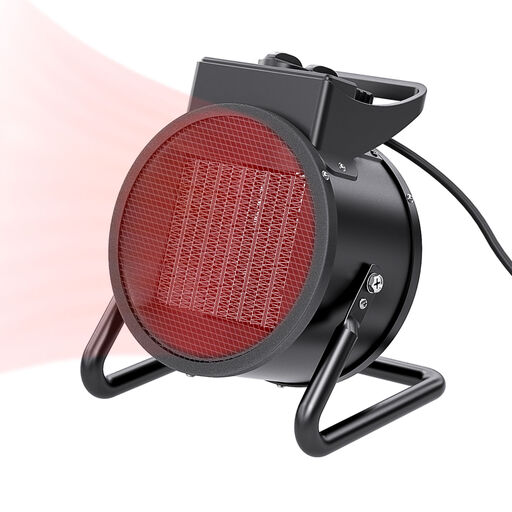
The thermostat and settings may suit you if you want to adjust the warmth while working at your desk.
According to the product name: 2 kW, PTC heating element, thermostat and three settings.
 No image available
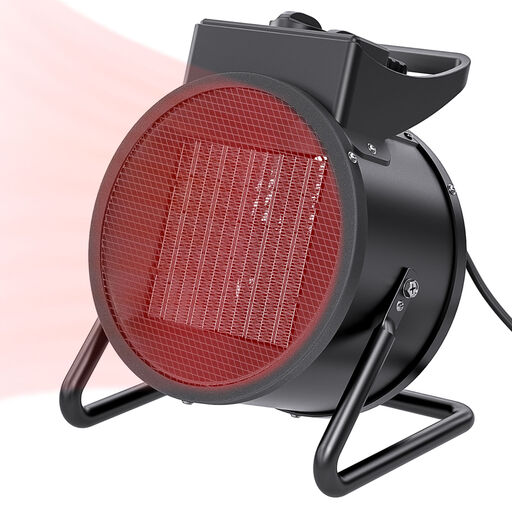
According to the product name, this model has three settings for adjusting the warmth during a work session.
According to the product name: 3 kW, PTC heating element, thermostat and three settings.
 No image available
The settings make this model worth comparing if you want to adjust the warmth at your desk; bear the specified placement requirements in mind.
According to the product name: 1500 W and three settings. The product information specifies at least 1 metre of clearance from flammable materials and an earthed socket; extension leads and adapters are not recommended.
 No image available
The product name describes it as a desktop heater; its stated oscillation may be useful if you want to spread warmth around your work area.
According to the product name: 600 W, ceramic PTC element, 45° oscillation and adjustable thermostat. Place the unit on a flat, stable surface and keep it away from water and flammable materials.
 No image available
The thermostat and several heat settings may suit you if you want to regulate the warmth during a desk-work session.
According to the product name: 1800 W, 24-hour timer, four heat settings, thermostat and oscillation. The instructions specify at least 1 metre of clearance from flammable materials and say not to cover the heater.
The Fire Service recommends plugging small electric heaters directly into a suitable socket rather than into a multi-socket extension or cable reel. Also follow the instructions for the model you choose.
Multiply the power used while heating, in kilowatts, by the number of hours spent heating to get the consumption in kilowatt hours. Then multiply this by your own tariff per kilowatt hour. A thermostat can affect how long the unit heats for.
The Netherlands Food and Consumer Product Safety Authority states that CE marking is compulsory for electrical products covered by the applicable Dutch rules. The marking is a declaration by the manufacturer and is not, in itself, an independent inspection of the heater.
Keep the air vents clear and follow the instructions for placing and cleaning the exact model. Put the heater in a suitable spot with the required clearance and, where possible, plug it directly into a suitable socket.