
Occasional chilly desk worker
Wants a quick boost of heat in one spot, without heating the whole living room.


An adjustable ceramic fan heater could be a good option if you want a quick burst of heat by your desk from time to time, provided you can position it safely in line with the instructions and plug it directly into a wall socket. The Fire Service advises plugging electric heaters directly into a socket. If you use one regularly, consider its electricity use and noise level too. If you mainly want to heat one fixed spot without a fan blowing air, compare an infrared panel as well: Milieu Centraal explains that it directs heat towards the area within its range.
Wants a quick boost of heat in one spot, without heating the whole living room.
Wants to use extra heating while others talk, read or work, so takes fan noise and airflow direction into account.
Uses supplementary heating for longer periods and wants to weigh up the power, controls and electricity use against more targeted alternatives.
Choose this when: you want a quick burst of warm air by your desk from time to time and the airflow is acceptable in your shared space.
Trade-off: the fan can be noisy and spread heat beyond where you’re sitting; electricity use is also worth considering if you use it for long periods.
Choose this when: you mainly want to heat one fixed spot and can sit within its range.
Trade-off: the direct warmth is limited to the area within its range; consider the positioning and how long you’ll use it for your needs.
| What to consider | What should you check? | Who should pay particular attention? |
|---|---|---|
| Heat by your desk | Compare the heat settings, thermostat and direction of the airflow. Also check whether you can maintain the required clearance around the heater. | I mainly want a quick burst of heat at my usual desk from time to time, without heating the whole living room. Around 33% of consumers say quick warmth at their desk is their main reason for buying. |
| Noise and airflow | Compare noise information for the setting you plan to use. Duux quotes 38 dB on the lowest setting and 46 dB on the highest; Rowenta quotes 29 dB(A) for the SO9330. These are separate manufacturer specifications, not directly comparable test results. | If other people are talking, reading or working in the same room, I want to take noise and airflow into account. Around 27% of consumers say keeping the space peaceful for others is their main reason for buying. |
| Electricity use | Take the power rating and actual usage time into account. To make your own estimate, multiply the power in kW by the number of hours the heating element is working and your rate per kWh. Milieu Centraal points out that electric heaters without a thermostat can continue running at full power while in use. | If I use supplementary heating regularly, I want to weigh up its electricity use against a targeted solution for my spot. Around 20% of consumers say running costs are their main reason for buying. |
| Safe positioning and connection | Check the instructions for the exact model and, in line with the Fire Service’s advice, plug the electric heater directly into a wall socket. The instructions for the Eurom Safe-t-Heater 1500 require a clearance of at least 1 metre from items including furniture, curtains and paper; this requirement does not automatically apply to other models. | If there’s little free space around my desk, I want to check first that the heater can be positioned and connected there in line with the instructions. Around 20% of consumers say safe positioning is their main reason for buying. |
The type of heating element alone doesn’t tell you how much electricity the heater will use in your situation. Usage time, power and controls all play a part.
Compare these details with how long you intend to use the heater for. Milieu Centraal warns that electric heaters without a thermostat can continue running at full power while in use.
Tip-over or overheat protection doesn’t replace the positioning requirements in the instructions. Furniture, paper and other flammable materials can limit the space available.
Measure the space and check the requirements for the exact model before you buy. The Eurom Safe-t-Heater 1500, for example, requires a clearance of at least 1 metre from items including furniture, curtains and paper.
Manufacturers may quote figures for different models, settings and test conditions. A single figure therefore doesn’t prove which heater will sound quieter in your shared living room.
Compare specifications only with the stated setting in mind, and check which noise information applies to the setting you plan to use.
The Safe-t-Heater 1500 is a compact ceramic heater with three heat settings specified by Eurom, a thermostat and an oscillation function.
The Intense Comfort SO9330 is worth considering if fan noise is important to you.
Duux describes the Threesixty² as a ceramic heater that spreads warm air around the unit, with controls on the heater or via an app.
The KA-5038 is a portable ceramic heater with two heat settings specified by Tristar.
These products are ceramic fan heaters for supplementary heating in a living or working space. Focus on comparing the power, controls, noise and positioning requirements for your shared living room.
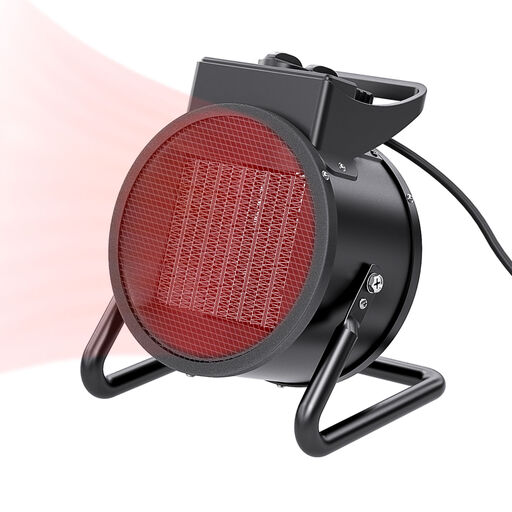 No image available
The title mentions a thermostat and three settings for adjusting the supplementary heating.
Power: 2 kW. PTC heating element. Check the instructions for positioning and connection.
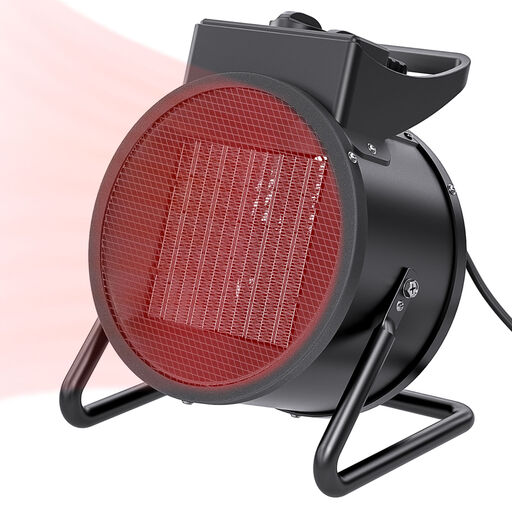 No image available
The title mentions a thermostat and three settings; compare the power rating with your electrical supply and intended use.
Power: 3 kW. PTC heating element. Check the instructions for positioning and connection.
 No image available
The product description mentions office use and settings of 600 W and 1500 W, so you can weigh the setting against your desk use.
Three settings; noise level quoted at 24 dB(A). The description mentions tip-over protection, overheat protection and automatic shut-off. Keep at least 1 metre from flammable materials and use an earthed socket, not an extension lead or adaptor.
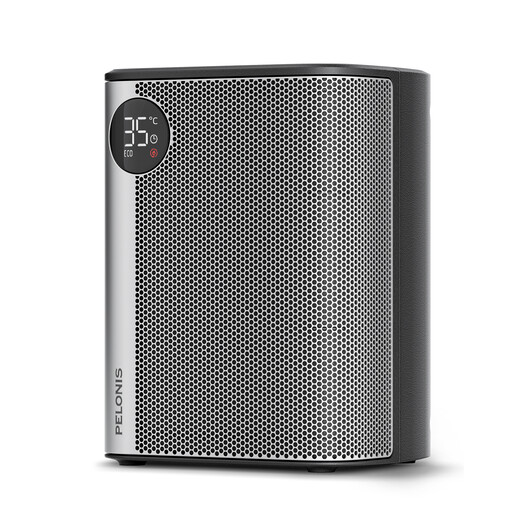 No image available
The product description mentions use in places such as living rooms and offices, with a thermostat to regulate the heat.
Power: 2000 W. Five heat settings, ECO mode and a timer of up to 24 hours. The description mentions overheat and tip-over protection.
 No image available
According to the product information, this desktop heater is designed for use at a desk; the thermostat and compact design make it suitable for a fixed spot.
Power: 600 W. PTC ceramic, with 45° oscillation, a thermostat, tip-over protection and dual overheat protection. The stated oscillation spreads heat more widely than just towards the desk.
Only if the instructions for the exact model allow it and you can maintain the required distance from furniture, paper and other flammable materials. The Eurom Safe-t-Heater 1500, for example, requires a clearance of at least 1 metre; this model-specific requirement does not automatically apply to other heaters.
The Fire Service advises plugging electric heaters directly into a wall socket rather than into an extension lead or cable reel. This is fire safety advice, not a general legal prohibition established here.
Multiply the power in kW by the number of hours the heating element is actually working and by your rate per kWh. A thermostat can affect how long it runs; an ECO mode specification alone doesn’t prove you’ll make a particular saving in your living room.
For a consumer purchase, the seller must provide a solution if the product doesn’t meet what you can reasonably expect from it. According to the Dutch government, there is no fixed statutory guarantee period in the Netherlands; the expected lifespan depends on the product and the circumstances.
CE marking is mandatory for electrical consumer products. The Netherlands Food and Consumer Product Safety Authority states that this requirement applies; check the marking and product information for the specific heater. CE marking alone doesn’t prove that the heater is safe in the spot you’ve chosen.