If you want to warm the air in a small, dry conservatory for a short time, compare ceramic heaters by their heat settings, safety features and instructions for the space. An infrared panel may be more targeted if you only want to heat one seating area. Milieu Centraal notes that insulation is worth considering if heat escapes quickly. If there is condensation or splashing, check that the exact appliance is approved for that location before use.
Who is this buying guide for?
If you only use the conservatory for short periods
You want to provide temporary supplementary heating in a small, dry space while you sit there, without installing a permanent heating system. Milieu Centraal describes electric heating as an option for specific situations; you should also check the appliance instructions.
If the appliance will be placed somewhere damp
Before choosing, you want to know whether condensation or splashes could reach the heater, and whether the exact model is approved for use there. Tristar and Rowenta specify different conditions for individual models.
If you mainly want to heat one seating area
You want to decide whether targeted radiant heat is a better fit than warming the air throughout the conservatory. Milieu Centraal says infrared panels are suitable for short-term supplementary heating in a specific spot.
What should you consider when choosing?
Ceramic heater for warming the air
A good fit if: you want to heat the space you’re using for a short time, and the location is dry and suitable according to the instructions.
The trade-off: a higher heat output uses more electricity per hour while the heater is running; a fan may also be audible.
Infrared panel for one seating area
A good fit if: you mainly want to feel warm where you’re sitting, without having to heat the whole conservatory.
The trade-off: radiant heat is limited to a particular area; you won’t get the same benefit outside the panel’s range.
Reduce heat loss first
A good fit if: you want to keep the conservatory warm often or for long periods, and heat seems to escape quickly.
The trade-off: insulation is a different solution from a portable heater, but a heater won’t solve heat loss.
| Buying concern |
What to look for |
Which consumers |
| Heating the space |
Compare the heat settings and thermostat on the exact model; don’t treat the stated room size as a guarantee of comfort in a conservatory. |
If I want to warm the space I’m using as a whole for a short time, I look for adjustable heat and consider heat loss. Around 33% of consumers are primarily concerned with temporarily heating the air in a room. |
| Moisture and positioning |
Check the instructions for the specific location, the required clearance and the recommended electrical connection. |
If condensation or splashes are possible, I first want to know whether the exact appliance is approved for use there; safety features don’t replace that check. This question of where to position the heater comes first for around 27% of consumers. |
| Targeted heat and electricity use |
Decide whether you want to heat one seating area or the air in the room; calculate usage by multiplying the power in kW by the number of hours it’s switched on. |
If I usually sit in one place, I weigh up localised heat against warming the whole conservatory. Targeted heat and running costs are the main concern for around 20% of consumers. |
| Noise and controls |
Check which setting the noise level applies to for each model, and what controls or cleaning it requires. |
When I’m sitting down, I want to be able to use a heater without noise or maintenance becoming a nuisance. Quiet, easy use is the main buying concern for around 20% of consumers. |
Common buying mistakes
-
Assuming every ceramic heater is suitable for a conservatory
Moisture restrictions vary by model. Tristar says the KA-5064 is not suitable for damp rooms; Rowenta describes water protection for the SO9281, but that doesn’t mean it’s approved for every spot in every conservatory.
Check whether condensation or splashing could reach the heater, and read the instructions for the exact appliance before use.
-
Treating a stated room size as a guarantee of comfort in a conservatory
Manufacturers’ stated room-size guidance doesn’t measure how comfortable your conservatory will be. Insulation and heat loss affect how much heating you’ll need.
Consider how well the space retains heat and how long you want to heat it for before choosing the highest output.
If a lot of heat escapes, the heater may stay on for longer, using more electricity.
-
Mistaking an extended warranty for essential statutory protection
According to the Dutch government, your statutory rights apply alongside any manufacturer’s or additional warranty; the Netherlands has no fixed statutory warranty period.
First compare the extra cover offered by an extended warranty with the rights you already have under the law.
Brands and models to consider
Inventum
Inventum describes the KC221W as a compact ceramic heater for small rooms or as supplementary heating.
- Inventum lists a thermostat, tip-over and overheat protection, and a maximum output of 2000 W.
- The manufacturer doesn’t list a timer for this model; its stated coverage hasn’t been tested in a conservatory.
Tristar
The KA-5064 is a compact ceramic heater with 1000 and 1500 W settings.
- Tristar lists tip-over and overheat protection.
- Tristar states that this model is not suitable for damp rooms. A reference to use in an awning doesn’t confirm that it’s suitable for a damp location.
Rowenta
The Mini Excel range includes the SO9266 and the separate SO9281 Aqua model.
- Rowenta describes the SO9266 as having a quiet setting, and the SO9281 as having water protection.
- The SO9281’s water protection and model specifications don’t automatically apply to the SO9266 or make every conservatory set-up suitable.
De’Longhi
De’Longhi describes the HFX65V20 as a ceramic tower fan heater with 1200 and 2000 W settings.
- The manufacturer lists a tilt switch, remote control and dust filter.
- These specifications don’t confirm that the appliance is suitable for condensation or splashes.
Eurom
Eurom positions the Safe-t-Heater 2400, a ceramic model, for larger rooms.
- Eurom lists a maximum output of 2400 W, a thermostat, and tip-over and overheat protection.
- Its higher maximum output doesn’t automatically make this model a good fit for a small conservatory. Eurom doesn’t list a timer or oscillation function for this model.
Ceramic heaters at Joybuy
This Joybuy selection features ceramic heaters for providing supplementary heat in a small space. Before using one in a conservatory, check that the exact appliance is approved for the intended location according to its instructions; the product type alone doesn’t confirm suitability for condensation or splashes.
 No image available
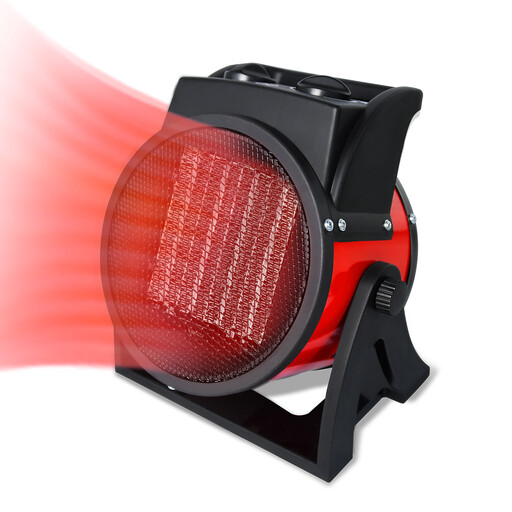
LZQ Ceramic Radiant Heater, 2 kW
A ceramic radiant heater with adjustable heat; check the instructions to see whether it can be used in your conservatory.
The product name lists a PTC heating element, thermostat and 3 heat settings.
View at Joybuy
 No image available
Philips 2000 Series Compact Ceramic Heater CX2120/01
A compact heater for indoor use; don’t use it in a wet room unless the appliance is specifically designed for that purpose.
The product name lists 1500 W and 3 settings; the product information lists 600 W and 1500 W, a thermostat, handle, and tip-over and overheat protection. The instructions specify an earthed 220 V socket, advise against using extension leads and adapters, and require at least 1 m of clearance from flammable materials.
View at Joybuy
 No image available
OmniHeat 1800W Ceramic Fan Heater
A fan heater with several adjustable settings; follow the positioning instructions when using it in a small space.
The product information lists 1800 W, 4 heat settings, an adjustable thermostat, oscillation, a 24-hour timer, remote control, and tip-over and overheat protection. Use it on a stable surface and keep it at least 1 m from flammable materials.
View at Joybuy
 No image available
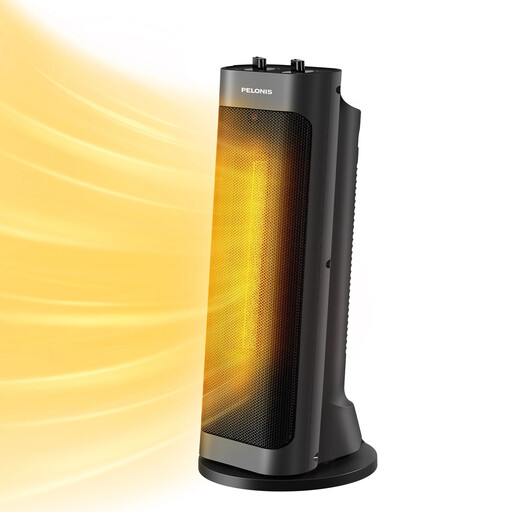
PELONIS 2000 W PTC Ceramic Fan Heater
A ceramic fan heater for comparing heat settings and heat distribution; the stated room size isn’t a guarantee of comfort in a conservatory.
The product name lists 2000 W, 70° oscillation and suitability for rooms up to 15 m². The product information lists a thermostat and tip-over and overheat protection. Use it on a stable, dry surface; keep it at least 1 m from flammable materials and don’t use it directly beside a bath, shower or swimming pool.
View at Joybuy
 No image available
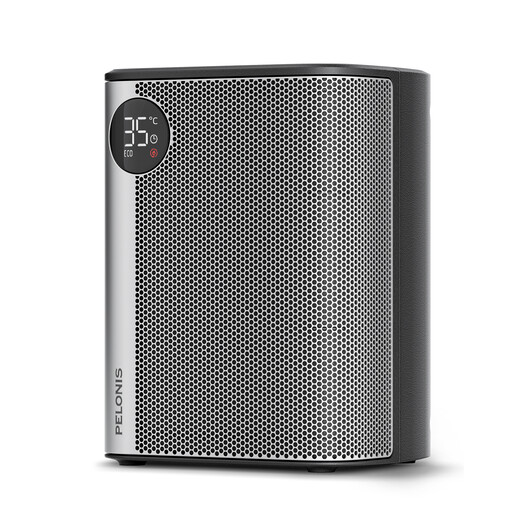
PELONIS 2000 W Ceramic Heater with ECO Mode
A ceramic heater with a timer and several heat settings; check that the intended location is covered by the instructions.
The product name lists an ECO mode, a 24-hour timer and 5 heat settings. The product information lists a thermostat and tip-over and overheat protection. Use indoors on a stable, dry surface and keep away from sources of water.
View at Joybuy
Frequently asked questions
Can I use a ceramic heater in a conservatory where there’s condensation?
Don’t assume it’s suitable just because it’s a conservatory: check the location and the instructions for the exact model. Tristar says the KA-5064 isn’t suitable for damp rooms; Rowenta describes water protection for the SO9281, but that doesn’t mean it’s approved for every wet location.
Can I plug an electric heater into a multi-socket adaptor or cable reel?
Brandweer Nederland advises plugging high-power appliances such as electric heaters directly into a socket rather than using a multi-socket adaptor or cable reel. Follow the instructions for your chosen model too.
How do I calculate a heater’s electricity use?
Multiply the power in kW by the number of hours the heater is switched on to calculate its consumption in kWh. Tristar lists a 1500 W setting for the KA-5064; running it continuously on that setting for two hours uses 3 kWh mathematically. Actual consumption depends on factors including how long it’s used and whether the thermostat switches it on and off.
Which product regulation applies to an electric heater?
Electrical equipment within the scope of the EU Low Voltage Directive must carry the CE marking when placed on the market. EUR-Lex describes the scope as equipment designed for 50–1000 V AC. A CE marking alone doesn’t prove that a specific appliance is approved for use in a damp conservatory.
Who should I contact if a heater turns out to be faulty during normal use?
According to the Dutch government, the retailer is your point of contact for the statutory guarantee. The Netherlands has no fixed statutory warranty period; a manufacturer’s warranty or an additional warranty comes on top of your statutory rights.


