What should you look for when choosing one?
First, check that the spot you have in mind is dry enough for your chosen model. Then compare your heating needs, how long you plan to use it, and its controls and noise levels.
| What to consider |
What should you check? |
Who should pay particular attention? |
| Moisture and safe positioning |
Read the instructions for the exact model and check the conditions for the spot where you plan to use it. Duux advises against using the Threesixty 2 in damp environments; Rowenta lists IP21 for the SO9380F0, but this is not blanket approval for every conservatory. |
If I expect condensation where the heater will go, I want to know first whether it can be used there. Around 36% of consumers say suitability for damp conditions and safe positioning are their main buying concerns. |
| Heat for short-term use |
Compare the settings and thermostat with how you plan to use the heater. A manufacturer’s recommended room size, such as Mill’s recommendation for rooms smaller than 30 m², is no guarantee of performance in a cold conservatory with heat loss. |
If I only use the conservatory for a short time, I want to know whether the settings will provide the heat I need. Around 29% of consumers prioritise quick heat for a short visit. |
| Electricity use with regular use |
Work out the kWh using the selected power in kW and the expected hours of use; your own price per kWh determines the cost. Milieu Centraal does not recommend electric heaters as a general replacement for more efficient heating. |
If I heat the conservatory often, I want to be able to factor in the hours of use and electricity consumption. Around 21% of consumers say the cost of regular heating is their main buying concern. |
| Noise and controls |
Compare any noise figures for the setting you plan to use. Only compare dB values if they were measured under similar conditions, and choose controls that suit the way you use the heater. |
If I want to read or work in the conservatory, I don’t want noise or complicated controls to get in the way. Around 14% of consumers prioritise quiet operation and easy controls. |
Which brands are worth comparing?
The features listed apply to the specific models below; they are not general statements about every product from each brand.
Rowenta
The Intense Comfort Aqua SO9380F0 is a ceramic model to consider if moisture where you plan to position the heater is a concern.
- Rowenta lists an IP21 rating, power settings of 1000, 1600, 1800 and 2000 W, and several safety features for this model.
- IP21 is not blanket approval for every damp conservatory or for outdoor use; follow the instructions for the exact model.
Eurom
The Safe-t-Heater 2400 is an option for a suitable dry indoor space if a higher stated power and simple controls are important to you.
- Eurom lists 2400 W, three settings, a thermostat, and tip-over and overheat protection.
- The specifications do not include a timer or oscillation. The product information does not state that the heater is generally suitable for a damp conservatory.
Mill
The CUS1800MECW is a compact ceramic fan heater with mechanical controls.
- Mill lists 1200 and 1800 W settings, a mechanical thermostat, and tip-over and overheat protection.
- The manufacturer’s recommendation for rooms smaller than 30 m² does not guarantee sufficient heat in a conservatory with heat loss.
Duux
The Threesixty 2 is a ceramic option to consider if all-round air circulation and convenient controls matter in a dry spot.
- Duux lists a maximum power of 1800 W, app control and all-round air circulation.
- Duux advises against using this model in wet or damp environments.
Philips
The 2000 Series CX2120/01 is a compact ceramic option to compare for a smaller, dry space.
- The Joybuy product page lists a maximum of 1500 W and settings of 600 and 1500 W.
- This product information is not an independent performance test and does not prove that it will adequately heat a cold conservatory of any particular size.
Ceramic heaters at Joybuy
The products below are ceramic electric heaters. For each model, check whether it is approved for use in your conservatory and whether its specifications suit how long you plan to use it.
 No image available
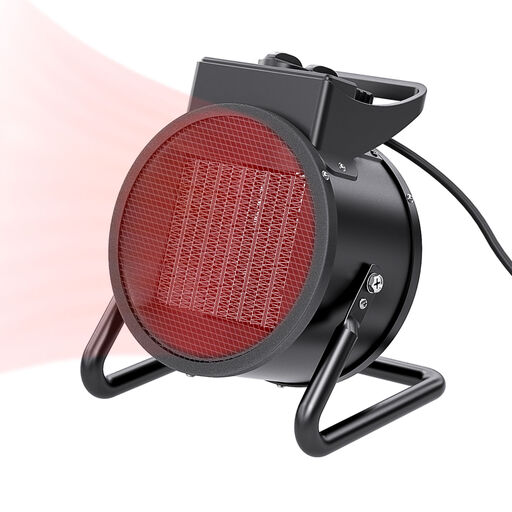
LZQ ceramic fan heater, 2 kW, 3 settings
The thermostat and multiple settings may be useful if you want to adjust the heat output.
The product name lists a PTC heating element, a thermostat, 3 settings and 2 kW.
Joybuy
 No image available
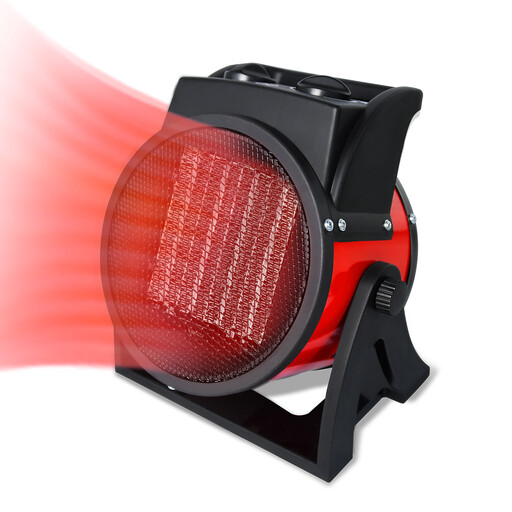
LZQ ceramic heater, 2 kW, 3 heat settings
Compare the stated settings with how you plan to use the heater, and check whether the instructions allow it to be used in your chosen spot in the conservatory.
The product name lists a PTC element, a thermostat, 3 heat settings and 2 kW.
Joybuy
 No image available
Philips 2000 Series CX2120/01
A compact model to consider for a dry spot; check that its stated conditions of use are suitable for your conservatory.
The product name lists 1500 W and 3 settings. For this model, Joybuy lists settings of 600 and 1500 W; the product information warns against using it in wet areas unless it is designed for that purpose, and specifies a clearance of at least 1 metre from flammable materials.
Joybuy
 No image available
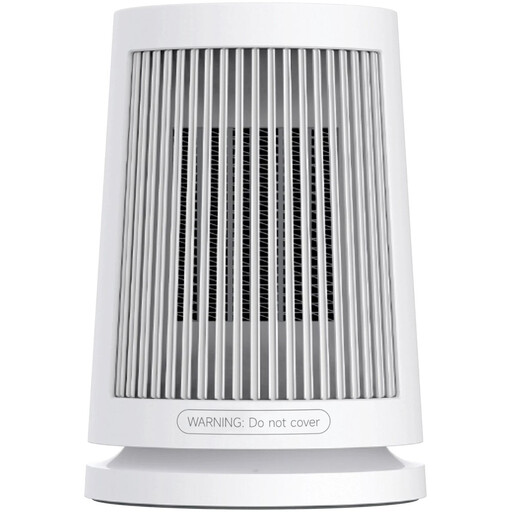
Xiaomi Desktop Heater, 600 W
Its desktop size and stated power make this a model to consider for a small, targeted heating need; they do not prove that it can heat an entire conservatory.
The product name lists a ceramic PTC element, a thermostat and 45° oscillation. The safety instructions rule out use in damp environments and require the heater to be kept away from water and flammable materials.
Joybuy
 No image available
OmniHeat ceramic fan heater, 1800 W
The thermostat and range of settings give you options to compare with how you plan to use the heater; first, check that the spot is suitable.
The product name lists 1800 W, 4 heat settings, a timer, ECO mode, oscillation, and tip-over and overheat protection. The safety instructions say not to cover the heater and to keep it at least 1 metre from flammable materials.
Joybuy
Frequently asked questions
Can any ceramic heater be used in a conservatory?
No. Suitability depends on the actual spot where you plan to use it and the instructions for the exact model. Duux advises against using the Threesixty 2 in damp environments; Rowenta lists an IP21 rating for the SO9380F0 and says it can be used in damp rooms such as bathrooms, but that does not automatically cover every conservatory set-up.
How can I estimate an electric heater’s electricity use?
Multiply the power in kW by the number of hours spent on that setting to estimate consumption in kWh; multiply this by your own price per kWh to work out the cost. At 1.5 kW for one hour on full power, consumption is 1.5 kWh. Thermostat cycling and other settings will affect actual consumption.
Where should I plug in an electric heater?
The Dutch Fire Service advises plugging a high-power appliance such as an electric heater directly into a wall socket rather than a multi-plug adaptor or cable reel. Also follow the model’s instructions for use and positioning.
Is CE marking required for an electric heater?
CE marking is required for electrical products covered by the relevant regulations. The NVWA describes the low-voltage rules for electrical equipment with a rated AC voltage of 50 V to 1000 V. CE marking alone does not indicate whether a model is suitable for the damp spot where you plan to use it.
Does the statutory guarantee in the Netherlands always end after two years?
No. According to ACM ConsuWijzer, the statutory guarantee in the Netherlands has no fixed two-year period; factors include how long you can reasonably expect the product to last. The seller is your point of contact for the statutory guarantee; any manufacturer’s guarantee has its own terms and conditions.


