Who might need a heater by a desk in the conservatory?

Conservatory worker looking for targeted heat

You use your desk occasionally and don’t want to heat the whole conservatory first. Milieu Centraal describes infrared heating as targeting a specific spot, while a fan heater circulates warm air around the room.

Conservatory worker with limited safe space for a heater

Your desk is close to furniture or other belongings. You’ll need to consider a stable position, the clearance around the appliance and a suitable socket; the Dutch Fire Service advises plugging electric heaters directly into a wall socket.

Conservatory worker who wants a quiet workspace

You spend long periods at your desk and want to take fan noise and airflow into account. Compare the noise rating for each model, paying attention to the setting and test conditions.

What should you look for when buying?

What to consider What to look for Who is this most important for?
Targeted heat Decide whether you want to heat just your usual seat or the air around your desk too; compare the positioning and airflow of the options you’re considering. If I mainly sit in one spot, I want warmth where I need it, not necessarily throughout the conservatory. Around 29% of consumers rank targeted heat as their top buying priority.
Safe positioning Check the required clearance and stable surface in the instruction manual, the cord length and whether you can plug the heater directly into a wall socket. The Dutch Fire Service advises against plugging electric heaters into an extension lead or cable reel. If there’s furniture or other belongings close to my desk, I want to know in advance where I can safely put the heater. Around 29% of consumers prioritise safe positioning.
Power consumption Compare the power rating for each setting and think about how long you’ll use the heater. A lower setting draws less power while running, but won’t necessarily provide enough warmth. If I use supplementary heating often or for long periods, I want to take the power rating and duration of use into account when considering my electricity costs. Around 24% of consumers put running costs first.
Noise and airflow Only compare noise ratings when the settings and test conditions are similar; also consider whether the airflow will blow past your face or over your papers. Rowenta gives a rating of 29 dB(A) for the SO9330F0, based on the manufacturer’s figures. If noise or moving air distracts me while I’m concentrating, I want to know how noisy the heater is and where it blows on the setting I’ll use. Around 18% of consumers make noise during work their top priority.

Things to consider when using a heater

  • Ceramic doesn’t automatically mean economical for prolonged use

    A conservatory that loses heat may need to be heated for long periods. Milieu Centraal does not recommend ordinary electric heaters as a permanent heating solution.

    Use a fan heater for the temporary supplementary heating it’s designed for. If you usually sit in one spot, also compare targeted heating options and look at ways to reduce heat loss.

  • A compact heater won’t necessarily fit safely among your desk items

    The size of the appliance doesn’t tell you how much clearance that particular model needs. The Dutch Fire Service advises plugging electric heaters directly into a wall socket rather than using an extension lead or cable reel.

    Before use, check the instruction manual, the required clearance, the stability of the surface and whether the cord allows you to plug the heater directly into a wall socket.

  • Noise and room-size claims don’t necessarily tell you how the conservatory will feel

    A manufacturer’s noise rating or stated heating area won’t automatically tell you what to expect at your workspace; the setting you choose and heat loss also make a difference.

    Only compare noise ratings under the same test conditions, and decide whether you mainly want warmth at your seat or warmer air around your desk.

Relevant brands to compare

Eurom

The Safe-t-Heater 1500 is a compact ceramic heater for occasional supplementary heating around a workspace.

  • According to Eurom, this model has three settings of 500, 1000 and 1500 W, a thermostat, an oscillation function, and tip-over and overheat protection.
  • Eurom doesn’t list a timer. The instruction manual says it’s for use in well-insulated spaces or occasional use; this doesn’t support using it as continuous main heating in a conservatory that loses heat.

Rowenta

The ceramic Intense Comfort SO9330F0 is worth considering if you want to compare two clearly different power settings.

  • Rowenta specifies settings of 1000 and 2000 W for this model, and lists tip-over and overheat protection.
  • The 29 dB(A) rating and room-size claim come from Rowenta; they don’t on their own determine how quiet or warm your conservatory will be.

Duux

The Threesixty 2 can be controlled on the appliance or via an app; Duux describes its heat as spreading around the heater.

  • Duux specifies a maximum power output of 1800 W and lists tip-over and overheat protection.
  • The instruction manual limits its intended use to indoors, in well-insulated spaces or for occasional use, and excludes use as primary heating. Duux’s claimed heat-up speed isn’t based on an independent test in a conservatory.

Mill

The compact ceramic CUS1800MECW is worth considering if you want to compare a mechanical thermostat and two settings.

  • For this version, Mill specifies 1200 and 1800 W, a 150 cm cord, and tip-over and overheat protection.
  • Mill recommends it for rooms smaller than 30 m²; this doesn’t guarantee that the heater will provide enough warmth in a conservatory with significant heat loss.

Joybuy products for supplementary heating around your desk

This selection features ceramic fan heaters for supplementary heating around a workspace. Before buying, check the labelling and product information for the specific model; the Dutch government explains that CE marking is required for products covered by the relevant EU rules.
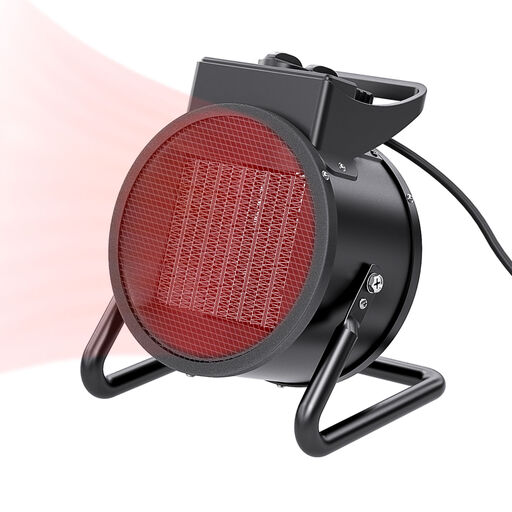
LZQ ceramic fan heater, 2 kW, black

LZQ ceramic fan heater, 2 kW, 3 settings

The fan heater and adjustable settings suit anyone looking to circulate warm air around a workspace.

The product title lists 2 kW, a thermostat, a PTC heating element and three settings.

View at Joybuy
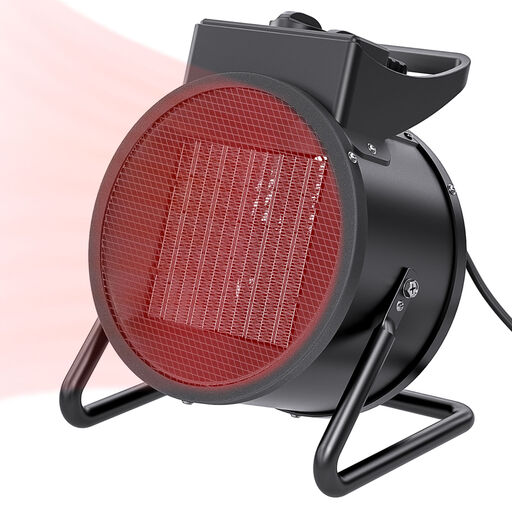
LZQ ceramic fan heater, 3 kW, black

LZQ ceramic fan heater, 3 kW, 3 settings

The fan heater is designed to circulate warm air around your workspace; check that the setting you choose suits how you plan to use it.

The product title lists 3 kW, a thermostat, a PTC heating element and three settings.

View at Joybuy
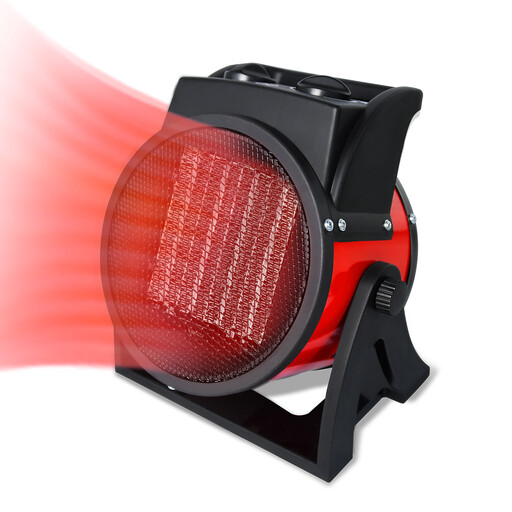
LZQ ceramic construction heater, 2 kW

LZQ ceramic heater, 2 kW, 3 heat settings

This ceramic heater with adjustable heat settings is an option to compare for temporary warmth around a workspace.

The product title lists 2 kW, a thermostat and a PTC heating element.

View at Joybuy

Xiaomi Desktop Heater, 600 W, white

Xiaomi Desktop Heater, 600 W

This compact model is described as suitable for desk use and circulating warm air; the product description warns against using it in damp areas or near water.

The title lists 600 W, a PTC ceramic element and 45° oscillation. The description mentions a thermostat and tip-over and overheat protection.

View at Joybuy
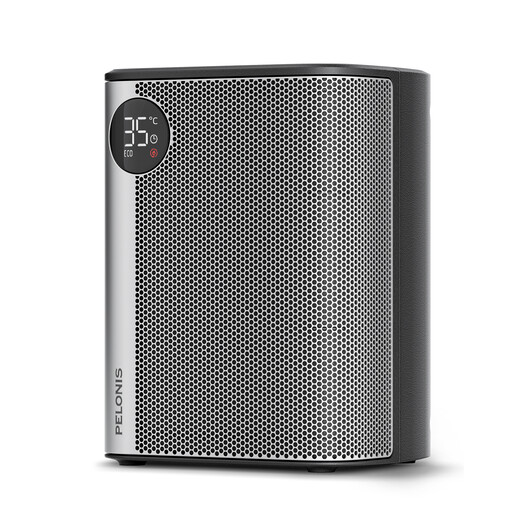
PELONIS ceramic heater, 2000 W

PELONIS ceramic heater, 2000 W

The product description says it’s for use at home and in the office; it’s for indoor use only and should not be used near water.

The title lists 2000 W. The product description mentions five heat settings, a timer, a thermostat, and tip-over and overheat protection.

View at Joybuy

Frequently asked questions

Should I always choose a 2000 W heater for a conservatory?

No. First decide whether you want warmth at your usual seat or warmer air around your desk. Then compare the settings and expected duration of use; a stated floor area doesn’t prove that a model can make up for the heat lost from your conservatory.

Can I plug the heater into an extension lead beside my desk?

The Dutch Fire Service advises plugging electric heaters directly into a wall socket rather than using a cable reel or extension lead. Also follow the instruction manual for your chosen model on positioning and clearance.

How do I work out the running costs?

Multiply the power rating in kilowatts by the number of hours the heater actually runs on that setting, then multiply by your own price per kWh. For example, 2000 W running for one full hour uses 2 kWh; a thermostat can change the actual running time.

What are my rights if a heater I bought online doesn’t work properly?

According to the Dutch government, if a product is faulty, the seller must provide a solution when it’s bought by a consumer in the Netherlands. There is no fixed statutory two-year guarantee period. For a standard online purchase from a business, you’ll usually also have 14 days to change your mind, subject to legal exceptions.

Can an electric ceramic heater be sold in the Netherlands without CE marking?

If an electric heater is covered by the relevant EU product rules, the required CE marking is part of the requirements for placing it on the market. Check the labelling and product information for the specific model; a statement on a product page alone doesn’t prove that all applicable requirements have been met.
