
Vandaag of morgen in huis

Kwaliteit gegarandeerd

Welkomstaanbiedingen ontgrendelen: GRATIS bezorging | Tot 80% korting | Gratis 30 dagen JoyPlus-proefperiode
Download de app
A chilly home office, a draughty living area, or a bedroom that just won't warm up? An electric heater seems like a quick fix. But the market is flooded with models that promise the world. Many people fall for marketing traps and end up with an energy-guzzling, unsafe, or noisy device. As a Joybuy Product Recommendation Officer, I'll help you cut through the noise so you can make a choice you'll feel good about.
Before you pull out your wallet, watch out for these common pitfalls:
To avoid a bad purchase, focus on the specifications that truly matter. These three points are the foundation for a good choice.
The power, expressed in watts, determines how quickly and effectively a heater can warm up a room. Power that's too low means the heater has to run constantly at full blast, while power that's too high consumes unnecessary electricity.
Safety is non-negotiable. Always check if a heater is equipped with the following features:
Modern ceramic heaters offer more than just warmth. These features make all the difference in daily use and on your energy bill:
Based on objective specifications, we have selected several models that fit different user profiles.
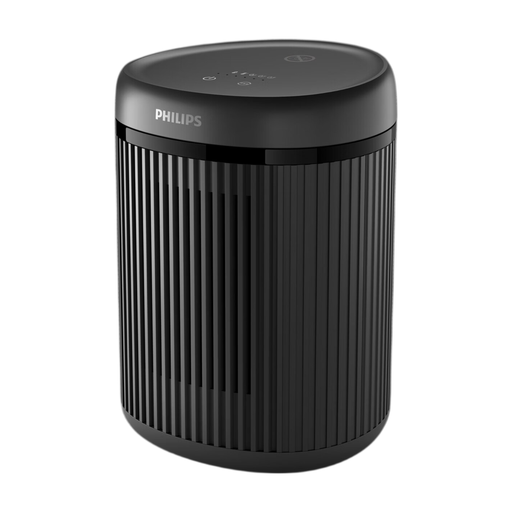
Why This Fits Their Persona: This compact model is ideal for a desk or a small home office. It delivers fast, targeted heat without taking up much space, perfect for staying focused while working on cold days.
Tackles the "silent" heater pitfall. According to the manufacturer, the DC motor produces a noise level starting from 24 dB(A), an objective value that indicates quiet operation.
Compact and lightweight (1.51 kg) design. Features both tip-over and overheat protection for safe use in the office or at home.
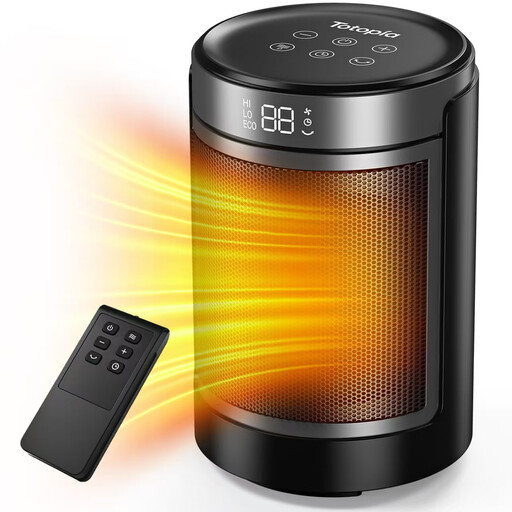
Why This Fits Their Persona: Ideal for those seeking comfort at night. With the remote control, timer, and ECO mode, you can regulate the heat without getting out of bed, all while limiting energy consumption.
Counters the "energy-efficient" myth with a concrete feature: the ECO mode. According to the manufacturer, this mode automatically adjusts the power output based on the ambient temperature, which helps save energy.
The 12-hour timer and remote control offer convenience and control. The built-in tip-over and overheat protection provide peace of mind during the night.
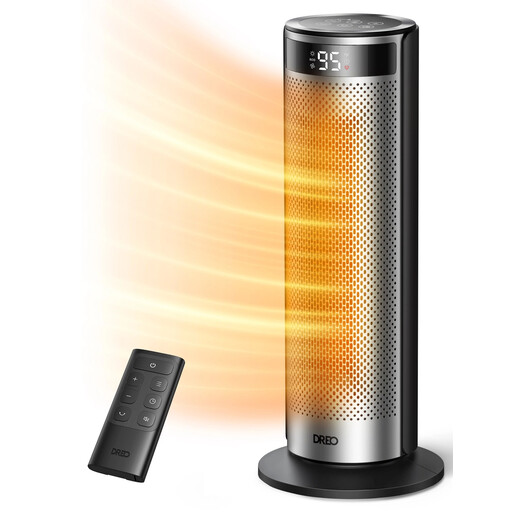
Why This Fits Their Persona: With 2000W of power and a wide oscillation angle, this model is suitable for evenly heating a medium-sized living room (up to 25 m?). Its extensive safety features make it a responsible choice for a family environment.
Addresses the pitfall of hidden safety risks. The manufacturer, Dreo, specifies a Shield360? 8-layer safety system, including tip-over and overheat protection, a child lock, and a flame-retardant housing.
Powerful and fast heating. The thermostat is adjustable from 5-35°C in 1°C increments for precise temperature control.
We have compiled a complete, up-to-date list of products that fully meet these strict selection criteria and Dutch safety regulations.
The power consumption is easy to calculate. A 2000-watt (2 kW) heater running at full power for one hour consumes 2 kilowatt-hours (kWh). Multiply this by your current electricity price per kWh to determine the cost per hour. A model with a good thermostat won't run continuously at full power, which lowers the final cost.
Yes, provided you choose a model with the right safety features. Always check for the presence of tip-over protection and overheat protection. A timer function is also recommended, so the heater turns off automatically after a set time. Additionally, ensure the heater has clear space around it and is not covered.
The main difference lies in the heating element. A ceramic heater uses a PTC (Positive Temperature Coefficient) element. This ceramic material gets hot, but not red-hot like the metal coils in a traditional fan heater. Ceramic elements retain heat better, which provides a more even and consistent heat output. They are also generally considered more durable and safer.
