What should you look for?
When photographing glazes at home, key considerations include consistent colour, reflections, detail, repeatability and the complete kit. Adobe and Nikon describe white balance and RAW as parts of the colour workflow, while Canon Europe recommends a tripod for consistent product photos.
| What to consider |
What should you check? |
Who is this important for? |
| Consistent colour |
Check whether the exact model lets you set the white balance and, if you need it, supports RAW shooting. Use a neutral reference under the same lighting. |
If you want to photograph glazes consistently under fixed studio lighting, colour consistency should be your first concern. Around 29% of consumers would reportedly make this their top buying priority. |
| Reflections and lighting |
Take test shots from different lighting and camera angles. Try any potential filter, in the correct size, on the glaze you plan to photograph. |
If reflections obscure the finish, you’ll want to adjust the lighting and camera angle without losing all the visible sheen. Around 23% of consumers would reportedly prioritise controlling reflections. |
| Fine details |
Compare the maximum magnification and focusing distance of the exact lens. Also consider how much room you’ll need to light the subject. |
If you want to fill the frame with fine speckles or crazing, lens magnification should be your first consideration. Around 18% of consumers would reportedly make detail magnification their top priority. |
| Repeatable photos |
Check that you can position the camera securely and repeat the framing and exposure in future sessions. |
If you want to photograph several pieces as a comparable series, consistent framing and setup are especially important. Around 18% of consumers would reportedly prioritise repeatability. |
| Complete kit |
Check exactly what’s included and see which lens or studio equipment you might still need. |
If you want to avoid needing another lens or piece of equipment after buying, the complete kit matters most. Around 12% of consumers would reportedly make the cost of the complete kit their top priority. |
Cameras at Joybuy
These cameras and camera setups are options to consider for home-studio photography. Check whether the lens and features of each model suit the glaze details you want to capture.
 No image available
KINSI Mini Vlog Camera 4K, 64 MP
The rotating lens and included tripod may appeal if you want to try out consistent framing.
The product name lists 64 MP, 4K video, a 330° rotating lens, a 1,72-inch touchscreen and a tripod.
Joybuy
 No image available
KOMERY G7-A 4K Digital Camera, Pink
The listed zoom may be useful if you want to try different framings. Check the focusing capabilities for glaze close-ups.
The product name lists 80 MP, 4K video and 18× zoom.
Joybuy
 No image available
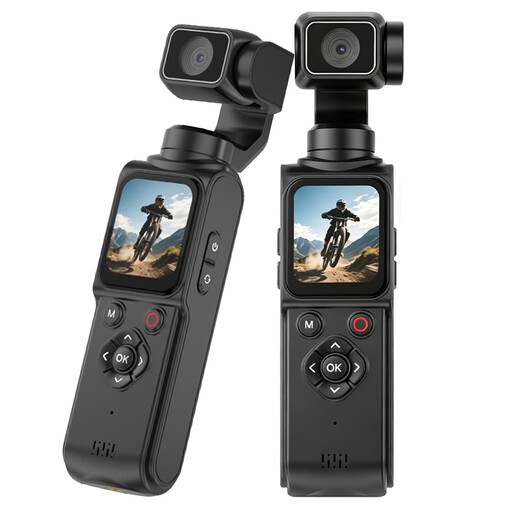
DJI Osmo Pocket 3 Creator Combo
This bundle may be worth considering if you’re looking for a compact camera setup with a microphone included.
The product information lists a 1-inch CMOS sensor. The product name mentions 4K/120fps video, 3-axis stabilisation and an included microphone.
Joybuy
 No image available
DJI Osmo Pocket 3
This compact camera setup is worth considering if you want to take photos and shoot video with one device.
The product information lists a 1-inch CMOS sensor. The product name mentions 4K/120fps video, 3-axis stabilisation and a rotating 2-inch touchscreen.
Joybuy
 No image available
Sony ZV-E10 with 16–50mm zoom lens
The included zoom lens offers different focal lengths to try out various framings. Check its close-up capabilities for the details you want to capture.
The product information lists a 24,2 MP APS-C sensor and an included 16–50mm E-mount lens.
Joybuy
Frequently asked questions
How can you keep the colours in different glaze photos comparable?
As far as possible, use the same lighting for every shot and capture a suitable neutral reference under that lighting. Check the white balance and use RAW if you want to make colour corrections afterwards. Assess the result using your own glazes.
Should you buy a macro lens straight away?
Not for every wider shot. First decide how small a detail you want to show, then check the maximum magnification of the exact lens. Canon lists a maximum magnification of 0,25× in MF mode for the RF-S 18-45mm.
How can you photograph several ceramic pieces in the same way?
Use the same background and lighting setup, and mark where you place each piece. Canon Europe recommends a tripod for consistent product photos. Keeping the camera in a fixed position helps you maintain the same framing between shots.
Who can help in the Netherlands if you’ve bought a faulty camera as a consumer?
According to the Dutch government, the seller must provide a solution if a product is faulty. A manufacturer’s guarantee and any additional guarantee you’ve bought are on top of your statutory rights. If you bought the camera for business use, you can’t automatically rely on consumer rights.
Where can you take an old camera or camera battery for recycling?
For old household devices, the Dutch government lists options including returning them when you buy a similar device and taking them to your local recycling centre. Camera batteries shouldn’t go in the bin; take them to a designated collection point. According to the Dutch government, the one-for-one take-back scheme for household appliances doesn’t apply to business equipment.


