
Vandaag of morgen in huis

Kwaliteit gegarandeerd

Welkomstaanbiedingen ontgrendelen: GRATIS bezorging | Tot 80% korting | Gratis 30 dagen JoyPlus-proefperiode
Download de app
A ceramic frying pan can be useful for eggs, vegetables, fish and other dishes that you want to cook with little oil. However, a smooth coating or the phrase “healthy cooking” does not tell you enough about the quality. The hob, size, care requirements and exact coating all determine whether a pan remains practical in your kitchen.
If you focus only on the price or a striking product claim, you can quickly run into the same problems: a pan that does not work properly on induction, a coating that wears out sooner than expected or a size that does not suit your everyday portions.
A frying pan for all hobs needs to have a suitable base. Induction requires a magnetic layer. A pan may be described as suitable for gas and ceramic hobs, but that does not automatically mean it works on induction. Always check that induction, gas, electric and ceramic hobs are explicitly listed.
Also pay attention to the base diameter. A 24 cm pan may have a smaller effective base, meaning that an induction zone heats it less evenly.
Many ceramic coatings are sold as PFAS-free frying pans. According to product information from various brands, certain models contain no intentionally added PFAS, PTFE or PFOA. This is a product specification, not a guarantee that the non-stick performance will always remain the same.
Ceramic coatings can wear down due to:
Use wooden, silicone or plastic utensils instead, and let the pan cool down before washing it.
A 24 cm frying pan is suitable for meals for one or two people and portions for up to around three people, depending on the dish. For a family, 26 to 28 cm is often more practical. A 20 cm pan works particularly well for an egg, an omelette or a small portion of vegetables.
A frying pan set with 24 and 28 cm pans offers greater flexibility, but takes up more cupboard space. A frying pan without a lid is compact, while a model with a lid is better suited to simmering and slow cooking.
A ceramic non-stick coating is usually applied to aluminium or a combination of aluminium and stainless steel. An aluminium frying pan heats up relatively quickly and is often light to use. However, heat distribution also depends on the thickness and construction of the base.
When checking a non-stick frying pan, look at:
A PFAS-free coating does not mean that you have to cook without oil. A small amount of oil can help with cooking and releasing food from the pan. The term healthy frying pan is not a medical qualification either. Here, it refers to ease of cooking and the option to prepare food with less fat.
Choose 20 to 22 cm for small portions, 24 cm for everyday cooking for one or two people, and 26 to 28 cm for families. A deep pan is useful for stir-fries, sauces and one-pan dishes. A shallow pan is convenient for pancakes, eggs and burgers.
A dishwasher-safe frying pan is practical, but the dishwasher can cause a ceramic coating to age more quickly. Even when the product information permits dishwasher use, washing by hand with a soft sponge can help extend its useful life.
Look out for contradictions in the product information. Some models are described as dishwasher-safe, while hand washing is still recommended. In that case, use the manufacturer’s care instructions as your guide.
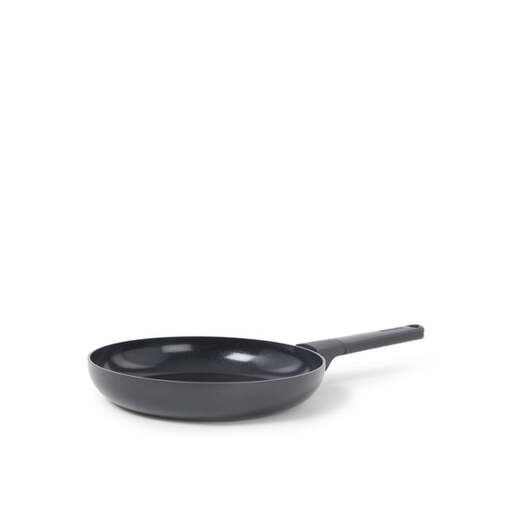
Why it suits this profile: A manageable size for everyday cooking, compatible with electric, gas, induction and ceramic hobs. According to the product information, the pan is dishwasher-safe and features a PFAS-free ceramic coating.
The hob compatibility and care information are clearly stated. This means you do not have to rely on the word “universal” alone.
24 cm, aluminium, a PFAS-free ceramic coating, a three-year manufacturer’s warranty and compatibility with several heat sources.

Why it suits this profile: This model combines recycled forged aluminium with a riveted stainless-steel handle. According to the product information, the pan is suitable for all common hobs and oven-safe up to 200 °C.
The maximum oven temperature and recommendation to clean the pan by hand are clearly stated. This helps prevent incorrect use of the coating.
PFAS-free ceramic coating, 24 cm, oven-safe up to 200 °C and RCS-certified recycled aluminium according to the product information.
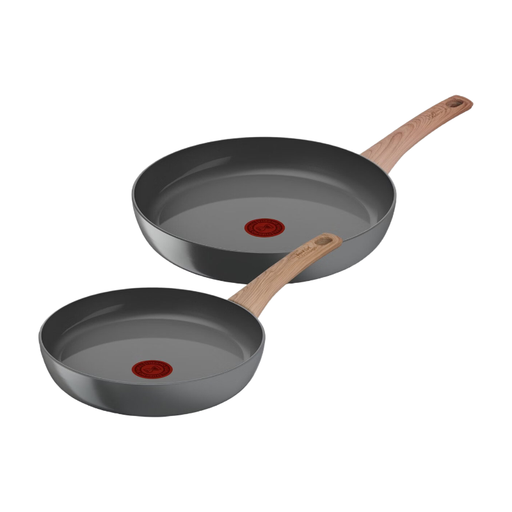
Why it suits this profile: Two sizes are practical for households that prepare small and larger portions at the same time. According to Tefal’s product information, the pans are made from 100% recycled aluminium and feature a PFAS-free ceramic coating.
The set lists the individual diameters, induction compatibility and recommendation to wash by hand. This makes the difference between size and care requirements clear from the outset.
Two pans, a Thermo-Signal heat indicator, recycled aluminium and compatibility with all the listed heat sources.
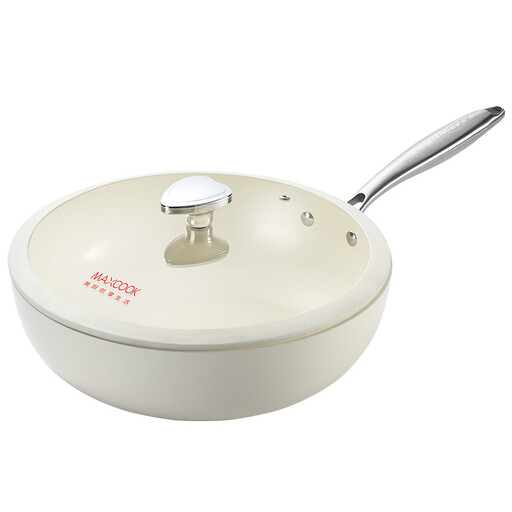
Why it suits this profile: The 32 cm diameter provides extra cooking surface for multiple portions, stir-fries or a family meal. The product information specifies a composite base for gas, electric, ceramic and induction hobs.
The large size makes the intended use clear. However, check that the pan fits your hob zone and that you have enough storage space.
32 cm, cast aluminium, ceramic non-stick coating and a base that, according to the product information, is suitable for several types of hob.
We have compiled a complete, up-to-date list of products that fully meet these strict selection criteria and the applicable European safety regulations.
These habits will generally help your pan remain usable for longer:
It is best not to continue using a pan with a damaged coating or an unstable handle.
That varies by model. Ceramic itself does not make a pan suitable for induction. The base must contain a magnetic layer. Check the product specifications for “induction suitable” and, if in doubt, consult the instruction manual.
Its lifespan depends on use, temperature and care. A ceramic coating wears more quickly when exposed to high heat, metal utensils and the dishwasher. Washing by hand, using low to medium temperatures and choosing soft utensils can help protect the coating.
“PFAS-free” describes the stated composition of the coating. It is not a medical claim and does not automatically say anything about cooking performance, durability or care requirements. You should therefore also compare the material, base, size and instructions for use.
