
Vandaag of morgen in huis

Kwaliteit gegarandeerd

Welkomstaanbiedingen ontgrendelen: GRATIS bezorging | Tot 80% korting | Gratis 30 dagen JoyPlus-proefperiode
Download de app
A ceramic frying pan may seem straightforward to choose on paper. However, pans vary considerably in size, compatibility with different heat sources, coating and maintenance requirements. A pan that starts sticking after a few weeks, does not work properly on induction or turns out to be too small for a family meal can quickly become an expensive mistake.
Pay particular attention to these three common pitfalls:
A ceramic non-stick pan generally consists of a metal pan body with a ceramic coating on the inside. If you are looking for a PFAS-free frying pan or a frying pan without PFAS, it is worth reading the product description carefully. “Ceramic” does not automatically mean that every possible substance has been excluded.
For various models in the range, the manufacturer or product description explicitly states PFAS-free, PTFE-free or PFOA-free. These properties are mentioned for products from brands including Brabantia, Tefal, Redchef and SENSARTE. Attribute this to the manufacturer: according to the product information provided by the relevant brand, these are the stated materials and properties. Always check the current specifications and warnings on the product page before purchasing.
A ceramic coating does not guarantee that food will never stick. Ideally, use wooden, silicone or plastic utensils and avoid heating an empty pan for longer than necessary. For some models, such as the Redchef Starlight, the instructions explicitly state that metal utensils should be avoided.
For an induction frying pan, a suitable magnetic base is essential. Also check whether the pan is suitable for gas, electric, ceramic and halogen hobs. Many models are advertised as frying pans for all heat sources, but check this for each individual product.
According to the product specifications, a thick or multi-layered base can help distribute heat evenly. This does not mean that every hob will produce the same results. Centre the pan on the cooking zone and choose a suitable diameter. A small pan on a large induction zone may heat unevenly, while an oversized pan may not sit properly on a compact hob.
A 24 cm frying pan is practical for one to three people, eggs, pancakes, vegetables or a small portion of meat. A 28 cm frying pan provides more room for several ingredients and family meals. For stir-fries, a 28 or 30 cm ceramic wok may be more convenient thanks to its higher sides.
Also pay attention to the cleaning instructions. Some pans are dishwasher-safe, but hand washing with a soft sponge is often recommended to keep the coating in good condition for longer. A pan with a lid is useful for simmering and preparing sauces, but may be heavier and more difficult to store.
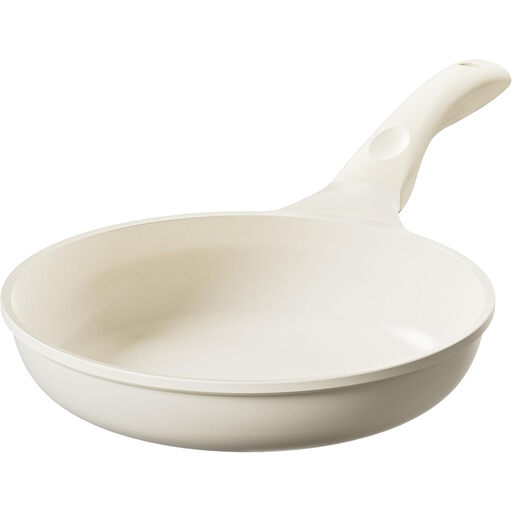
Why it suits this profile: The 24 cm size is easy to manage for everyday portions and smaller households. According to the product information, the pan is suitable for induction, gas and electric hobs.
The specifications state that the coating is free from PTFE, PFOA and PFAS. Do not use metal spatulas and allow the pan to cool before cleaning it.
24 cm diameter; aluminium, ceramic and stainless steel; suitable for several heat sources; handle suitable for left- and right-handed use according to the product description.
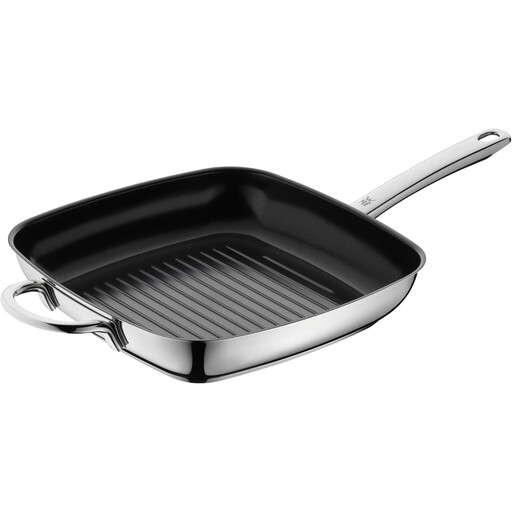
Why it suits this profile: This grill pan is designed for users looking for a spacious cooking surface and sturdy stainless steel construction for meat, vegetables and grilled dishes.
The product specification states that it has a ceramic coating, a base suitable for all heat sources and recommends hand washing for maintenance. This makes the usage requirements clear.
28 x 28 cm; Cromargan 18/10 stainless steel; suitable for induction and other heat sources; oven-safe according to the product information.
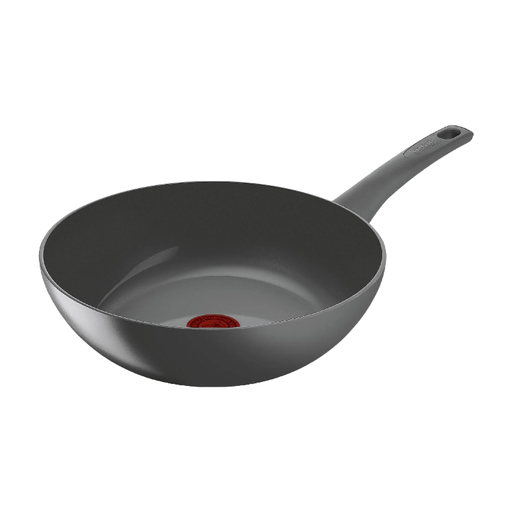
Why it suits this profile: The taller wok shape is suitable for stir-frying, noodles and meals for several people. According to Tefal, the pan is made from recycled aluminium and features an Inoceram coating.
The product information states that it is suitable for induction, gas, electric, ceramic and halogen hobs. The pan is not dishwasher-safe; hand washing removes any uncertainty about maintenance.
28 cm; Thermo-Signal heat indicator according to Tefal; suitable for all the heat sources listed; at least 77% recycled material according to the product description.
We have put together a complete, up-to-date list of products that fully meet these strict selection criteria and the applicable European safety regulations.
These habits will help keep your pan practical and reliable:
That depends on the base. Choose a model whose product information explicitly states that it is suitable for induction. Also check that the diameter of the base matches the cooking zone.
Its lifespan depends on how it is used, the temperature and how it is maintained. With suitable utensils, hand washing and moderate heat, the coating will generally remain intact for longer. Replace the pan when the coating visibly starts to come away or the pan is structurally damaged.
The pan itself does not use extra energy because it is made with ceramic material. Energy consumption mainly depends on the hob, the temperature selected and the cooking time. A pan with a suitable base and diameter may transfer heat more efficiently, but results vary depending on the hob and how the pan is used.
