
Vandaag of morgen in huis

Kwaliteit gegarandeerd

Welkomstaanbiedingen ontgrendelen: GRATIS bezorging | Tot 80% korting | Gratis 30 dagen JoyPlus-proefperiode
Download de app
A ceramic frying pan may seem easy to choose at first glance. However, pans vary considerably in their coating, base, size and possible uses. A low price may be appealing, but a pan that is not suitable for induction or quickly loses its non-stick performance can ultimately prove to be a false economy.
So watch out for these three common pitfalls:
A frying pan with a ceramic coating generally has a smooth cooking surface that allows ingredients to release more easily. However, performance depends on how the coating is constructed, the temperature used and how the pan is maintained.
If you are looking for a PFAS-free frying pan, read the specifications carefully. The Brabantia Onyx and Dusk models explicitly state that their ceramic coating is PFAS-free. The USELUCK models also state that their coating is free from PFAS, PFOA and PTFE. Other products may only mention a “ceramic non-stick coating”. This is not the same as an explicit PFAS-free statement.
According to the product information provided by the relevant brands, some coatings are also scratch-resistant or made up of several layers. Treat this as a product specification from the brand, not as a guarantee of a particular service life. Use wooden, silicone or plastic utensils and avoid scouring pads.
A ceramic induction frying pan needs a base that can be recognised by an induction zone. Do not look only at the term “aluminium”: aluminium conducts heat quickly, but is not magnetic on its own. A suitable induction base or composite base is essential.
Most of the models included in this selection are suitable for several heat sources:
The Tefal Easy Cook & Clean frying pans are an important example of why checking is essential. These aluminium pans are suitable for gas, electric and ceramic cooking, but not for induction. A pan that otherwise suits your needs may therefore still be unusable in your kitchen.
A 20 cm pan is practical for one person, eggs or small portions. A diameter of 24 cm is suitable for everyday cooking for one to three people. For families or larger quantities, 28 cm and 32 cm pans are more convenient, although they take up more space and may feel heavier.
An oven-safe frying pan is useful for dishes that are first seared on the hob and then finished in the oven. Always check:
According to the product information, the Redchef Gemstone pans are oven-safe up to 450 °C. The Brabantia Dusk has a specified limit of 200 °C. These figures are not directly comparable: for safe use, always follow the instructions on the product page and packaging.
The recommendations below are based on verifiable information such as size, material, hob compatibility, PFAS statements, oven use and cleaning instructions.
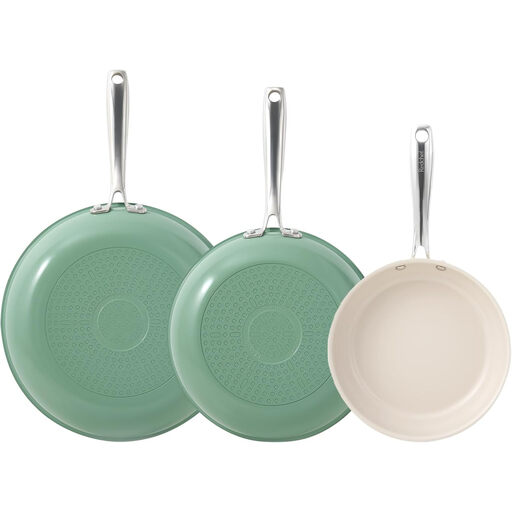
Why it suits this profile: The set includes 20, 24 and 28 cm pans. This gives you a suitable size for different portions without having to choose individual pans straight away.
The product information states that it is compatible with induction, gas and electric hobs. According to the description, the set is also oven-safe up to 450 °C; check the current instructions for use before using it.
Aluminium construction, ceramic coating, three popular sizes and dishwasher compatibility according to the product information.

Why it suits this profile: A compact pan for everyday use, made with recycled aluminium, a PFAS-free ceramic coating and a stainless steel handle.
The product description states that it is PFAS-free and suitable for induction and other common hobs, with a clear oven limit of 200 °C.
100% recycled forged aluminium according to the product information, two ceramic non-stick layers and dishwasher compatibility.
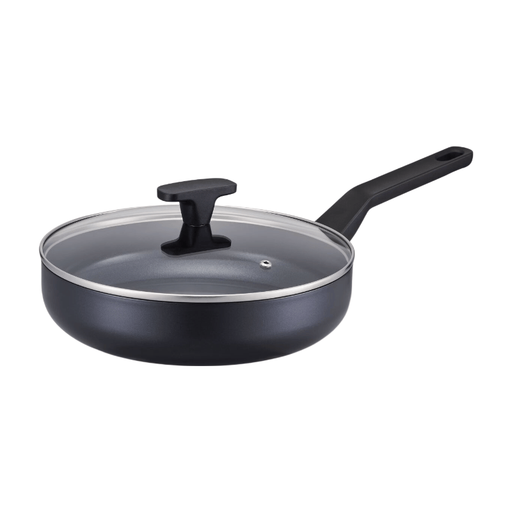
Why it suits this profile: The higher sides and glass lid are practical for simmering, sauces, stews and family meals.
The specifications state that it has a PFAS-free ceramic double non-stick coating and is suitable for induction, gas, electric, ceramic and halogen cooking. The pan is not intended for oven use.
26 cm size, glass lid, recycled lightweight aluminium and dishwasher compatibility according to the product description.
We have put together a complete, up-to-date list of products that fully meet these strict selection criteria and the applicable European safety regulations.
A ceramic non-stick frying pan will generally remain usable for longer when you avoid putting unnecessary strain on the coating. These habits can help:
“Dishwasher-safe” means that, according to the manufacturer, a product can be cleaned in the dishwasher. However, several product descriptions still recommend hand-washing to extend the coating’s service life. It takes a little more time, but limits exposure to harsh cleaning products and high temperatures.
Only when the product information states that it is induction-compatible. An aluminium frying pan will not automatically work on induction. Also check that the diameter of the base is suitable for the induction zone.
This depends on use, temperature and maintenance. Overheating, metal utensils and abrasive cleaning can damage the coating more quickly. An exact service life cannot reliably be inferred from marketing information alone.
The pan itself does not consume energy; energy use depends mainly on the hob, temperature and cooking time. According to the product information, an aluminium base heats up quickly, but you should still avoid setting the hob higher than necessary. Hand-washing can also help keep the coating usable for longer, potentially reducing the need for replacement.
