
Vandaag of morgen in huis

Kwaliteit gegarandeerd

Welkomstaanbiedingen ontgrendelen: GRATIS bezorging | Tot 80% korting | Gratis 30 dagen JoyPlus-proefperiode
Download de app
A ceramic frying pan may seem straightforward to choose at first glance. However, pans vary considerably in size, compatibility with different heat sources, coating and maintenance requirements. As a result, a cheaper pan may be less suitable for induction, while a larger pan can become awkwardly heavy in a small kitchen.
Pay particular attention to these three common pitfalls:
Anyone looking for a PFAS-free frying pan or a frying pan without PFAS should not focus solely on the word “ceramic”. Ask yourself exactly what claim is being made. Some product descriptions explicitly state PFAS-free, while others only mention being free from PFOA or PTFE.
According to Redchef’s product information, its ceramic coating is free from PTFE, PFOA and PFAS. Brabantia states that the Dusk and Onyx pans have a PFAS-free ceramic coating. WMF states that the Durado frying pan is PFAS-free. These are product claims made by the relevant brands or sellers, so always check the current specifications on the product page before buying.
A ceramic non-stick frying pan also requires suitable use:
The non-stick performance of any type of coating can decrease over time. A ceramic coating therefore does not guarantee that you will be able to cook without oil for years.
A 24 cm frying pan is practical for one to three people. This size is suitable for eggs, an omelette, vegetables or a small portion of meat. It also takes up relatively little space on the hob.
A 28 cm frying pan provides more cooking space for families, larger portions and dishes where ingredients should not be packed too closely together. With induction, however, check that the diameter of the pan base matches the cooking zone. The overall diameter is not always the same as the actual heated surface.
A frying pan set containing, for example, 20 and 24 cm pans can be useful when you prepare small and medium-sized portions at the same time. A set is not automatically better value: check that both sizes suit the way you cook and that you have enough storage space.
A ceramic frying pan for induction must have a magnetic or composite base suitable for induction cooking. “Ceramic” on its own says nothing about which heat sources the pan can be used with.
Also check the following points:
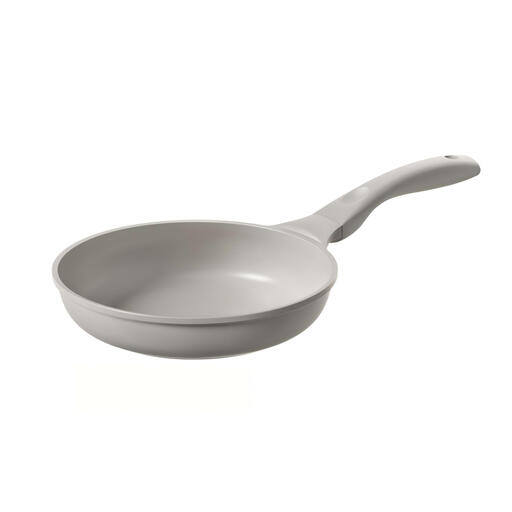
Why it suits this profile: The 24 cm size is suitable for everyday portions for one to three people. According to the product information, the pan is compatible with induction, gas and electric hobs.
The product description explicitly states that the ceramic coating is free from PTFE, PFOA and PFAS, and confirms suitability for multiple heat sources.
24 cm diameter, Bakelite handle and dishwasher-safe according to the product information.
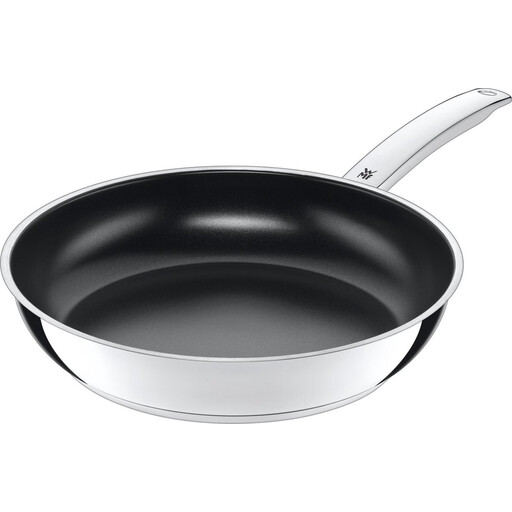
Why it suits this profile: This pan combines a Cromargan 18/10 stainless-steel body with a ceramic coating. It is designed for users who value robust construction and oven use.
The specifications mention induction compatibility, oven use up to 250 °C and hand-washing as the recommended care method. This makes the usage limits clear.
Suitable for all the stated heat sources, PFAS-free according to the product information and suitable for use in the oven.
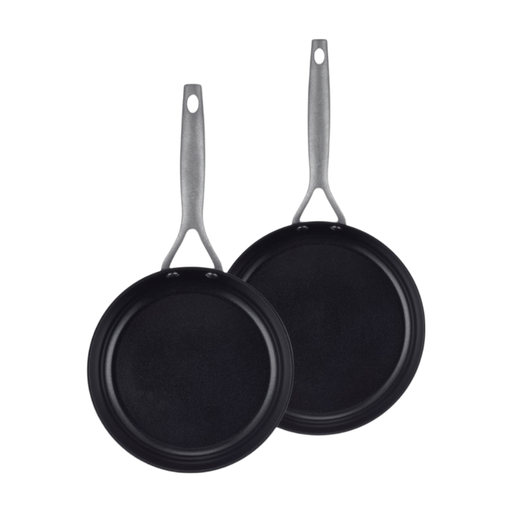
Why it suits this profile: The combination of 20 and 24 cm offers flexibility for small portions and meals for one to three people. The pans are suitable for everyday cooking on induction and gas hobs, among others.
The product information states that the ceramic coating is PFAS-free, that the pans are suitable for all heat sources and that the maximum oven temperature is 200 °C.
Two sizes, 100% recycled forged aluminium according to the stated RCS information, and dishwasher-safe construction.
We have put together a complete, up-to-date list of products that fully meet these strict selection criteria and the applicable European safety regulations.
A ceramic coating generally performs best at medium temperatures. Heat the pan gradually and add a small amount of oil if necessary. Do not use metal forks or spatulas, even when the product description states that the coating is scratch-resistant.
Allow the pan to cool down after cooking. Do not rinse a hot pan immediately with cold water: a sudden change in temperature can cause it to warp. Even when a ceramic frying pan is dishwasher-safe, hand-washing with mild washing-up liquid is often the sensible choice for a longer service life. Check the coating and handle regularly. If any parts start to come away or the handle becomes loose, replacing the pan is safer.
It can be, but not every ceramic pan is automatically suitable. Check that the product page explicitly states induction-compatible. The base of the pan must also make good contact with the induction zone.
Its service life depends on the temperature, utensils and cleaning methods used. Overheating, metal spatulas and abrasive products can damage the coating more quickly. Follow the manufacturer’s care instructions and replace the pan when the coating becomes visibly damaged.
Not necessarily. In addition to the coating, consider the size, heat sources, oven use, handle, weight and care requirements. A PFAS-free pan that does not work on your induction hob or is too small for your household still will not meet your needs.
