
Vandaag of morgen in huis

Kwaliteit gegarandeerd

Welkomstaanbiedingen ontgrendelen: GRATIS bezorging | Tot 80% korting | Gratis 30 dagen JoyPlus-proefperiode
Download de app
A ceramic frying pan with a lid may seem straightforward to choose at first glance. In practice, pans vary considerably in coating, heat distribution, capacity and maintenance. For example, a pan suitable for induction is not automatically suitable for use in the oven. “Ceramic” does not always mean that the entire pan is made from ceramic either.
For UK households, three pitfalls are particularly important:
A ceramic pan often consists of a metal base, such as aluminium, with a ceramic non-stick coating applied over it. This is different from a pan made entirely from ceramic. Aluminium heats up relatively quickly, while a multi-layer construction combining stainless steel and aluminium can help distribute heat more evenly.
If you are looking for a PFAS-free frying pan, it is worth checking the exact product description. According to the product description, some brands claim that their ceramic coating is free from PFAS, PTFE, PFOA, lead or cadmium. These statements come from the manufacturer and should not be extended to include medical or health claims. Also check whether it says “free from intentionally added substances”; this is different wording from a general claim covering all possible contaminants.
A stainless-steel interior may be appealing if you do not want a traditional non-stick coating. According to the product description, the interior of the PURECOOK pan is made from 304 stainless steel, while the ceramic coating is on the outside. This is therefore not the same as a ceramic non-stick frying pan.
An induction frying pan generally needs a magnetic base. So do not only check whether “induction” appears in the title; also check whether the base is made from magnetic stainless steel. For gas, electric and ceramic hobs, other base properties are less critical, but a flat base remains important.
Be aware of exceptions. According to the product description, Naturepan is suitable for induction, gas, electric and ceramic hobs. For infrared or halogen hobs, you are advised to check compatibility with the manufacturer. A frying pan for all hobs is therefore only a good choice if your specific hob is included in the stated compatibility.
A 24 cm frying pan is useful for omelettes, eggs, smaller portions and compact kitchens. For three to four people or dishes containing lots of vegetables, 28 cm is often more practical. A deep frying pan, also known as a ceramic sauté pan or sauté pan with lid, provides extra room for stir-frying, simmering and dishes with plenty of sauce.
A lid helps food cook through and reduces splashing, but check what it is made from. A glass lid allows you to monitor the dish without lifting it. For oven use, you should check whether both the pan and the lid are oven-safe. According to the product information, the Naturepan pan can be used in the oven at up to 230 °C, but only without the lid.
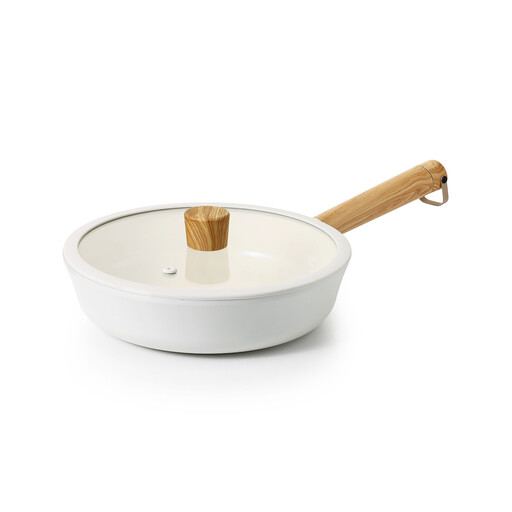
Why it suits this profile: The compact size is suitable for smaller households and everyday cooking such as eggs, vegetables and stir-fries.
The product description mentions a ceramic coating, magnetic stainless-steel base and compatibility with gas, induction, halogen, ceramic and electric hobs.
24 cm, lid included and, according to the brand description, free from PTFE, PFAS, cadmium and lead.
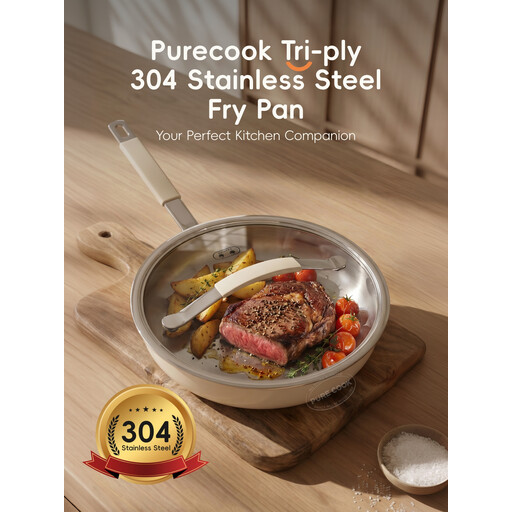
Why it suits this profile: The multi-layer construction and larger cooking surface are well suited to families who regularly fry, sauté and simmer.
According to the product description, the interior is brushed 304 stainless steel without a chemical non-stick coating. The ceramic coating is on the outside.
26 cm cooking surface, glass lid, suitable for induction and gas, and a three-layer heat-conducting base.
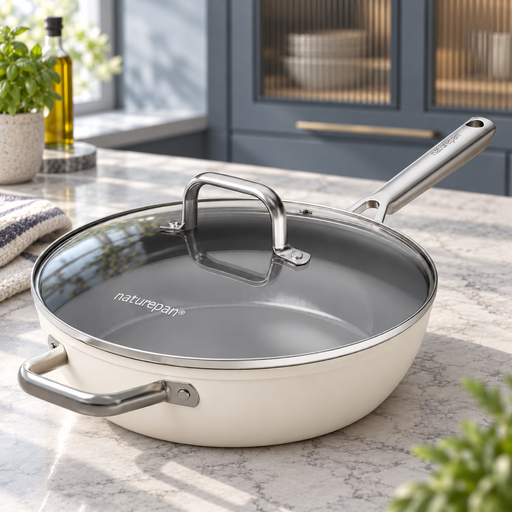
Why it suits this profile: The 7.5 cm depth provides room for stir-frying, simmering and meals containing several ingredients.
The product information states the permitted hobs, an oven limit of 230 °C without the lid, and recommends cooking over low to medium heat.
28 cm diameter, 7.5 cm high sides, ceramic coating and dishwasher-safe design according to the product description.
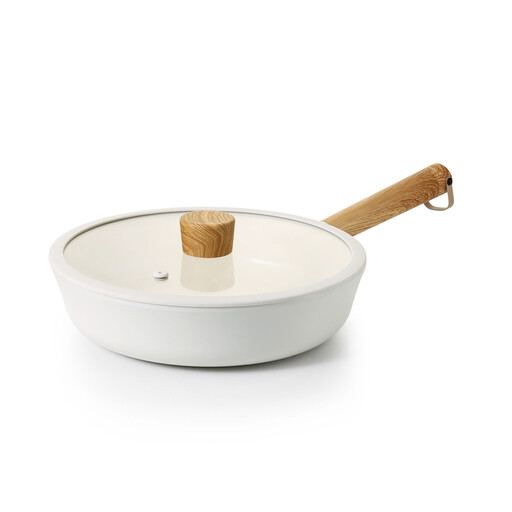
Why it suits this profile: The deep design is intended for stir-frying, sautéing and preparing larger portions for everyday meals.
The specifications mention a magnetic stainless-steel base and compatibility with gas, induction, halogen, ceramic and electric hobs.
28 cm size, lid included and, according to the brand description, free from PTFE and PFAS. Hand washing is recommended to help protect the coating.
A ceramic non-stick frying pan will generally remain enjoyable to use for longer when you follow the manufacturer’s instructions. Ideally, use wooden, silicone or nylon utensils and avoid metal scouring pads. Allow the pan to cool before washing it; a sudden change in temperature can put stress on the material and coating.
Also bear these points in mind:
We have put together a complete, up-to-date list of products that fully meet these strict selection criteria and the applicable European safety regulations.
No. “Ceramic” does not always describe the complete composition or all the layers of a pan. Check the product information for specific statements such as PFAS-free, PTFE-free or PFOA-free. Claims about the composition come from the brand and should be read exactly as worded.
A 24 cm pan is generally suitable for smaller portions. For three to four people, a size of around 26 to 28 cm provides more working space. A deep frying pan or sauté pan is particularly useful when you want to cook vegetables, meat and sauce together.
Its lifespan depends on how it is heated, the utensils used and how it is cleaned. Overheating, metal spatulas, abrasive products and sudden cooling can put more strain on the coating. Always follow the care instructions for the specific model.
