
Vandaag of morgen in huis

Kwaliteit gegarandeerd

Welkomstaanbiedingen ontgrendelen: GRATIS bezorging | Tot 80% korting | Gratis 30 dagen JoyPlus-proefperiode
Download de app
A ceramic frying pan may seem easy to choose at first. However, pans vary considerably in their coating, size, heat distribution and care requirements. A low price can be tempting, but a pan that doesn’t work well on induction or quickly sticks can end up costing you more.
For households in the Netherlands, three things matter most: a verifiable PFAS-free coating, the right size and compatibility with your hob. Read on to find out what to look for and which models suit different cooking styles.
The term ceramic describes the type of non-stick coating, but it doesn’t always tell you about all the substances used. Look specifically for PFAS-free, PTFE-free or similarly clear wording in the product information. Pay attention to the exact claim, too: “made without intentionally added PFAS” is different from a general guarantee about the full composition.
For the models below, the PFAS-free claim comes from the product information provided by the manufacturer or seller. Treat it as a product specification, not a medical or health claim.
Even a ceramic non-stick pan can be damaged by metal utensils, scouring pads, high temperatures or sudden temperature changes. So a scratch-resistant coating won’t necessarily perform just as well for years.
We recommend using silicone, wooden or plastic utensils. Let the pan cool before washing it, and don’t leave it empty on a high heat. If you use it regularly, check that the coating, rim and handle are still intact.
A dishwasher-safe frying pan is convenient, but dishwasher detergents and high temperatures can shorten the life of a ceramic coating. Some models are officially dishwasher-safe, though hand-washing is recommended to help the non-stick coating last longer.
So check these two points separately:
If you cook on an induction hob, you’ll need a magnetic base. Don’t just look for “suitable for all heat sources”; check that induction is specifically mentioned. Also check the diameter of the base. A 28 cm pan may have a smaller effective base, so it might not work as well on a small induction zone.
According to their product information, the products in this selection are suitable for induction, gas and electric hobs. Some are also suitable for ceramic or halogen hobs.
A 24 cm frying pan is suitable for eggs, omelettes, vegetables and meals for around one to three people. This size is usually lighter and takes up less space.
A 28 cm frying pan gives you more room for meat, fish or several portions of vegetables. It is heavier, though, and needs a larger cooking zone. For stir-fries and dishes with sauce, a ceramic sauté pan or wok with higher sides may be more practical.
Aluminium heats up quickly and is relatively light. Stainless steel offers a sturdy construction, but can be heavier. A layered base can help distribute heat evenly, but always check the specific product details.
A non-stick pan is designed for cooking with little oil. That makes it handy for everyday cooking, but it’s no reason to heat it to extremely high temperatures. Follow the manufacturer’s warnings and use the pan as intended.
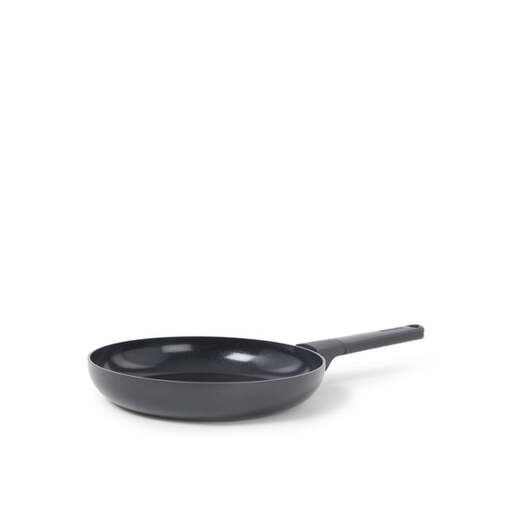
Why it suits this profile: A compact size for everyday cooking, with broad compatibility across electric, gas, ceramic and induction hobs.
The product information lists a ceramic PFAS-free coating and dishwasher-safe construction. Hand-washing is still advisable to protect the coating.
24 cm, aluminium, PFAS-free ceramic coating and a three-year manufacturer’s warranty, according to the product information.
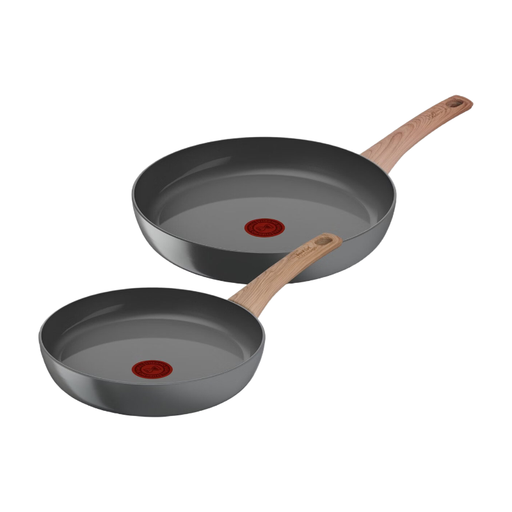
Why it suits this profile: Two popular sizes give you the flexibility to cook small portions and family meals, without having to find two pans separately.
The set lists a PFAS-free ceramic coating and suitability for all heat sources, including induction. The pans are not dishwasher-safe.
24 and 28 cm, recycled aluminium, Thermo-Signal heat indicator and a PFAS-free coating, according to the product description.

Why it suits this profile: Its generous capacity and glass lid make it suitable for stir-frying, stewing, boiling and cooking meals for several people.
The product information lists a composite base for induction, gas, electric and ceramic hobs. Hand-washing is required, so you know what to expect when it comes to care.
30 cm, 304 stainless steel, ceramic coating, honeycomb structure and a toughened glass lid, according to the product description.
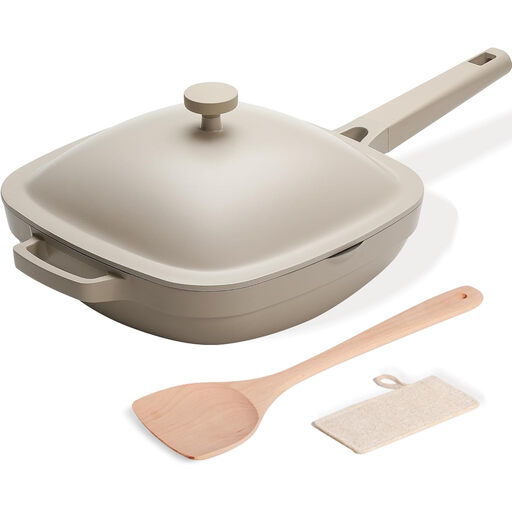
Why it suits this profile: Its deep shape and 3.8-quart capacity are handy for sautéing, stewing and making larger one-pot meals.
The manufacturer lists a PFAS-free ceramic coating and compatibility with all types of hob. The pan is not suitable for the dishwasher or oven.
Deep sauté pan, lid, two pouring spouts, and a wooden spatula and scrubber included, according to the product information.
We’ve put together a complete, up-to-date list of products that meet these strict selection criteria and the applicable European safety regulations.
That depends on the base. A ceramic coating alone doesn’t make a pan suitable for induction. Check whether “induction” is specifically listed among the heat sources, and whether the base fits the cooking zone properly.
Its lifespan depends on how you use it, the temperature, the utensils and how you clean it. A pan that isn’t overheated when empty and is washed by hand may keep its non-stick properties for longer. There’s no set lifespan for every pan; replace it if the coating or handle is visibly damaged.
“PFAS-free” is a claim about the coating material, not a general guarantee of health. Check the product specifications, follow the instructions for use and avoid overheating. That way, you can choose a PFAS-free frying pan based on verifiable product information, without assuming broader claims.
