
Vandaag of morgen in huis

Kwaliteit gegarandeerd

Welkomstaanbiedingen ontgrendelen: GRATIS bezorging | Tot 80% korting | Gratis 30 dagen JoyPlus-proefperiode
Download de app
A ceramic frying pan may seem easy to choose at first glance. However, pans vary considerably in coating, size, heat source and maintenance requirements. A low price may be appealing, but a pan that is unsuitable for your induction hob or quickly loses its non-stick properties can ultimately prove more expensive.
Pay particular attention to these three common pitfalls:
A frying pan with a ceramic coating is usually made from aluminium with a ceramic non-stick layer. Aluminium heats up relatively quickly, while a suitable base ensures compatibility with different types of hob.
If you are looking for a PFAS-free frying pan, PTFE-free pan or PFOA-free pan, it is worth reading the product specifications in full. Look for specific statements such as:
Brand claims about wear resistance, long-lasting non-stick performance or heat resistance come from the product description. Do not therefore treat such claims as a guarantee for every cooking style. The product’s lifespan also depends on temperature, utensils and cleaning methods.
An induction frying pan needs a magnetic base. Also check whether the pan is suitable for gas, electric, ceramic or halogen cooking. “Suitable for all hobs” should be stated in the specifications; do not rely solely on a product photo.
Would you like to sear dishes first and finish them in the oven? Then check:
For example, some Redchef models are stated to be heat-resistant up to 450 °C, but the handle must be removed when using the pan in the oven. The Brabantia Dusk pans have a maximum oven temperature of 200 °C. These values are specific to each product and should not be compared without taking the accompanying conditions into account.
A 20 cm pan is handy for one portion, eggs or an omelette. A 24 cm pan is suitable for many everyday meals for one to three people. For larger families or stir-fries, a size of 26 to 32 cm may be more practical.
Also check whether you need a dishwasher-safe frying pan. Dishwasher-safe does not always mean that this is the best way to care for the pan. For ceramic coatings, preferably use:
A pan set with a removable handle can save considerable cupboard space. The components can often be stacked more compactly, which is useful in a small kitchen, motorhome or caravan. Do check that the handle has clicked firmly into place before lifting a full pan.
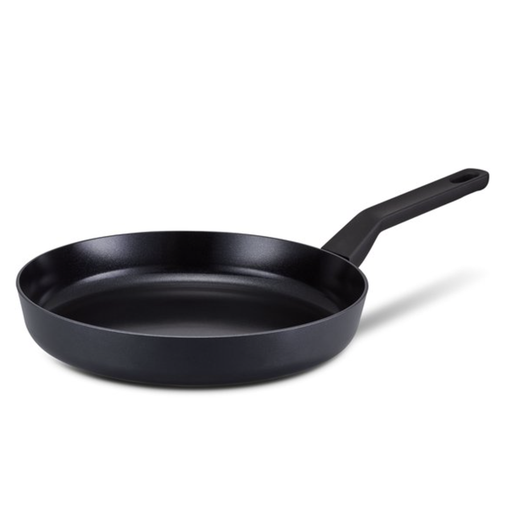
Why it suits this profile: The compact size is suitable for small portions, eggs and everyday cooking. According to the product specifications, the pan is suitable for induction, gas, electric, ceramic and halogen cooking.
The stated PFAS-free ceramic coating and broad hob compatibility make important checks easy to identify.
20 cm diameter, 100% recycled aluminium according to the product description, double ceramic non-stick coating and dishwasher-safe.
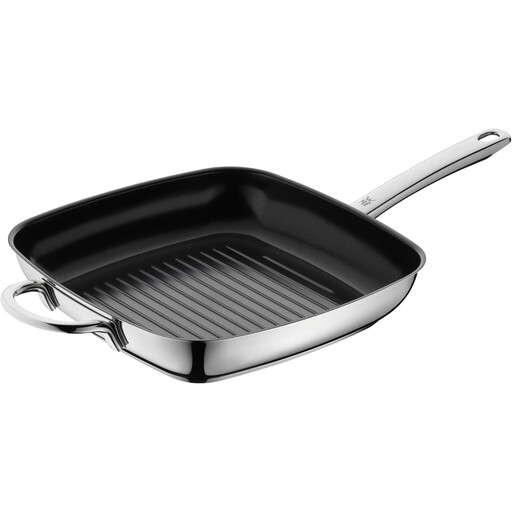
Why it suits this profile: The square 28 x 28 cm grill shape provides room for larger ingredients and creates attractive grill marks. The pan has a Cromargan 18/10 stainless steel construction and an ergonomic handle.
The specifications clearly state that the pan is not dishwasher-safe. This prevents a disappointing purchase for anyone who only wants to wash up using a dishwasher.
Ceramic coating, suitable for all heat sources including induction, oven-safe and fitted with a wide pouring rim.
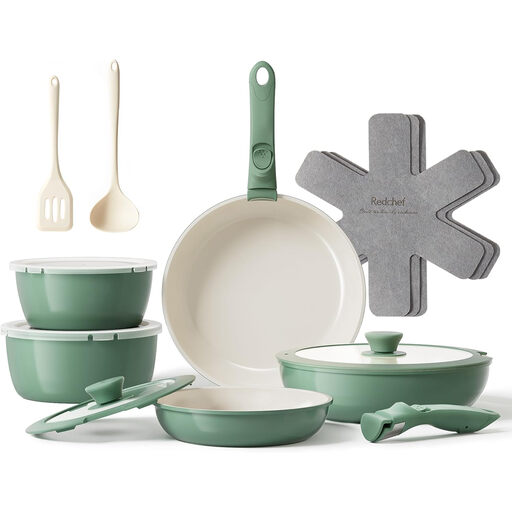
Why it suits this profile: The set combines two saucepans, two frying pans, a removable handle and a pan mat. This is practical for families, small kitchens and use in a motorhome.
The set explicitly states that it is PFAS-, PTFE- and PFOA-free, compatible with induction and stackable. The handle must be removed before using the pans in the oven.
16 pieces, suitable for gas, electric, ceramic and induction cooking, oven-safe according to the product specifications and dishwasher-safe once the handle has been removed.
We have put together a complete, up-to-date list of products that fully meet these strict selection criteria and the applicable European safety regulations.
A ceramic non-stick coating generally remains usable for longer when you avoid putting the pan under unnecessary strain. Do not heat the pan while empty at a high temperature and preferably use low to medium heat. Allow the pan to cool before washing it. Even a durable frying pan can be damaged by metal utensils, abrasive cleaning products or sudden changes in temperature.
Check the handle and coating regularly. Stop using the pan if the coating starts to come away or the handle is no longer securely attached. With a set featuring a removable handle, you should also check that the locking mechanism is fully engaged before moving the pan.
It can be, but not automatically. Check the product specifications to confirm that the pan is explicitly suitable for induction. A magnetic base is essential. Also position the pan correctly on the cooking zone for even heat distribution.
Its service life varies depending on the coating, temperature and care. Use wooden or silicone utensils, avoid overheating and wash the pan carefully. A dishwasher-safe pan can be put in the machine, but several models recommend hand washing to help the coating last longer.
Not necessarily. The pan itself may have a higher purchase price, but everyday use does not require special fuel or accessories. A suitable size that heats up quickly and matches the cooking zone can also help minimise unnecessary heat loss. When buying, focus on the overall combination of size, hob compatibility, maintenance and expected frequency of use.
