
Livraison le jour même et le lendemain

Qualité garantie

Débloquez vos offres de bienvenue: Livraison GRATUITE | Jusqu'à -80 % | 30 jours d'essai gratuits à JoyPlus
Téléchargez l'application
A ceramic frying pan may seem straightforward to choose at first glance. However, pans vary considerably in terms of coating, size, heat source and care requirements. A low price can be tempting, but a pan that is not suitable for induction or quickly loses its non-stick properties can soon become frustrating to use.
So look beyond words such as “non-stick” or “healthy”. Below, you’ll find out which features can be verified, which marketing claims require extra attention and which models suit different cooking styles.
A PFAS-free frying pan is an important purchasing criterion for many households. However, check whether the product information explicitly states that the coating is free from PFAS, PTFE or PFOA. A general term such as “non-toxic” says little by itself about the exact composition.
For the models below, we refer to the product specifications. According to the product information from Brabantia, Redchef and Tefal, among others, the ceramic coatings mentioned have a PFAS-free formulation. This is a product claim made by the brand or manufacturer, not a general guarantee for every ceramic non-stick frying pan.
A ceramic coating can also be damaged by:
A non-stick frying pan is generally more pleasant to use when you cook at a moderate temperature and use wooden, silicone or plastic utensils. Non-stick performance is not a permanent feature either: wear and tear depend on use, heat and maintenance.
A 24 cm pan is practical for an omelette, vegetables or a meal for one to three people. For a family, 28 to 32 cm or a deep sauté pan is often more convenient. With an induction frying pan, also check the diameter of the magnetic base. A large pan may have a relatively small effective induction zone.
Also check whether the pan is oven-safe. A plastic or Bakelite handle is not automatically suitable for oven use. Always check the maximum temperature and whether the manufacturer describes the pan as an oven-safe frying pan.
Ceramic coatings are usually applied to aluminium, cast aluminium or stainless steel. Aluminium heats up quickly and is relatively light. A thicker or forged base can distribute heat more evenly, but may make the pan heavier.
Look for the following information:
A “healthy frying pan” is not an officially defined product category. So use the term mainly as a search term and base your choice on specific information about materials and care.
Choose the diameter based on your usual portions:
A frying pan with a lid is more versatile, but takes up more space. A ceramic wok pan has higher sides and is suitable for vegetables, noodles and stir-fries.
“Dishwasher-safe” does not mean that the coating will last indefinitely in the dishwasher. Manufacturers often recommend hand-washing to preserve the ceramic layer for longer. Allow the pan to cool first, use warm water with mild washing-up liquid and dry it thoroughly.
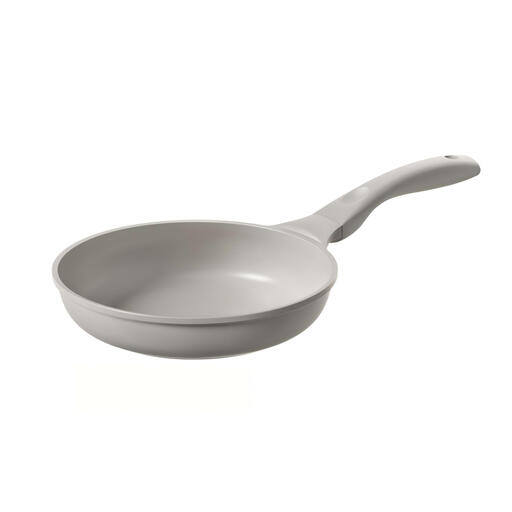
Why it suits this profile: A compact size for everyday portions, eggs and vegetables. According to the product information, the ceramic coating is free from PTFE, PFOA and PFAS, and the pan works on induction, gas and electric hobs.
The specifications mention both the coating and the compatible heat sources. This means you don’t have to rely solely on the term “non-stick”.
24 cm, induction-compatible, ergonomic Bakelite handle and dishwasher-safe according to the product information.

Why it suits this profile: Suitable for anyone who values certified recycled materials, a securely attached handle and use on different types of hob.
The product description mentions a PFAS-free ceramic coating, RCS-certified recycled aluminium and an oven limit of 200 °C.
24 cm, suitable for induction and dishwasher- and oven-safe up to 200 °C according to the product information.
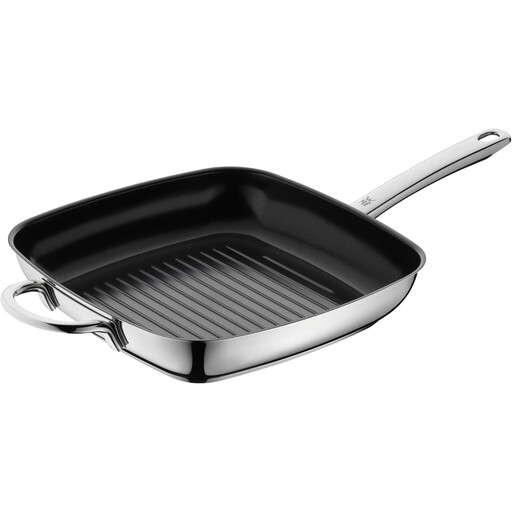
Why it suits this profile: A 28 cm square grill pan for steaks, vegetables and distinctive grill marks. According to the product information, the pan is suitable for all heat sources, including induction.
The product specifications state the dimensions, material and induction compatibility. The pan is not dishwasher-safe, which you can take into account before making your choice.
28 × 28 cm, ceramic coating, Cromargan 18/10 stainless steel and a wide pouring rim.
We’ve put together a complete, up-to-date list of products that fully meet these strict selection criteria and the applicable European safety regulations.
This varies from model to model. Ceramic itself does not make a pan induction-compatible. A magnetic base is required for that. So always check the product specifications for the statement “suitable for induction”.
Its lifespan depends on temperature, frequency of use and maintenance. Do not use metal utensils, do not heat the pan while empty and avoid abrasive cleaning. Hand-washing can help keep the coating in good condition for longer than regular dishwasher use.
“Healthy” is not a technical guarantee. According to the product information, manufacturers may state that their coating is PFAS-free, PTFE-free or PFOA-free. Check the specific claim and follow the use and care instructions. A ceramic pan without PFAS is still susceptible to overheating and damage.
