
Vandaag of morgen in huis

Kwaliteit gegarandeerd

Welkomstaanbiedingen ontgrendelen: GRATIS bezorging | Tot 80% korting | Gratis 30 dagen JoyPlus-proefperiode
Download de app
A ceramic frying pan for induction might seem easy to choose on paper. In practice, pans vary considerably in their base, coating, size and care requirements. A pan that works on an induction hob isn’t automatically right for the way you cook.
There are three common pitfalls to watch out for:
A ceramic non-stick pan typically has a ceramic layer on an aluminium, stainless steel or composite base. Aluminium heats up quickly, while induction may require a stainless steel or magnetic base.
Look out for these terms:
According to the product information, for example, Brabantia Onyx and Dusk pans have a PFAS-free ceramic coating. Redchef pans are described in their product specifications as free from PFAS, PTFE and PFOA. This information comes from the product descriptions; it isn’t an independent laboratory assessment.
An induction frying pan needs a magnetic base and must sit flat on the cooking zone. If you use more than one type of hob, check whether the pan is also suitable for gas, electric, ceramic and halogen cooking.
The size determines how practical the pan is:
A pan that’s too large for a small cooking zone may heat unevenly. A pan that’s too small can be awkward when you’re cooking for several people.
A dishwasher-safe frying pan is convenient, but ceramic coatings often stay in good condition for longer if you wash them by hand with a soft sponge. Let the pan cool first and avoid moving it suddenly from hot to cold water.
When choosing an oven-safe frying pan, always check:
For ceramic coatings, it’s best to use wooden, silicone or plastic utensils. Avoid preheating an empty pan for a long time. For example, the product information for the Cooker King wok explicitly says not to heat the pan while empty, but to add oil or ingredients first.
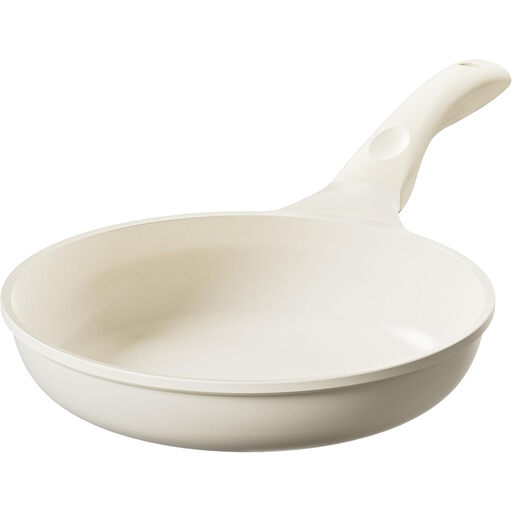
Why it suits this profile: The 24 cm size is ideal for everyday use and, according to the product information, the pan is compatible with induction, gas and electric hobs.
The product specifications identify the ceramic coating and compatibility with several heat sources. Avoid metal utensils to help prevent scratches.
24 cm, ergonomic handle and, according to the product information, free from PTFE, PFOA and PFAS.

Why it suits this profile: The 20 and 24 cm pans cover small portions and everyday cooking, without you needing to buy a complete ceramic cookware set straight away.
The product information specifies a PFAS-free ceramic coating, suitability for induction and an oven limit of 200 °C. This makes the key conditions for use clear.
Two sizes, recycled aluminium according to the product specifications, dishwasher-safe and suitable for oven use up to 200 °C.
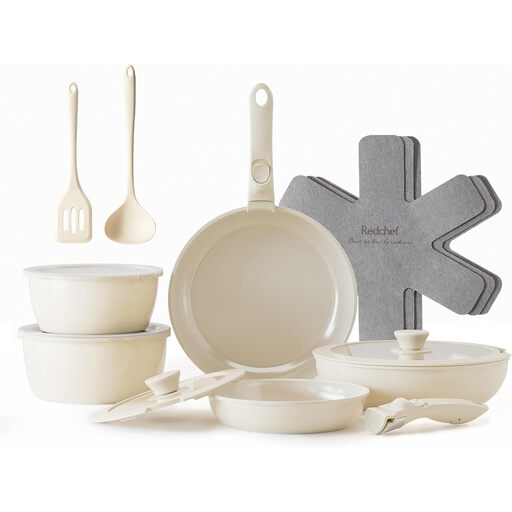
Why it suits this profile: The detachable handle and stackable design are practical for small kitchens, campervans and anyone who moves between the hob, oven and fridge.
The product information explicitly states that it is compatible with induction, gas and electric cooking, and suitable for dishwasher and oven use. The handle must be removed before oven use, in line with the safety instructions.
16-piece set, stackable design, detachable handle and, according to the product information, free from PFAS, PTFE, PFOA, lead and cadmium.
We’ve put together a complete, up-to-date list of products that meet these strict selection criteria and the applicable European safety regulations.
A ceramic coating doesn’t need complicated care, but it does benefit from consistent use:
So, a durable frying pan isn’t just about the material. The size, heat source and the way you care for it also affect how long you can use it.
No. Check that the product information explicitly states that it’s suitable for induction. A pan with an aluminium base alone won’t automatically work on an induction hob. Look for terms such as “induction compatible”, “suitable for induction” or a magnetic base.
Its lifespan depends on how you use and care for it, as well as the temperature. Overheating, metal utensils and abrasive cleaning can damage the coating more quickly. Hand washing and cooking on a low to medium setting can help extend its useful life, but they’re no guarantee.
According to the product information, some models are dishwasher-safe, including several Brabantia and Redchef products. Other models, including the Tefal Ceramic Renew set and WMF Durado grill pan, aren’t dishwasher-safe. Always check the product specifications and any conditions relating to the handle.
