
Vandaag of morgen in huis

Kwaliteit gegarandeerd

Welkomstaanbiedingen ontgrendelen: GRATIS bezorging | Tot 80% korting | Gratis 30 dagen JoyPlus-proefperiode
Download de app
A ceramic induction frying pan may seem straightforward to choose at first glance. However, pans vary considerably in size, base, coating and care requirements. An attractive pan can disappoint in practice if the base does not align properly with your induction zone, the pan is too small for your household or the non-stick coating is easily damaged.
As a Joybuy Product Recommendation Officer, I filter product information based on verifiable features. This makes it easier to see which ceramic frying pan suits your kitchen and cooking habits.
A pan may be described as suitable for induction, but the diameter of the base is still important. A cooking zone works more efficiently when the pan is properly centred and the base covers most of the zone. So don’t just look at the diameter at the top; check the base diameter too.
For example, a 24 cm frying pan may have a smaller effective base. This matters on an induction hob with a large cooking zone.
Many products marketed as ceramic frying pans have an aluminium pan body with a ceramic non-stick coating. This is different from a pan made entirely from ceramic. Aluminium often provides a low weight and rapid heat conduction, while the ceramic coating forms the cooking surface.
So check the material specification carefully. If it lists aluminium, ceramic and stainless steel, it usually means coated metal. You can also view our range of fully ceramic frying pans if you are specifically looking for this type.
According to the product descriptions of the selected models, several coatings are free from PFAS, PTFE and/or PFOA. This is useful information for anyone looking for a PFAS-free frying pan. However, the claim should always be linked to the specific product and manufacturer, so check the current product information before buying.
A PFAS-free frying pan can still be damaged by metal utensils, abrasive sponges or prolonged heating without ingredients. Ceramic coatings generally remain usable for longer when used at low to medium temperatures.
Choose the size based on your portions:
A 24 cm frying pan is a useful medium size for many Dutch households. For a family, a second 28 cm pan can be handy.
Pay attention to the exact description of the coating. Products in this selection include ceramic coatings that, according to the product descriptions, are free from PFAS, PFOA or PTFE. Naturepan also states that its ceramic coating is reinforced with diamond and titanium particles. Brabantia states that its product has a PFAS-free ceramic double non-stick coating.
This does not mean that you do not need to use oil. The product information says that only a small amount of oil may be needed, but a little oil can help with cooking and preserving the coating. Use wooden, silicone or plastic utensils, and allow the pan to cool before washing it.
A frying pan suitable for all heat sources can be used on induction, gas, electric, ceramic and sometimes halogen hobs. Check this for each model. Oven suitability also varies:
So, “dishwasher-safe frying pan” does not automatically mean that the dishwasher is the best choice for everyday care.
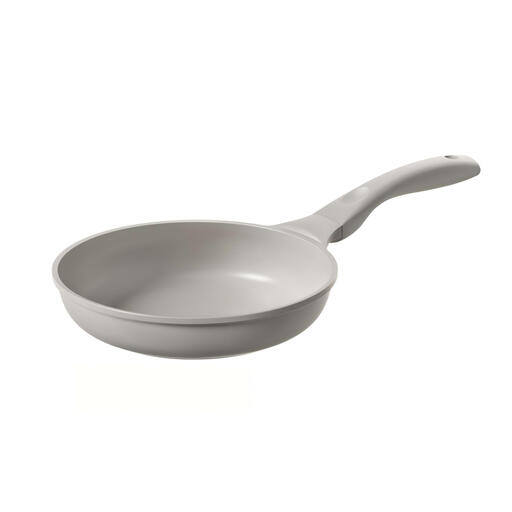
Why it suits this profile: This 24 cm model is designed for everyday cooking of eggs, meat and noodles. According to the product description, the pan is suitable for induction, gas and electric hobs.
The product description explicitly mentions a PTFE-, PFOA- and PFAS-free ceramic coating and compatibility with multiple heat sources. Always check this against the current product listing.
24 cm, ergonomic Bakelite handle, dishwasher-safe according to the product information and suitable for induction.
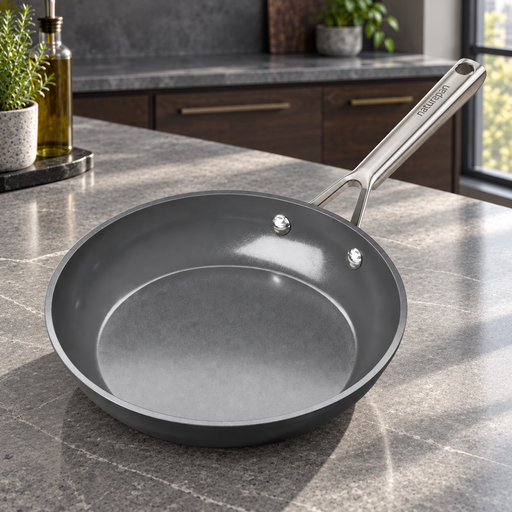
Why it suits this profile: The 24 cm pan is designed for meals for two to three people and combines an aluminium body with a ceramic coating that, according to the product description, is reinforced with diamond and titanium.
The specifications state the base diameter, heat sources and maximum oven temperature. This makes it easier to match the pan to your hob and intended use.
Base diameter 19.1 cm, suitable for induction and, according to the product description, oven-safe up to 260 °C and dishwasher-safe.
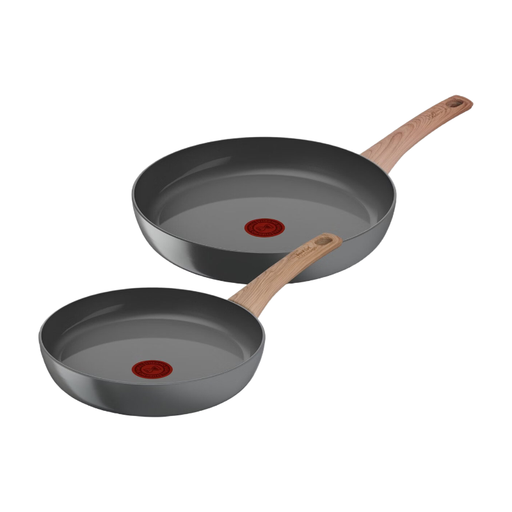
Why it suits this profile: Two sizes are practical when you regularly prepare different quantities. According to the product description, the set has a PFAS-free ceramic coating and a Thermo-Signal heat indicator.
The set explicitly states that it is compatible with induction and that hand washing is required. This helps prevent dishwasher use from putting unnecessary strain on the coating.
Two popular sizes, 100% recycled aluminium according to the product information and suitable for all the stated heat sources.
We have compiled a complete, up-to-date list of products that fully meet these strict selection criteria and the applicable European safety requirements.
A ceramic pan is not a substitute for careful cooking. Even a so-called healthy frying pan remains dependent on temperature, ingredients and maintenance.
No. Only models with a magnetic, induction-compatible base work on induction hobs. Always check the listed heat sources and pay attention to the base diameter. A product suitable for gas or electric hobs is not automatically suitable for induction.
Its lifespan depends on how it is used, the temperature and how it is cared for. Overheating, metal utensils and abrasive cleaning can damage the non-stick coating more quickly. Hand washing with a soft sponge can help protect the coating, even when the product description allows dishwasher use.
According to product descriptions, some ceramic coatings allow you to cook with little oil. However, cooking completely without oil is not practical for every dish or cooking technique. A small amount of oil can help with cooking and with releasing food from the pan.
