
Vandaag of morgen in huis

Kwaliteit gegarandeerd

Welkomstaanbiedingen ontgrendelen: GRATIS bezorging | Tot 80% korting | Gratis 30 dagen JoyPlus-proefperiode
Download de app
Buying a new frying pan seems simple—until you've used it for a few weeks. The pan that looked so promising in the store suddenly warps on your induction cooktop, or your perfectly fried egg sticks stubbornly to the surface. Sound familiar? Many pans are sold with appealing marketing terms but quickly fail in practice.
As a Joybuy Product Recommendation Officer, I'm here to help you cut through the marketing jargon. Before you purchase a new ceramic frying pan for induction, it's important to be aware of a few common pitfalls. This will help you avoid a bad purchase and choose a pan you'll enjoy for years to come.
You don't need to be a materials scientist to buy the right frying pan. Pay attention to the following three practical points, and you'll make a much better choice.
For induction, you need a pan with a magnetisable (ferromagnetic) base. Most ceramic pans have an aluminum core for fast, even heat distribution. The key to success on induction is a thick, warp-resistant base that can handle rapid temperature changes without deforming. Always check that the product description explicitly states "suitable for induction" and look for terms like "forged aluminum" or "cast aluminum," which often indicate a sturdier construction.
A good ceramic coating is at the heart of a great cooking experience. These layers are made from natural materials (sand) and do not contain harmful substances. This makes them a popular choice for anyone seeking a PFAS-free frying pan. Some pans feature multiple layers of coating, which manufacturers claim can improve durability and non-stick performance. Remember, however, that every non-stick coating requires careful maintenance: use wooden or silicone utensils and avoid overheating.
Think about how you will use the pan. A 28 cm frying pan is a popular size for families, while a 20 or 24 cm pan is often sufficient for one or two-person households. Do you want to finish a dish in the oven after searing? Then choose an oven-safe frying pan. Pay close attention to the handle material; stainless steel handles can often go in the oven, whereas wooden or plastic handles usually cannot. A pan with higher sides, also known as a sauté pan for induction, is useful for sauces or one-pan meals.
Based on these criteria, we have selected a number of pans that suit different user profiles.
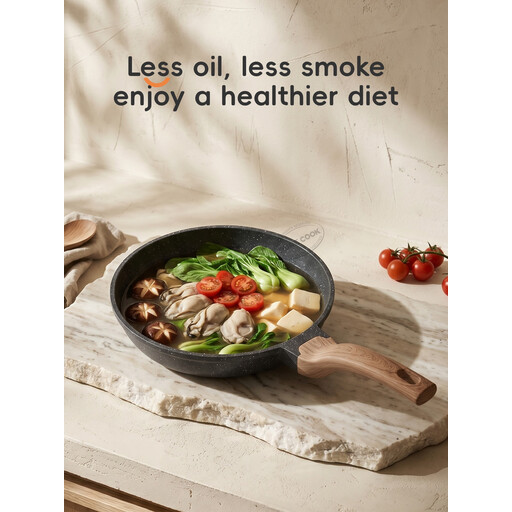
Why This Fits Their Persona: A practical all-rounder for daily meals. The 24 cm size is ideal for 2-3 people. The pan is lightweight, and the wooden handle provides a comfortable grip, making it easy to cook a quick meal after a long day at work.
The aluminum body is designed for fast and even heat conduction on all heat sources, including induction, which reduces the risk of warping.
Universal compatibility (induction, gas, ceramic) and a lightweight design make this a very accessible pan for everyday use.
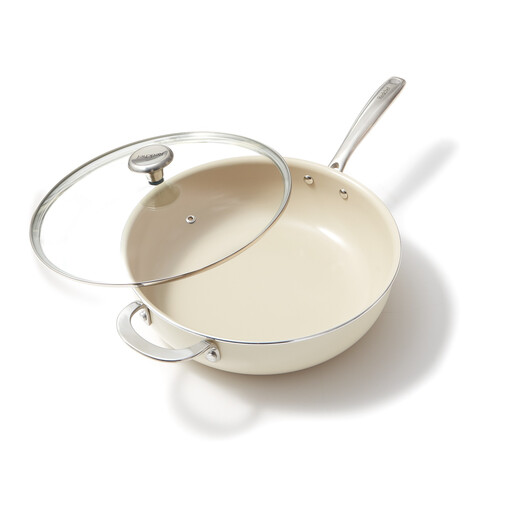
Why This Fits Their Persona: For those who love to experiment and want to get more out of their pan. This large sauté pan is perfect for searing meat, making stews, or creating one-pan pasta dishes. The stainless steel handle means the pan can go straight into the oven.
The heavy-duty cast aluminum construction is highly warp-resistant and prevents buckling on induction. The manufacturer specifies that the coating is free of PFAS, PTFE, PFOA, lead, and cadmium, thus avoiding the "PFAS-free" pitfall.
Highly versatile: suitable for all heat sources and oven-safe up to 450°C. Its large capacity (4.7 litres) is ideal for larger families or cooking for guests.
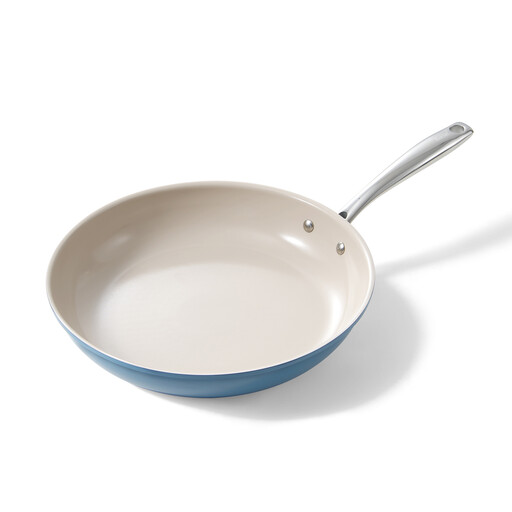
Why This Fits Their Persona: Perfect for those who cook for one or two people and value non-toxic materials. Its compact size is ideal for frying an egg or sautéing vegetables, with the peace of mind that comes from a coating free of harmful chemicals.
According to the manufacturer, the triple-layer ceramic coating is reinforced for enhanced durability. The specially designed base ensures fast and even heat distribution on induction, preventing hot spots and sticking.
The combination of a compact size, a robust triple-layer ceramic coating, and oven-safe properties makes this pan a durable and healthy choice for smaller households.
We have compiled a complete, up-to-date list of products that fully meet these strict selection criteria and safety regulations.
The lifespan of a ceramic coating depends heavily on use and maintenance. With proper care, a high-quality pan can last for several years. The most important tips are:
If a pan doesn't heat up properly or works intermittently on an induction cooktop, there are two likely causes. Either the pan does not have a magnetic base and is therefore not suitable for induction (check for the induction symbol, a coil icon). Or, the base has warped, preventing it from making proper contact with the cooktop. Therefore, always choose a pan with a sturdy, flat base that is explicitly marked as suitable for induction.
Ceramic coatings are generally considered a healthy choice because they are manufactured without the use of PFAS (such as PFOA and PTFE), lead, or cadmium. This means there is no risk of these substances leaching into your food at high temperatures. This makes it a reassuring option for everyday cooking.
