
Vandaag of morgen in huis

Kwaliteit gegarandeerd

Welkomstaanbiedingen ontgrendelen: GRATIS bezorging | Tot 80% korting | Gratis 30 dagen JoyPlus-proefperiode
Download de app
A ceramic frying pan for induction can be handy for everyday cooking, but not every pan with a ceramic coating will suit your hob, household or cleaning routine. Terms like “titanium”, “non-stick” and “PFAS-free” in particular call for a close look at the product specifications.
For British households, there are three key pitfalls to watch out for:
Look in the specifications for induction, not just “suitable for all hobs”. That broader description should ideally be backed up by a concrete list, such as induction, gas, electric and ceramic.
A frying pan suitable for all hobs is practical if you move house, use multiple hobs or want to take a pan in a campervan. Also watch out for exceptions. Some pans work on induction and gas but not on halogen or infrared. Other models aren’t suitable for induction at all, despite a similar product name.
The base must sit flat on the cooking zone. A base that’s too small may heat less efficiently, while a warped pan will make uneven contact with the hob.
A ceramic frying pan with non-stick coating can consist of several layers. In the product information you might see aluminium with a Ti-Ceramic coating, a stainless steel exterior, or a combination of ceramic with diamond and titanium particles.
A “titanium ceramic frying pan” doesn’t always describe a pan made of titanium. It’s often a ceramic layer with titanium particles mixed in, or one that the manufacturer claims has been reinforced with titanium. So check:
With a PFAS-free frying pan or PFOA-free frying pan, the wording in the product information matters. Attribute claims like “PFAS-free”, “PFOA-free” or “PTFE-free” to the manufacturer or product listing, rather than presenting them as a general safety conclusion yourself.
For one person or a small kitchen, 20 to 24 cm is usually manageable. A pan of 26 to 28 cm gives you more room for vegetables, potatoes or multiple portions. A deep pan with a lid also works as a ceramic sauté pan with lid for sauces, stews and one-pot meals.
Also pay attention to:
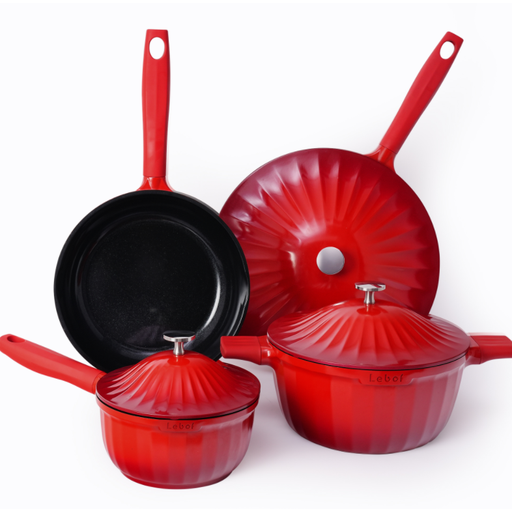
Why this fits the profile: This ceramic cookware set includes two frying pans, two saucepans and a sauté pan with lid. That’s practical if you need multiple pans without buying each piece separately.
The listed specifications mention induction and other hobs separately. PFAS-, PFOA- and PTFE-free are also stated according to the product information. The set is not suitable for the oven.
7-piece set, aluminium with Ti-Ceramic coating and dishwasher-safe according to the product listing.
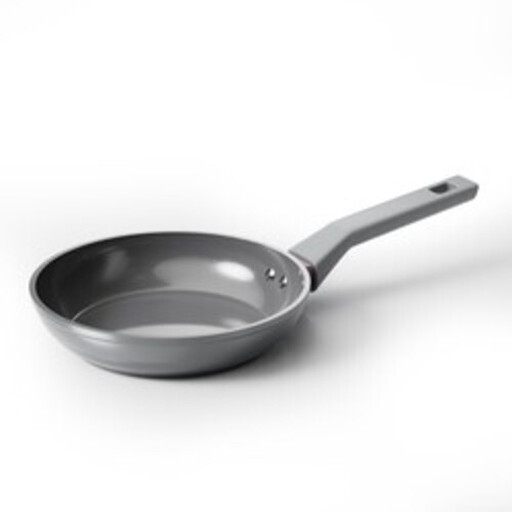
Why this fits the profile: A compact pan for those who value a multi-layer base, easy cleaning and daily cooking on different heat sources.
The product information lists induction, gas, electric and ceramic as suitable hobs. According to the manufacturer, the coating is PFAS- and PFOA-free; use wooden, silicone or plastic spatulas.
20 cm size, diamond-titanium ceramic coating, dishwasher-safe according to the product description and not suitable for oven or microwave.
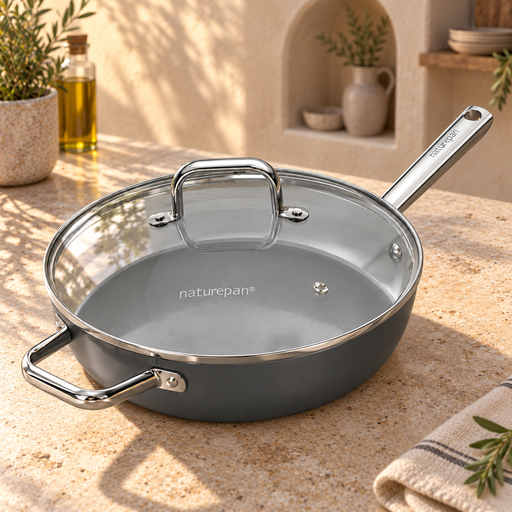
Why this fits the profile: The high sides and included lid are suitable for larger portions, sauces, stews and one-pot meals for families.
Hob compatibility is specified for induction, gas, electric and ceramic. For oven use, the lid must be removed; the stated maximum oven temperature is 260 °C.
28 cm diameter, high sides, glass lid and PFAS-, PFOA- and PTFE-free coating according to the product information.
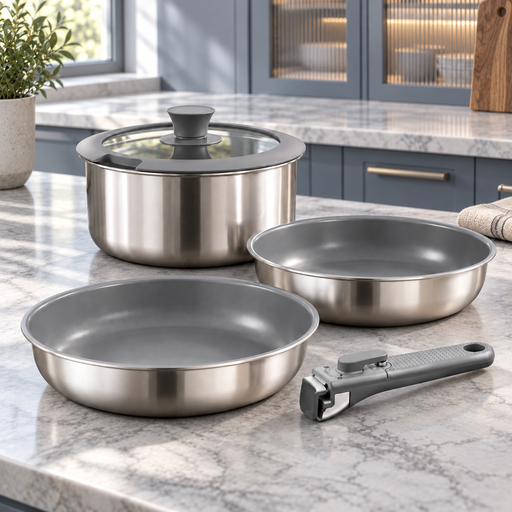
Why this fits the profile: The detachable handle and stackable design are practical for a small kitchen, student room, campervan or caravan.
The set states induction compatibility, dishwasher safety and oven use up to 250 °C for the handles. Always check that the handle is securely locked before lifting.
Two frying pans, saucepan, lid and detachable handle; designed for space-saving storage according to the product information.
We’ve put together a full, up-to-date list of products that fully meet these strict selection criteria and current European safety regulations.
A durable frying pan doesn’t depend only on the material. Use the pan on low to medium heat where possible and don’t leave it empty on a hot induction zone for long periods. Choose wooden, silicone or plastic spatulas instead of metal utensils.
After cooking, let the pan cool down before washing it. A soft sponge and mild washing-up liquid will put less strain on the coating. Even if a model is dishwasher-safe, hand washing can help keep the finish looking good for longer. Store pans with some space between them or with a protective layer, so the cooking surfaces don’t rub against each other.
No. Check that “induction” is explicitly stated in the product specifications. A ceramic coating on its own says nothing about whether it will work on induction. An aluminium pan in particular needs a suitable magnetic base.
The lifespan varies depending on the coating, how often you use it, the temperature and your cleaning method. Prolonged empty heating, metal spatulas and harsh cleaning can damage the layer more quickly. So use low to medium heat and follow the manufacturer’s care instructions.
No. PFAS-free describes a material claim from the product information, but it doesn’t prevent a pan from wearing out. Even a PFAS-free ceramic frying pan needs careful use, suitable spatulas and thorough cleaning.
