
Vandaag of morgen in huis

Kwaliteit gegarandeerd

Welkomstaanbiedingen ontgrendelen: GRATIS bezorging | Tot 80% korting | Gratis 30 dagen JoyPlus-proefperiode
Download de app
A ceramic frying pan might seem straightforward to choose on paper. Yet two pans with the same diameter can perform very differently on an induction hob, when frying eggs or during cleaning. A smooth coating, a sturdy base and the right size matter far more than flashy marketing claims.
Pay particular attention to three common pitfalls:
If you are looking for a PFAS-free frying pan, you need to check the full product description. Look for specific mentions such as PFAS-free, PFOS-free, PFOA-free or PTFE-free. These terms describe the stated composition of the coating; they do not automatically tell you how long the non-stick performance will last in your kitchen.
According to the product information from various brands in this range, the ceramic coatings are free from certain substances. Use this information as a selection criterion, but also look at the care instructions. A ceramic coating generally performs better when you:
For a ceramic frying pan for induction, you need a magnetic base. A stainless steel or stainless steel-clad base can help with this. Also check whether the pan is suitable for your other heat sources, such as gas, electric, ceramic or halogen.
A thicker base can distribute heat more evenly, but can also make the pan heavier. The BUYDEEM pan has a base of 5.5 mm and a stainless steel bottom layer, according to the product description. The SENSARTE models use a magnetic stainless steel base, according to the product information. These are verifiable specifications that are more relevant than a general claim about “faster cooking”.
A pan of 20 to 24 cm is ideal for single portions, eggs, omelettes and small side dishes. A diameter of 26 to 28 cm offers more space for meat, fish, vegetables or a meal for several people. A deep pan with a lid can be more practical for stir-frying, sauces and stews.
Also consider the weight, the handle and your storage space. A heavy pan can sit steadily on the hob, but is less comfortable if you regularly need to toss ingredients. A ceramic sauté pan with a lid is suitable if you want to simmer as well as fry. Do check whether the pan is ovenproof; this is not stated for every model.
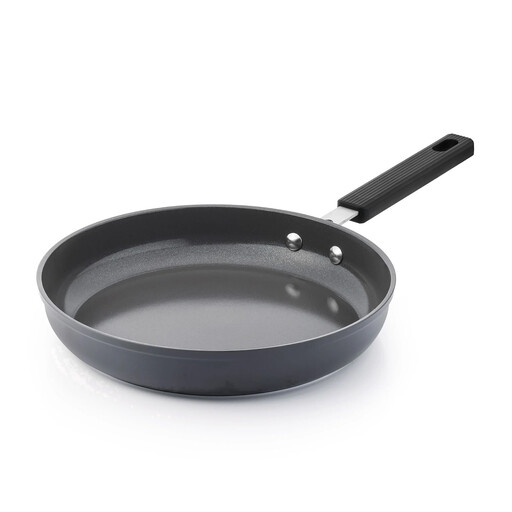
Why this fits the profile: The 24 cm size is practical for eggs, omelettes and everyday portions. According to the product description, this pan is suitable for induction, gas, electric and ceramic hobs.
The product information specifically mentions the heat sources and a PFAS-free, lead-free and cadmium-free ceramic coating. Hand washing and soft utensils are recommended.
24 cm diameter, non-stick coating according to the product description and a heat-resistant handle.

Why this fits the profile: According to the product description, this pan combines 100% recycled forged aluminium with a PFAS-free ceramic coating. The pan is suitable for all listed heat sources and for oven use up to 200 °C.
The specifications list both induction compatibility and the maximum oven temperature. This means you do not have to rely on a general claim about versatility.
Recycled aluminium, 24 cm diameter, oven-safe up to 200 °C and dishwasher-safe according to the product information.
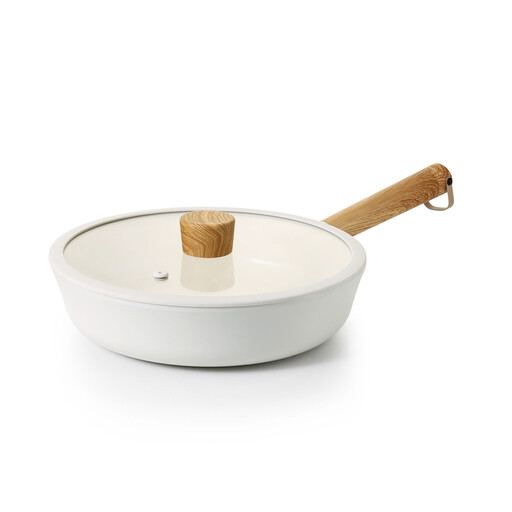
Why this fits the profile: The deep shape and included glass lid are ideal for stir-frying, simmering and larger portions. According to the product description, the pan works on induction, gas, electric, ceramic and halogen hobs.
The product description specifies the diameter, the lid, the magnetic base and the compatible heat sources. Hand washing is recommended to protect the coating.
28 cm size, deep pan, glass lid and ceramic coating according to the stated specifications.
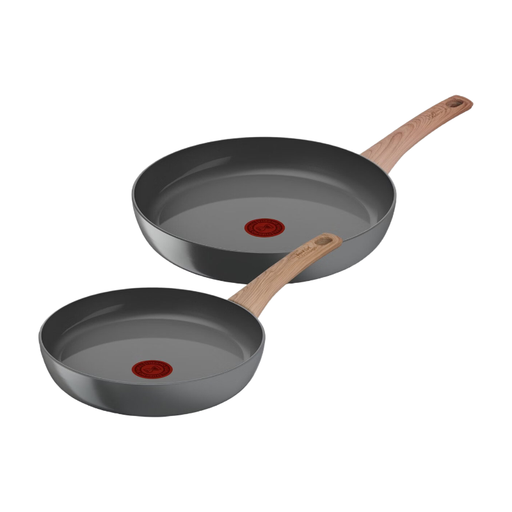
Why this fits the profile: According to the product description, the set includes pans of 24 and 28 cm, made from 100% recycled aluminium. Both sizes are useful for different portions and cooking tasks.
The set explicitly states a PFAS-free ceramic coating and suitability for induction. The product information also indicates that hand washing is recommended and that the pans are not dishwasher-safe.
Two diameters, recycled aluminium, PFAS-free coating according to the product description and a heat indicator.
We have put together a full, up-to-date list of products that fully meet these strict selection criteria and comply with current European safety regulations.
A ceramic pan does not require complicated care, but it does need consistent use:
A dishwasher-safe frying pan may go in the dishwasher according to the product information, but hand washing remains the recommended method for many models. Always follow the instructions for your specific product.
It can be, but not every ceramic pan works automatically on induction. Check that “induction” is explicitly mentioned and look to see whether the pan has a magnetic base. A pan that is only suitable for gas, electric or ceramic hobs will not work on an induction hob.
The lifespan depends on temperature, cleaning and utensils. Overheating, metal spatulas and abrasive sponges can damage the coating more quickly. Therefore, use soft materials and replace the pan when the layer visibly peels or becomes damaged.
Some models are dishwasher-safe, such as certain Brabantia, SENSARTE and Redchef models according to their product descriptions. Other pans, including the Tefal Ceramic Renew set mentioned, are not. Always check this per product and choose hand washing if you want to protect the coating for as long as possible.
