
Vandaag of morgen in huis

Kwaliteit gegarandeerd

Welkomstaanbiedingen ontgrendelen: GRATIS bezorging | Tot 80% korting | Gratis 30 dagen JoyPlus-proefperiode
Download de app
A ceramic frying pan may seem straightforward to choose on paper. In practice, pans vary considerably in coating, base, size, care requirements and suitability for induction hobs. A low price can be tempting, but a pan that sticks quickly or warps may need replacing sooner than expected.
So do not rely solely on terms such as “healthy”, “durable” or “extra strong”. Always check the product specifications and consider how you will actually use the pan.
A PFAS-free frying pan may have a ceramic coating, but that does not mean the non-stick layer is resistant to wear. Metal utensils, high temperatures and abrasive cleaning products can damage the coating. Use wooden, silicone or plastic utensils unless the manufacturer gives different instructions.
Brands may promote the properties of their coatings, but do not treat these claims as a guarantee of a particular lifespan. According to Brabantia’s product information, some Onyx models have a PFAS-free ceramic double non-stick coating. The manufacturer also recommends hand washing to help extend the coating’s lifespan.
A 24 cm frying pan is practical for one or two portions, eggs and smaller dishes. A 28 cm frying pan offers more space for families, vegetables or several pieces of meat. However, diameter does not tell you everything: the flat base may be smaller than the upper rim.
This is particularly important on induction hobs. Check that the base diameter matches the cooking zone. A pan that is too small or not positioned centrally may heat less evenly.
“Dishwasher-safe” means that, according to the product specifications, the pan can be put in the dishwasher. It does not automatically mean that the coating will remain unaffected in the long term. Hand washing with a soft sponge and mild washing-up liquid is usually the gentler option.
Also check the oven suitability. A pan with a plastic or Bakelite handle is not always suitable for oven use. A model with a metal handle may be better suited, but always check the maximum temperature.
Look for a clear description of the non-stick layer. For a PFAS-free frying pan, the product information should explicitly state that the coating is PFAS-free. Some brands also mention PTFE, PFOA, lead or cadmium. These terms do not all mean the same thing, so compare the information carefully.
A ceramic non-stick pan can help you cook with less oil because ingredients come away more easily. This is a usage benefit, not a medical claim. According to their own product information, various models mentioned from Tefal, Brabantia and Redchef feature a PFAS-free ceramic coating.
For an induction frying pan, the base must be magnetically suitable. Check whether it explicitly states that the pan is suitable for induction, gas and electric hobs. A model suitable for gas is not automatically suitable for induction.
For example:
A 20 or 24 cm pan is suitable for smaller portions. For a household with several people, 28 cm is often more practical. A deep pan, such as a sauté pan with a ceramic coating, is suitable for sauces, stews and dishes containing lots of ingredients.
A ceramic wok pan offers extra height for stir-frying. A deep sauté pan with a lid is more convenient for simmering and one-pan dishes. Bear the weight in mind: a large metal pan may be stable, but less comfortable to lift with one hand.
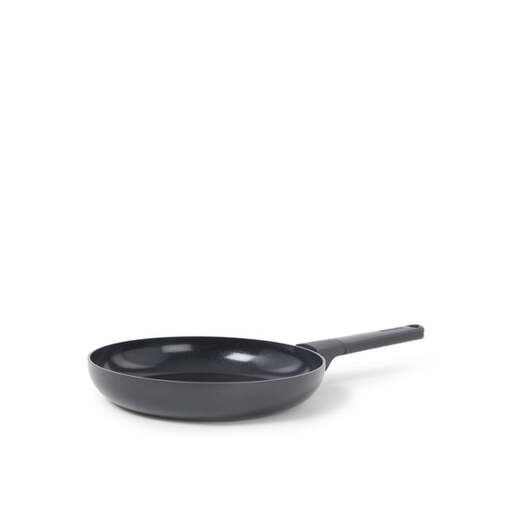
Why it suits this profile: The compact size is suitable for everyday portions and, according to the product information, the pan is suitable for induction, gas, electric and ceramic hobs.
The specifications explicitly state that it is PFAS-free, has a ceramic non-stick coating and is dishwasher-safe. According to the product information, hand washing remains an option for caring for the pan carefully.
24 cm, aluminium, PFAS-free ceramic coating, suitable for several types of hob and supplied with a 3-year manufacturer’s warranty according to the product listing.
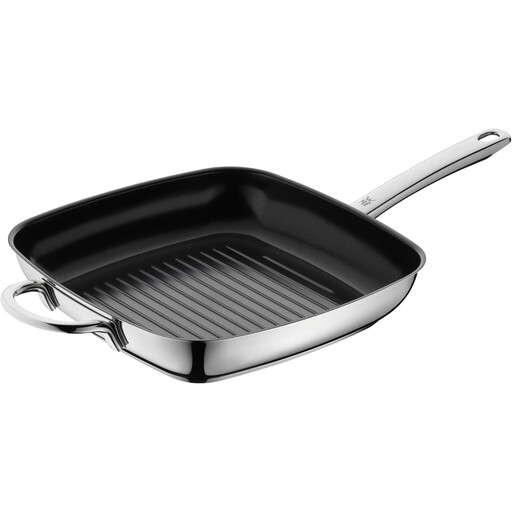
Why it suits this profile: This grill pan is made from Cromargan 18/10 stainless steel, has a ceramic coating and is suitable for all heat sources, including induction.
The key limitations are clearly stated: the pan is not dishwasher-safe and requires hand washing. This makes it clear in advance what care is needed.
Square 28 x 28 cm grill design, wide pouring rim, ergonomic handle and suitability for all heat sources.
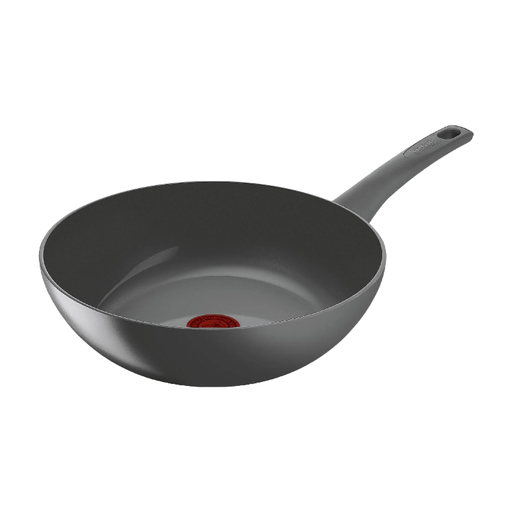
Why it suits this profile: The wok shape provides room for stir-fries, vegetables and noodles. According to the product information, the pan is made from recycled aluminium and is suitable for induction.
The product information states that the Inoceram coating is free from PTFE, lead and cadmium. The pan is not dishwasher-safe; hand washing removes any uncertainty about its care requirements.
28 cm, Thermo-Signal indicator, Thermo-Fusion base and a pan body made from 100% recycled aluminium, according to the manufacturer.
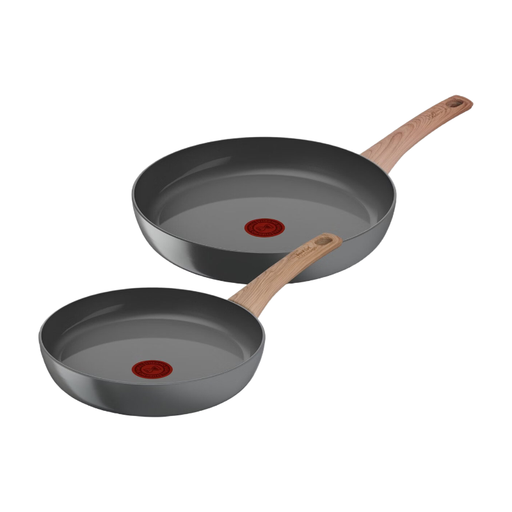
Why it suits this profile: The two sizes cover smaller portions and family meals. According to Tefal, both pans are suitable for all heat sources, including induction.
The set clearly states the coating type, the two diameters and hob compatibility. The pans are not dishwasher-safe, so hand washing is an important part of the purchasing decision.
Two pans, PFAS-free ceramic coating, 100% recycled aluminium and a Thermo-Signal heat indicator, according to the product information.
We have put together a complete, up-to-date list of products that fully meet these strict selection criteria and the applicable European safety regulations.
These habits will help keep your pan in good condition and limit unnecessary wear:
A dishwasher-safe frying pan can be practical for busy households, but hand washing is often a sensible choice if you want to preserve the ceramic coating for as long as possible.
This varies by model. Ceramic itself does not make a pan suitable for induction. The base must be magnetically conductive. Always check that induction is explicitly mentioned in the product information and that the base diameter matches your cooking zone.
There is no fixed lifespan that applies to every pan. Cooking temperature, utensils, cleaning method and frequency of use all have an effect. A coating that is visibly flaking or damaged should no longer be used. Follow the manufacturer’s care instructions and check the warranty terms when purchasing.
“Healthy” is not a technical quality classification. A PFAS-free frying pan may appeal to consumers who want to avoid contact with certain fluorinated compounds, but cooking results also depend on the base, temperature and care. Look at the specific coating information and use the pan according to the instructions.
