
Vandaag of morgen in huis

Kwaliteit gegarandeerd

Welkomstaanbiedingen ontgrendelen: GRATIS bezorging | Tot 80% korting | Gratis 30 dagen JoyPlus-proefperiode
Download de app
A ceramic frying pan might seem straightforward to choose at first glance. Yet pans vary greatly in coating, base, size, maintenance and suitability for induction hobs. A low price doesn't automatically tell you about practical lifespan, while a well-known brand name is no guarantee that the pan will suit your cooking style.
For British households, these three pitfalls are particularly important:
“Non-stick” without clear coating information
Check whether the product information specifies exactly which type of coating has been used. With a frying pan without PFAS, you need to look for an explicit mention such as “PFAS-free” or “free from PTFE/PFOA/PFAS”. A general term like “non-stick” doesn't give you the full picture.
Suitable for induction, but with a poorly fitting base
A pan may be described as suitable for induction, yet still heat less evenly if the base is much smaller than the cooking zone. So check not only the heat sources, but also the diameter and construction of the base.
A coating that is maintained incorrectly
Ceramic coatings can be damaged by overheating, metal utensils and sudden temperature changes. Even a dishwasher cycle can shorten the lifespan, even when the manufacturer states dishwasher safety.
A ceramic non-stick frying pan typically has a coating based on ceramic material. The exact composition varies by manufacturer. So look for verifiable product information:
Note the difference between a brand claim and a general product feature. According to the product information from Redchef, the coating on the Starlight pans mentioned is free from PTFE, PFOA and PFAS. With Brabantia, several Onyx and Dusk models state a 100% PFAS-free ceramic coating. This information comes from the brands' product descriptions; always check the current specifications when purchasing.
A PFAS-free frying pan can be a suitable choice for consumers who want to avoid these substances in their cookware. That doesn't mean every ceramic coating retains the same non-stick properties for the same length of time.
If you have an induction hob, look specifically for ceramic frying pan induction or “suitable for all heat sources”. Check whether the pan is suitable for:
An aluminium pan usually needs a magnetic base layer for induction. A thick or multi-layered base can help with even heat distribution, but the actual result also depends on the hob and the pan size.
With the Tefal Renewal 24 cm, for example, an improved induction base and a Thermo-Signal heat indicator are mentioned. The Brabantia models in this selection are stated as suitable for all the heat sources mentioned, according to their product information.
The right diameter depends on how much you usually cook:
A 24 cm frying pan takes up little space and heats up quickly. A 28 cm frying pan offers more cooking surface, but check that the base sits well on the induction zone. For sauce dishes and simmering, a sauté pan with a lid can be more practical than a shallow frying pan.
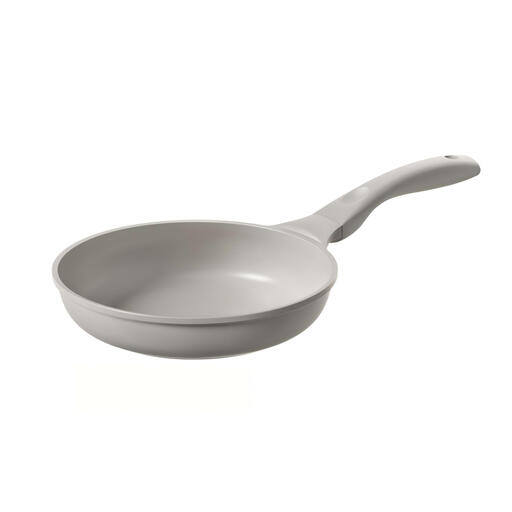
Why this fits: The 24 cm size is practical for small households, students and everyday portions. According to the product information, this pan is suitable for induction, gas and electric hobs.
The description explicitly states a ceramic coating without PTFE, PFOA and PFAS. However, do not use metal utensils to minimise scratches.
Aluminium, ceramic and stainless steel; ergonomic bakelite handle; dishwasher safe according to the product information.

Why this fits: A suitable everyday pan for anyone looking for a lightweight pan that can also go from hob to oven.
The manufacturer states a PFAS-free ceramic coating and RCS-certified recycled aluminium. Hand washing is still recommended to preserve the coating for longer.
Suitable for all heat sources, dishwasher safe according to the description and oven safe up to 200 °C.
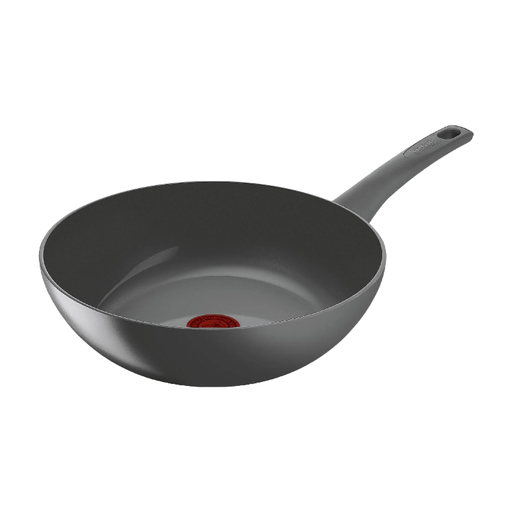
Why this fits: The wok shape and 28 cm diameter offer space for stir-fries, vegetables and meals for several people.
According to Tefal, the Inoceram coating is free from PTFE, lead and cadmium. The pan is not dishwasher safe; hand washing is required.
Recycled aluminium, suitable for induction and other heat sources, plus a Thermo-Signal indicator.
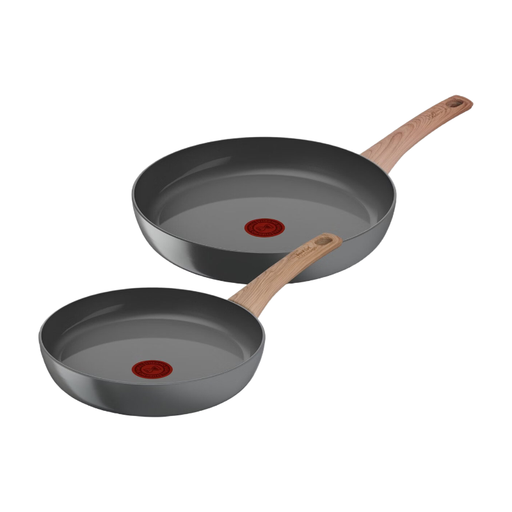
Why this fits: The two sizes cover small portions and family meals without needing two separate purchases.
The product information mentions 100% recycled aluminium and a PFAS-free ceramic coating. The set is not dishwasher safe.
24 and 28 cm, suitable for all heat sources including induction, with Thermo-Signal heat indicator.
An easy-care frying pan will last longer if you follow the manufacturer's instructions:
A dishwasher can be convenient, but hand washing is often a better choice for the coating. If the coating is damaged or peeling, it's wiser to replace the pan than to continue using it.
Browse our current range of ceramic non-stick frying pans and compare size, coating, heat source and maintenance per product.
That depends on the base. Choose a model that explicitly states it is suitable for induction. Also check whether the base diameter fits the cooking zone. The Tefal and Brabantia models mentioned in this article are stated as suitable for induction according to their product information.
There is no fixed lifespan. Use, temperature, utensils and cleaning method all affect the coating. By not overheating an empty pan, cooking with soft spatulas and hand washing, you can limit unnecessary wear.
No. PFAS-free describes the absence of a certain group of substances and not automatically the material of the pan. So check separately whether the pan has a ceramic coating and whether the manufacturer explicitly states PFAS-free.
