
Vandaag of morgen in huis

Kwaliteit gegarandeerd

Welkomstaanbiedingen ontgrendelen: GRATIS bezorging | Tot 80% korting | Gratis 30 dagen JoyPlus-proefperiode
Download de app
A ceramic frying pan might seem straightforward to choose at first glance. Yet pans differ greatly in coating, base, size and care. A smooth surface doesn't automatically mean the pan will last. Terms like "PFAS-free", "stone" and "healthy cooking" are also not always used in the same way.
For British households, there are three main pitfalls to watch out for:
A ceramic non-stick coating is typically a coating on a metal pan, often aluminium. The pan is therefore not entirely made of ceramic. Aluminium is used because it is relatively lightweight and conducts heat quickly.
Pay attention to the difference between:
According to the product information, brands including Brabantia, Tefal and Redchef claim a PFAS-free, PTFE-free or PFOA-free coating on certain models. Treat this as a brand or supplier claim and always check the current product specifications, packaging and instructions for use. A product claim is not a medical guarantee; therefore use neutral terms such as "coating without intentionally added PFOA" when that is how it is described.
An induction frying pan must have a suitable magnetic base. So check not only whether "aluminium" is listed as the material, but also whether the pan is suitable for induction. Most of the recommended models below are, according to their product information, suitable for induction, gas and electric hobs. Some are also suitable for ceramic and halogen hobs.
Also pay attention to the diameter of the base. The Tefal Renewal 24 cm, for example, has a base diameter of 18 cm. This needs to align well with the induction zone for even performance.
A small 20 cm pan is handy for one egg, an omelette or a small portion. A 24 cm frying pan is a versatile choice for daily use. For several people or larger ingredients, 28 cm is more practical. A deep pan with a lid can also be used for sautéing, simmering and one-pot meals.
Check before you buy:
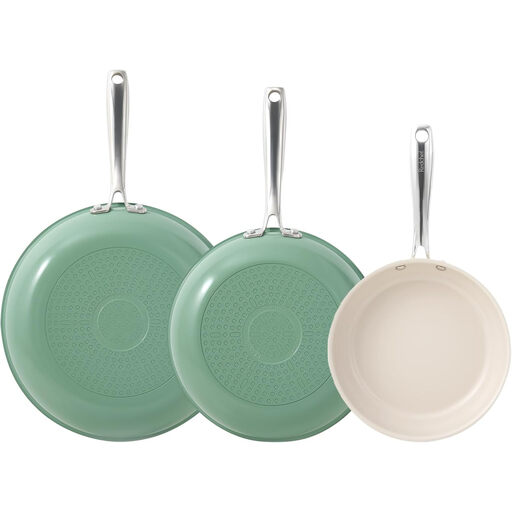
Why this fits the profile: The set includes pans in 20, 24 and 28 cm. This means you can prepare small portions and family meals without having to buy several individual pans straight away.
The product information states compatibility with induction, gas and electric hobs. The three sizes reduce the chance of choosing an impractical size.
Forged aluminium construction, ceramic coating and oven safe according to the product information up to 450 °C. Hand washing is recommended to preserve the coating for longer.
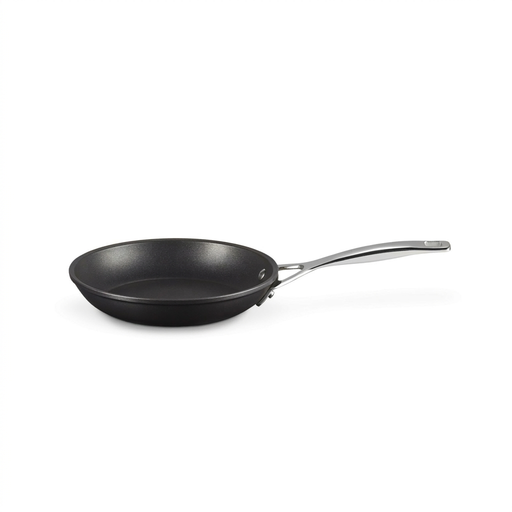
Why this fits the profile: The wide pan is designed for frying, sautéing and browning for several diners. The aluminium body and stainless steel handle are suitable for daily use.
The specifications mention induction compatibility and a PFOA-free coating. This makes the relevant material and hob details clearer to assess upfront.
28 cm diameter, reinforced non-stick coating and suitable for all hobs according to the product description. The pan is dishwasher safe according to the information.
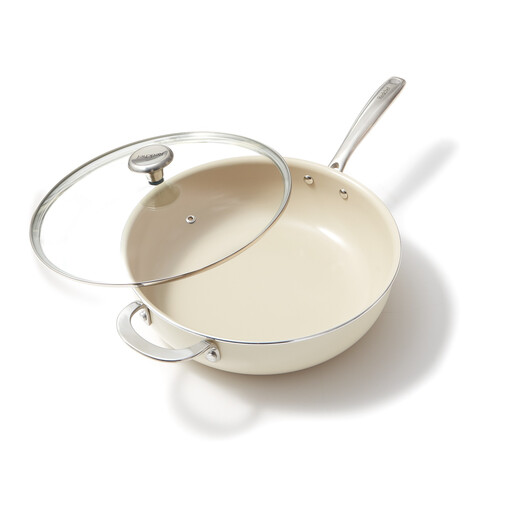
Why this fits the profile: The deep shape and glass lid are suitable for sautéing, simmering, blanching and larger portions. This is practical for families and meal preppers.
The product details mention an induction base, compatibility with multiple hobs and a maximum oven temperature of 450 °C. This makes important usage limits visible.
5-quart capacity, toughened glass lid and ceramic coating that, according to the product information, is free from PFAS, PTFE and PFOA among others.

Why this fits the profile: The 24 cm size suits everyday portions and the pan is made from 100% recycled forged aluminium according to the product information.
The coating is described as PFAS-free in the product information. Induction compatibility and the oven limit of 200 °C are also explicitly stated.
Two layers of ceramic non-stick coating, suitable for all mentioned heat sources and dishwasher safe according to the product description. Hand washing can help extend the life of the coating.
A ceramic pan will generally stay in good working order for longer if you follow the instructions for use. Do not heat the pan empty for long periods and generally choose low to medium heat. Let the pan cool down before rinsing it; a large temperature change can cause warping.
Do not use steel wool, scouring pads or metal utensils. Even when a pan is dishwasher safe, regular cleaning with harsh detergents can cause the coating to wear more quickly. A soft sponge, mild washing-up liquid and careful drying are usually the gentlest approach.
Stop using the pan when the coating clearly peels or becomes damaged. Always check the temperature limit and the handle on an oven-safe frying pan. A metal handle may be suitable for the oven, but it will get hot.
We have put together a full, up-to-date list of products that fully meet these strict selection criteria and comply with current European safety regulations.
That depends on the base. Ceramic coating alone does not make a pan suitable for induction. Check whether the manufacturer explicitly mentions induction and whether the base aligns well with the cooking zone.
The lifespan depends on heat, utensils, cleaning and frequency of use. Low to medium heat, hand washing and wooden or silicone spatulas help to limit wear. There is no fixed lifespan for every ceramic pan.
"Healthy frying pan" is not a precise technical standard. A PFAS-free claim only describes the stated composition of the coating. According to the product information, a pan with such a coating may enable cooking with little oil, but this is not a medical claim and does not replace careful use.
