
Vandaag of morgen in huis

Kwaliteit gegarandeerd

Welkomstaanbiedingen ontgrendelen: GRATIS bezorging | Tot 80% korting | Gratis 30 dagen JoyPlus-proefperiode
Download de app
A ceramic frying pan can be handy for cooking eggs, vegetables, fish and other dishes when you want to use less fat. However, the term “ceramic” doesn’t tell you everything about the pan. Some models only have a ceramic coating, while others combine one with aluminium, stainless steel or an induction base.
Marketing claims can also be confusing. So focus on verifiable product specifications, such as the material, size, hob compatibility, care instructions and coating information.
Ceramic coatings and PFAS-free frying pans are often mentioned together, but they don’t mean the same thing. Check whether the product information explicitly states that the pan is free from PFAS, PTFE or PFOA. If it only says “stone”, “granite” or “non-stick”, you still don’t know exactly which coating has been used.
According to the product information, Redchef pans have a ceramic coating. For Brabantia Onyx frying pans, the product information explicitly states that they have a PFAS-free ceramic coating. This distinction matters if you’re looking for a frying pan without Teflon.
An aluminium frying pan conducts heat quickly, but aluminium on its own usually won’t work directly on an induction hob. It needs a magnetic base or induction disc. So look for a clear statement such as suitable for induction, “all heat sources” or “induction pan set”.
A pan that’s only suitable for gas and electric hobs may heat unevenly or not work at all on an induction hob. Check the base diameter too. A 28 cm pan may have a smaller effective induction base than your cooking zone.
A pan may be described as dishwasher-safe, but intensive cleaning, high temperatures and harsh dishwasher detergents can affect how long it lasts. Hand-washing is recommended for many ceramic pans to help keep the coating in good condition for longer.
Also, avoid metal spatulas, scouring pads and wire wool. Let the pan cool before cleaning it with water. A sudden change in temperature can cause it to warp.
Choose a size to suit how you’ll use the pan:
A small pan heats up faster and is lighter to handle. A larger pan gives ingredients more room, so they’re less likely to steam on top of one another, but it can be heavier when full.
An aluminium frying pan is usually lightweight and heats up quickly. A thicker or forged aluminium base can help distribute the heat more evenly. Check the product description, though: “rapid heat distribution” is a product specification or brand claim, not a guarantee for every dish.
Stainless steel is sturdy, but often heavier. The WMF Durado, for example, uses Cromargan 18/10 stainless steel with a ceramic coating. It offers a different experience from a lightweight aluminium pan.
A ceramic coating is designed to make it easier to release food from the pan. Its performance can decline over time due to overheating, metal utensils and abrasive cleaning. So avoid leaving an empty pan on a high heat for too long.
Check whether the pan is suitable for oven use, too. Some pans are oven-safe, while others shouldn’t be used in the oven according to the product information. A removable handle can make pans easier to stack, but always check the maximum load and oven temperature limit.
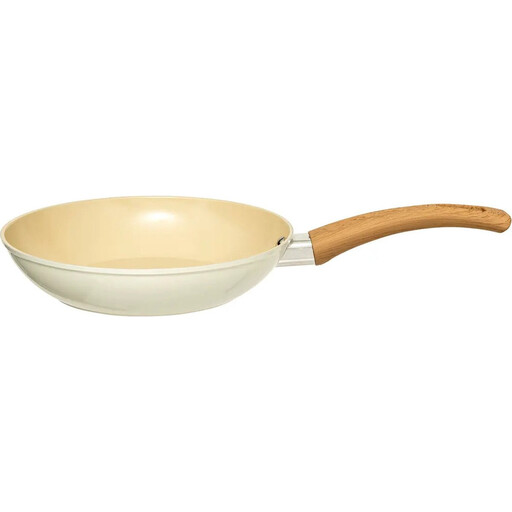
Why it suits this profile: This compact 20 cm model is suitable for small portions and weighs 320 grams according to the product information. It’s designed for use on gas, induction, ceramic and electric hobs.
The hob compatibility and dimensions are clearly stated. That means you won’t end up buying a pan that’s too large for small dishes or a model without an induction base.
20 cm diameter, 1.5 litres of usable capacity, two non-stick layers according to the product information, and dishwasher-safe. Hand-washing is recommended to help it last longer.
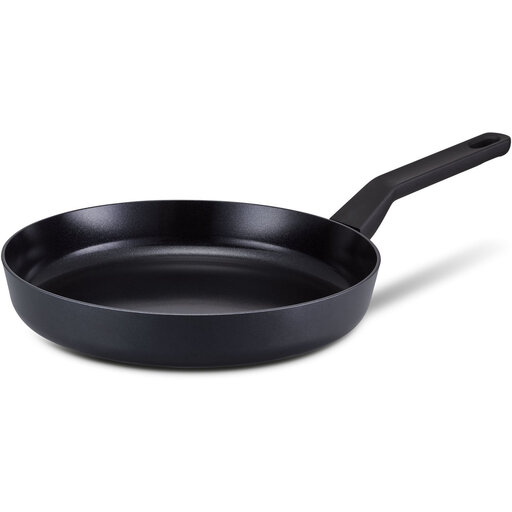
Why it suits this profile: This pan combines a size suited to everyday cooking with 100% recycled aluminium, according to the product information. Its stated PFAS-free ceramic coating is a good fit for shoppers who want to make a considered choice.
The coating isn’t simply described as “non-stick”: the product information also says it’s PFAS-free and ceramic. This makes it easier to check what it’s made with.
24 cm size, suitable for induction and other heat sources, double ceramic non-stick coating and dishwasher-safe. Hand-washing is still recommended.
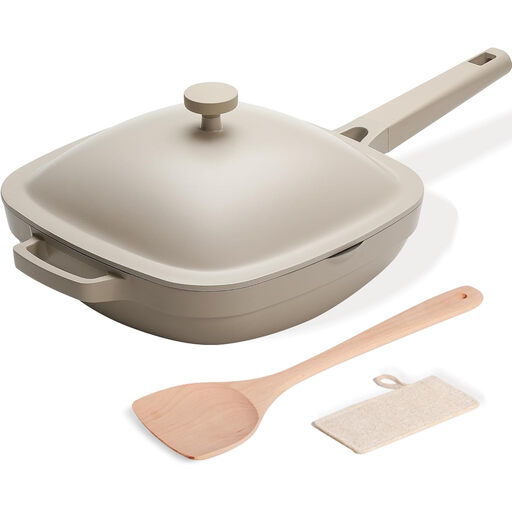
Why it suits this profile: According to the product information, this deep 3.8-quart pan is suitable for sautéing, stewing, stir-frying and meal prep. It comes with a lid, wooden spatula and scrubber.
The care limitations are clearly stated: this model isn’t dishwasher-safe or oven-safe. You can choose it with your cooking routine in mind.
Deep shape, lid, ceramic Ti coating and compatibility with all the listed hobs. The product information states that it’s PFAS-free; use soft utensils to protect the coating.
We’ve put together a complete, up-to-date list of products that meet these strict selection criteria and the applicable European safety regulations.
Use a ceramic pan on a low to medium heat and don’t let it overheat while empty. Choose wooden, silicone or plastic utensils. Clean the pan with warm water, a soft sponge and mild washing-up liquid.
A coating is a wear-and-tear component. If you notice bubbles, peeling or deep scratches, stop using the pan. Always follow the manufacturer’s specific instructions, especially for oven use, dishwashing and maximum temperatures.
It can be, but always check the product information. An aluminium pan needs a magnetic base or induction disc. Look for “suitable for induction” or “all heat sources” before you order.
Its lifespan depends on the cooking temperature, utensils and cleaning method. Hand-washing, avoiding metal spatulas and not heating it while empty can help keep the coating in good condition for longer. There’s no set lifespan that applies to every pan.
No. “Ceramic” and “without Teflon” don’t automatically give you complete information about PFAS. Choose a model whose product information explicitly states that it’s PFAS-free, PTFE-free or PFOA-free, and check the latest specifications on the product page.
