
Vandaag of morgen in huis

Kwaliteit gegarandeerd

Welkomstaanbiedingen ontgrendelen: GRATIS bezorging | Tot 80% korting | Gratis 30 dagen JoyPlus-proefperiode
Download de app
A ceramic frying pan may seem simple to choose at first glance. However, pans vary considerably in their coating, base, size and care requirements. A low price may be appealing, but a pan that is not suitable for induction, warps too quickly or can only be washed by hand will not suit every kitchen.
The main pitfalls are clear:
By checking a few key features in advance, you can avoid a poor purchase and choose a non-stick frying pan that is better suited to everyday use.
Ceramic pans usually consist of a metal pan body with a ceramic non-stick coating. The base may be made from aluminium, stainless steel or a combination of materials, for example. Aluminium generally heats up quickly, while a multi-layer stainless-steel pan may offer additional stability.
Pay attention to the exact wording:
According to Redchef’s product information, its ceramic coating is free from PTFE, PFOA and PFAS. SENSARTE states that its coating is made without intentionally added PFOA, PFOS, APEO, lead or cadmium. These are product claims made by the brands, so always check the current information on the product page.
A ceramic coating is particularly practical when you want to fry with little oil and release food easily. Ideally, use wooden, silicone or nylon utensils. Damage, peeling or deep scratches are signs that the pan should no longer be used.
Making a ceramic frying pan induction-compatible requires a magnetic base. Not every ceramic-coated pan has one. Check the list of suitable heat sources rather than relying on the title alone.
For UK households, these points are relevant:
The Tefal Easy Cook & Clean models in the selection, for example, are not suitable for induction. According to the product information, the Tefal Renewal Ceramic pan and Brabantia Dusk are suitable for all common heat sources, including induction.
The stated size refers to the pan’s diameter, not always the diameter of the cooking surface. A 20 cm pan is suitable for an omelette, egg or small portion. A 24 cm pan is practical for one to three people. With 28 cm, you have more room for meat, vegetables or a one-pan meal.
A deep ceramic sauté pan with a lid is more convenient for stir-frying, simmering and larger quantities. A shallow frying pan works better for pancakes, eggs and searing. For different cooking tasks, a frying pan set containing, for example, 24 and 28 cm pans may be more efficient than buying two separate pans of the same size.
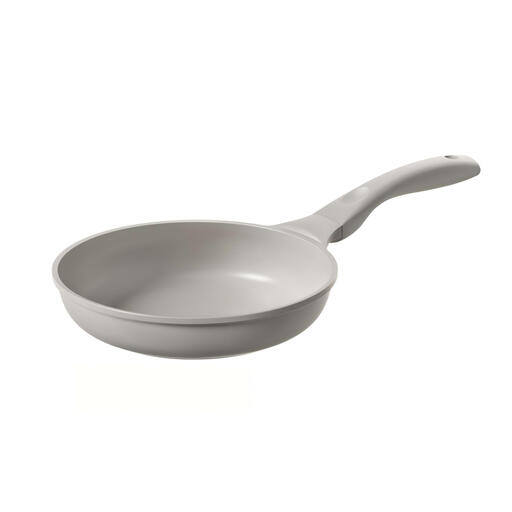
Why it suits this profile: A compact size for everyday portions, with compatibility with induction, gas and electric hobs according to the product information.
The product listing explicitly mentions a ceramic coating without PTFE, PFOA or PFAS and states that it is compatible with induction.
24 cm diameter, Bakelite handle and dishwasher-safe according to the product information.

Why it suits this profile: Suitable for those who value the choice of materials, induction compatibility and oven use alongside everyday cooking convenience.
The specifications mention a PFAS-free ceramic coating, compatibility with all heat sources and oven use up to 200 °C.
100% recycled forged aluminium, two ceramic layers and a riveted stainless-steel handle.
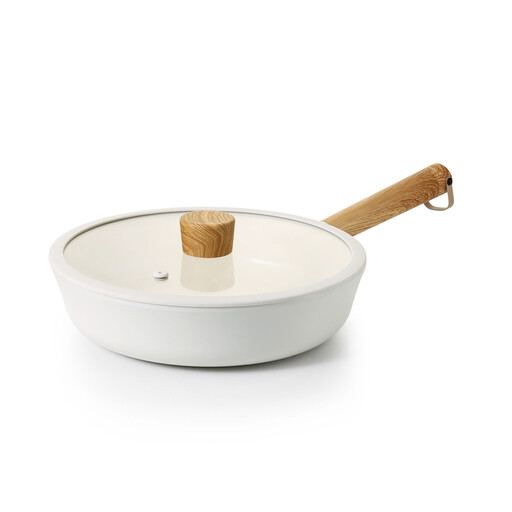
Why it suits this profile: A deep pan for stir-frying, sautéing, stewing and larger meals on gas, induction, electric or ceramic hobs.
The product information mentions a magnetic stainless-steel base and a coating without PTFE or PFAS. Hand washing is recommended to help protect the coating.
28 cm size, glass lid and deep shape for stir-frying and simmering.
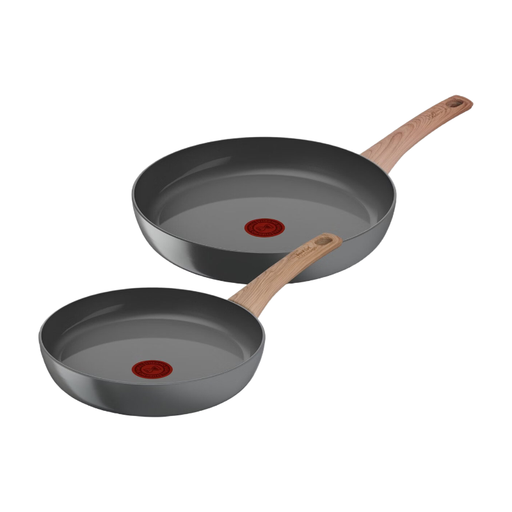
Why it suits this profile: Two sizes offer flexibility for small portions and family meals, without having to buy two similar pans.
The set states that it has a PFAS-free ceramic coating and is suitable for all heat sources, including induction. The pans are not dishwasher-safe.
24 and 28 cm, 100% recycled aluminium and a Thermo-Signal indicator according to the product information.
We have put together a complete, up-to-date list of products that fully meet these strict selection criteria and the applicable European safety regulations.
A ceramic non-stick coating will generally continue to perform better when you follow the care instructions. Heat the pan gradually on a low to medium setting and do not leave it empty over high heat for extended periods. After cooking, allow the pan to cool down before rinsing it with water.
Use a soft sponge and mild washing-up liquid. Even if the product information states that a pan is dishwasher-safe, hand washing can help protect the coating. Also check the handle, base and coating regularly. A pan with a loose handle or damaged coating should no longer be used.
This varies from model to model. The ceramic coating itself does not determine this; the base must be magnetic. Look for “induction suitable” or “suitable for all hobs” in the product specifications. A pan listed as suitable only for gas, electric and ceramic cooking is not automatically suitable for induction.
Its lifespan depends on heat levels, utensils and cleaning methods. Overheating, metal spatulas, abrasive products and thermal shock can reduce the non-stick performance more quickly. Hand washing, low to medium temperatures and silicone or wooden utensils are practical ways to keep the pan usable for longer.
Not always. PFAS-free refers to a material property stated in the product information, while ceramic refers to the type of coating. Check both details separately. Also pay attention to the exact wording, such as “without intentionally added PFAS”, and follow the manufacturer’s use and care instructions.
