
Vandaag of morgen in huis

Kwaliteit gegarandeerd

Welkomstaanbiedingen ontgrendelen: GRATIS bezorging | Tot 80% korting | Gratis 30 dagen JoyPlus-proefperiode
Download de app
A ceramic frying pan may seem easy to choose at first: an attractive colour, a non-stick coating and the promise of easy cleaning. But having the wrong expectations can leave you with a pan that sticks quickly, isn’t suitable for induction or doesn’t last as long as you’d hoped.
For UK kitchens, these are the three main pitfalls to look out for:
A PFAS-free ceramic frying pan typically has a ceramic coating rather than a traditional PTFE coating. When comparing products, look closely at the exact claim:
Redchef states that the ceramic coating on several models is free from PTFE, PFOA and PFAS. Brabantia describes the Onyx series as having a 100% PFAS-free ceramic coating. Tefal says the Ceramic Renew series features a PFAS-free coating. These are claims made by the respective brands, so always check the latest product specifications and instructions for use.
A ceramic coating can help food release easily and make it possible to cook with little oil. This makes a pan handy for eggs, pancakes and vegetables, but it isn’t a medical or health claim.
The diameter determines how much you can cook at once and how easily the pan fits on your hob.
An aluminium frying pan usually heats up quickly and is relatively lightweight. With aluminium, the base matters: a magnetic or composite base makes the pan suitable for induction. Also check that the pan sits flat. A warped base can affect heat distribution and stability.
A non-stick frying pan still needs to be used with care. Keep these points in mind:
A dishwasher-safe frying pan is convenient, but washing it by hand with a soft sponge can help keep the coating in good condition for longer. Some models, such as the USELUCK pan, aren’t dishwasher-safe according to the product information. This is worth bearing in mind if you want to tidy up quickly.
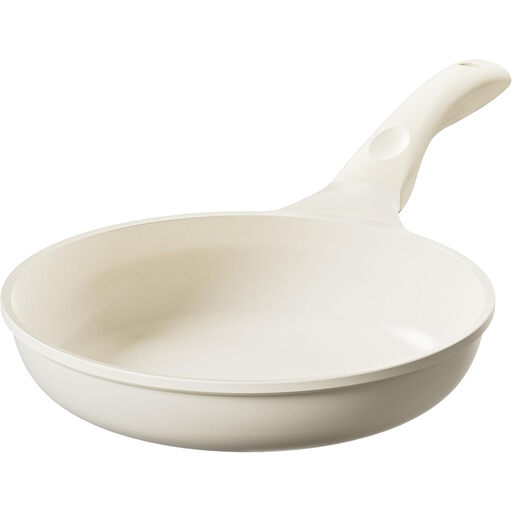
Why it suits this profile: The 24 cm size is easy to handle for everyday meals and suits smaller households. According to the product description, this pan works on induction, gas and electric hobs.
The specifications describe a ceramic coating free from PTFE, PFOA and PFAS. Use soft utensils to help prevent scratches.
24 cm, aluminium/ceramic/stainless steel construction, ergonomic Bakelite handle and, according to the product information, dishwasher-safe.
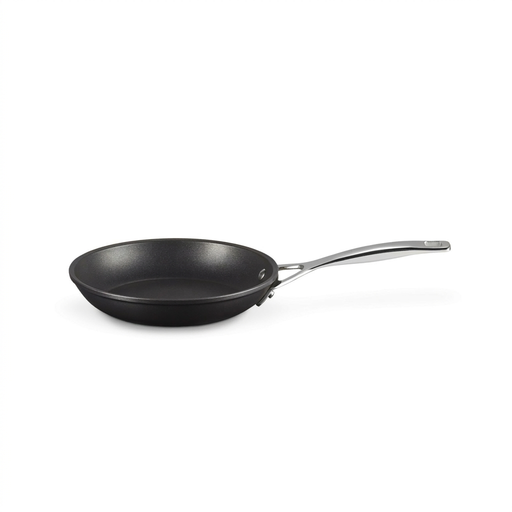
Why it suits this profile: This 28 cm shallow pan is designed for frying, sautéing and browning. Its aluminium body and stainless steel handle make it a good choice if you value a sturdy pan for everyday use.
The product information says it’s compatible with all hobs, including induction. Before buying, check the exact care instructions.
28 cm diameter, reinforced non-stick coating, PFOA-free coating according to the product description, and an oven-safe design.
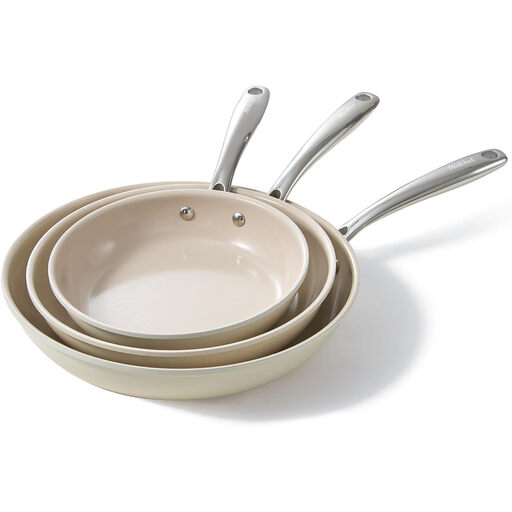
Why it suits this profile: The 20, 24 and 28 cm sizes offer flexibility for breakfast, side dishes and larger meals. According to the product information, the set is suitable for induction, gas and electric hobs.
Having three sizes means you won’t need to find a different pan for every meal. Hand-washing is recommended to protect the ceramic coating, despite the stated dishwasher-safe rating.
Forged aluminium construction, three-layer ceramic coating, stainless steel handles and oven use up to the stated temperature limit.
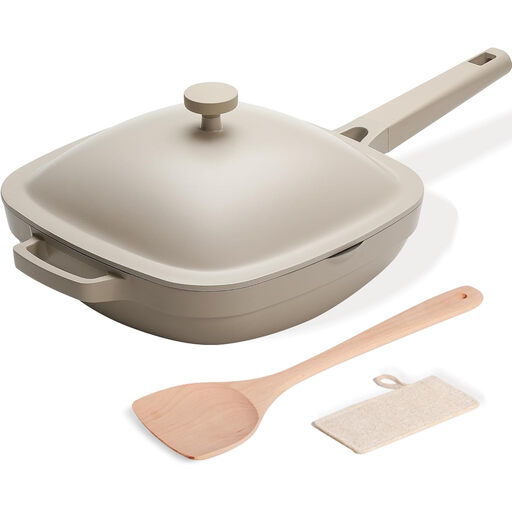
Why it suits this profile: This deep 3.8-quart pan with a lid is suitable for sautéing, stewing, stir-frying and meal preparation. The extra accessories are handy for everyday use.
The product information clearly states that this pan isn’t dishwasher-safe or oven-safe. This helps you avoid buying it by mistake if you need either of those features.
3.8-quart capacity, lid, two pouring spouts, wooden spatula and scrubber; suitable for all heat sources according to the product description.
We’ve put together a complete, up-to-date list of products that meet these strict selection criteria and the applicable European safety regulations.
A pan’s lifespan depends not only on its coating, but also on how you use it. Heat a ceramic frying pan gradually and avoid using a high setting unless you need to. A little oil can help with ingredients that tend to stick, even if the pan is sold as non-stick.
Once the pan has cooled, wash it with warm water and a soft sponge. Only put it in the dishwasher if the product information says this is allowed. If you have a frying pan set, check the sizes and care instructions for each pan; they aren’t always the same.
It can be, but not every ceramic pan is automatically suitable. Check that the product description explicitly mentions induction. A magnetic stainless steel or composite base is often a feature of an induction frying pan. If in doubt, don’t test it yourself at high temperatures; check the model’s specifications instead.
There’s no set lifespan. It depends on the temperature, utensils, cleaning and how often you use the pan. Hand-washing, low to medium heat and wooden or silicone spatulas can help protect the coating. Replace the pan if the coating visibly peels, is damaged or food keeps sticking to it.
“Healthy frying pan” isn’t a technical guarantee. A PFAS-free claim describes the coating according to the product information, but it doesn’t mean every dish you cook will automatically be healthy. Before choosing a pan, also check the material information, instructions for use, temperature limits and care guidance.
