
Vandaag of morgen in huis

Kwaliteit gegarandeerd

Welkomstaanbiedingen ontgrendelen: GRATIS bezorging | Tot 80% korting | Gratis 30 dagen JoyPlus-proefperiode
Download de app
A ceramic frying pan can be handy for eggs, vegetables, fish, meat and pancakes with little oil. However, a smooth non-stick coating isn’t everything. Some pans aren’t suitable for induction hobs, can’t go in the oven, or lose their non-stick properties more quickly when used at high temperatures.
If you only look out for terms like “non-stick”, “scratch-resistant” or “healthy cooking”, you could end up buying a pan that doesn’t suit your hob or cooking style. Instead, focus on verifiable specifications: the material, hob compatibility, diameter, maintenance and any limitations.
A ceramic frying pan for induction needs a magnetic base. So check whether induction, gas, electric and ceramic are explicitly listed in the product information. An aluminium pan without a suitable base won’t work on induction, even if the inside has a ceramic coating.
According to the product descriptions of various brands, certain ceramic coatings are free from PFAS, PTFE or PFOA. That’s a product specification, not a guarantee that the coating will last indefinitely. Metal utensils, heating the pan when empty and very high temperatures can damage the coating. It’s better to use wooden, silicone or plastic kitchen tools.
A pan may be dishwasher-safe, but it will still last longer if you wash it by hand with a soft sponge. The maximum oven temperature also varies from model to model. A plastic or Bakelite handle often has different limitations to an all-metal handle. So look at the exact usage instructions, not just the product title.
A ceramic non-stick coating is usually applied to an aluminium or steel pan. Aluminium heats up quickly and is relatively light. A multi-layer stainless steel base can distribute heat more evenly and is often suitable for induction.
Brands may claim additional properties, such as “extra scratch-resistant” or “healthy cooking”. Don’t take these as guaranteed results: according to the brand’s own product information, a coating may be PFAS-free or require less oil. The practical lifespan also depends on temperature, utensils and cleaning.
A ceramic sauté pan usually has higher sides. That’s useful for sauces, stews and vegetables. For stir-frying, a ceramic wok can offer more space, while a low-sided frying pan is easier to manoeuvre.
A frying pan with a lid is practical when you want to simmer or retain heat. Check whether the lid is glass and whether the knob is heat-resistant. Also look at:
A PFAS-free pan isn’t a reason to skip maintenance. Let the pan cool down before washing it, avoid thermal shock and don’t use an abrasive sponge.
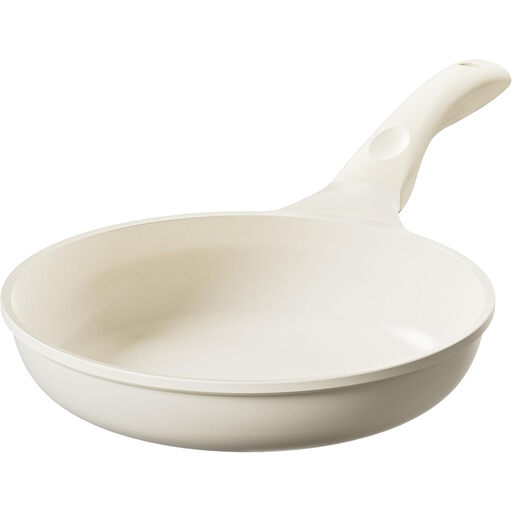
Why this fits the profile: The 24 cm size is practical for everyday portions. According to the product information, the pan is suitable for induction, gas and electric hobs and has a ceramic coating.
The product information explicitly mentions multiple hob types and warns against metal utensils. Do check the current specifications before buying.
24 cm diameter, ceramic coating and an ergonomic Bakelite handle according to the product description.
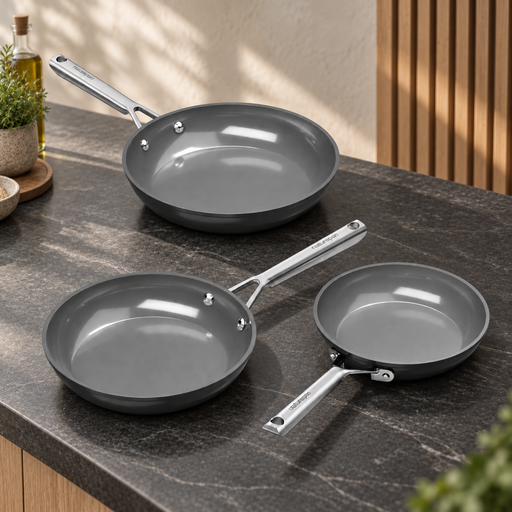
Why this fits the profile: The set includes pans in 20, 24 and 28 cm. This means you can cover small portions and family meals with one purchase.
According to the product description, the pans are suitable for induction, gas, ceramic and electric cooking. The set is also dishwasher-safe.
Three sizes, a PFAS-, PTFE- and PFOA-free ceramic coating according to the manufacturer, and oven-safe up to 260 °C.

Why this fits the profile: The 30 cm wok offers space for stir-frying, simmering and larger portions. A glass lid helps with dishes that need to cook while retaining moisture.
The product information mentions a flat magnetic base for induction, gas, electric and ceramic cooking. Hand washing is required; this prevents false expectations about the dishwasher.
30 cm, tri-ply stainless steel body, ceramic inner layer and glass lid according to the product data.
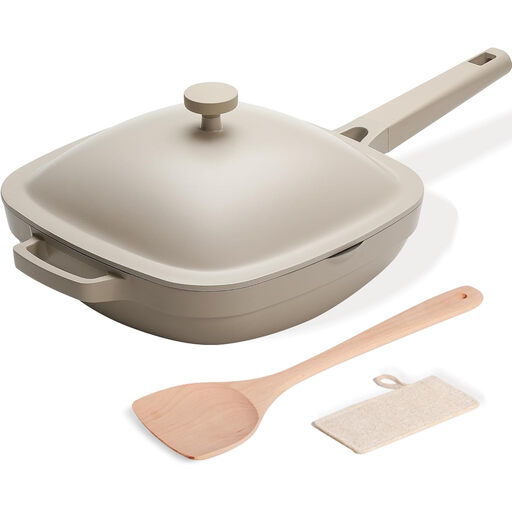
Why this fits the profile: The deep shape and 3.8 quart capacity are designed for sautéing, braising, simmering and meal prep. The raised lid and pouring spouts are practical for sauces.
The product description states compatibility with all hob types. At the same time, oven use and dishwasher are not permitted according to the same information.
Deep pan of 3.8 quart, lid, wooden spatula and scrubber included according to the product specifications.
We’ve put together a full, up-to-date list of products that fully meet these strict selection criteria and current European safety regulations.
That varies from model to model. Check whether induction is explicitly mentioned and whether the pan has a magnetic base. The ceramic coating itself doesn’t automatically make a pan suitable for induction.
The lifespan depends on use and maintenance. Don’t heat an empty pan for a long time, generally choose low to medium heat and use soft utensils. Hand washing with a soft sponge can help preserve the coating, even if the manufacturer allows dishwasher use.
“Healthy frying pan” is mainly a search term and not a fixed quality standard. According to the product information of some brands, their ceramic coatings are PFAS-free and intended for cooking with little oil. Always check the full product specifications, usage instructions and safety information before you buy.
