
Vandaag of morgen in huis

Kwaliteit gegarandeerd

Welkomstaanbiedingen ontgrendelen: GRATIS bezorging | Tot 80% korting | Gratis 30 dagen JoyPlus-proefperiode
Download de app
A ceramic frying pan might seem straightforward to choose at first glance. Yet differences in coating, size and heat source can determine whether the pan performs well or disappoints after a short time. Especially during sales, features are sometimes described broadly while important details are missing.
So watch out for these common pitfalls:
If you’re looking for a PFAS-free frying pan or a frying pan without PFAS and PFOA, it’s worth reading the full product specifications. Look for concrete mentions such as:
According to the product descriptions from Redchef, Brabantia, SENSARTE and Sanho, their stated models feature a ceramic coating without PFAS. With Redchef, PFOA and PTFE are also mentioned. This information comes from the brands’ product descriptions. A claim like “healthy frying pan” should therefore be seen as marketing language; focus instead on the verifiable material and care information.
When using a ceramic pan, opt for wooden, silicone or plastic utensils. Metal spatulas can cause scratches. Also, let the pan cool down before washing it.
An induction frying pan needs a suitable magnetic base. Always check whether the pan works on your hob:
The Tefal Renewal Ceramic Frying Pan 24 cm is described in the product information as suitable for all the heat sources mentioned. The Tefal Easy Cook & Clean 32 cm, on the other hand, is not suitable for induction. That difference is more important than just the word “ceramic” in the product name.
The right size depends on the quantity and type of dish:
Alongside the diameter, also check the weight, pan height and base diameter. A 28 cm pan may have a smaller effective base, meaning the entire cooking zone isn’t used to its full potential.
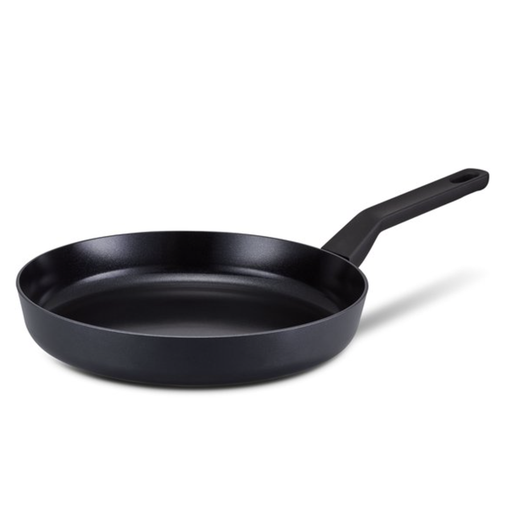
Why this fits the profile: The compact size is suitable for one person, eggs, omelettes and small portions. According to the product description, this pan has a PFAS-free ceramic double non-stick coating and works on induction, gas, electric, ceramic and halogen.
The product information mentions both the coating and the suitability for different heat sources. This means you don’t have to rely solely on the term “ceramic”.
20 cm, 100% recycled aluminium according to the product description, PFAS-free ceramic coating and dishwasher-safe.

Why this fits the profile: The 24 cm size is suitable for daily cooking for up to around three people. The product description mentions recycled forged aluminium, a PFAS-free ceramic double layer, all heat sources and oven use up to 200 °C.
The main usage limits are stated: dishwasher is possible, hand washing extends the lifespan according to the description, and the oven limit is 200 °C.
24 cm, induction-compatible, PFAS-free coating, oven-safe up to 200 °C and dishwasher-safe according to the product information.
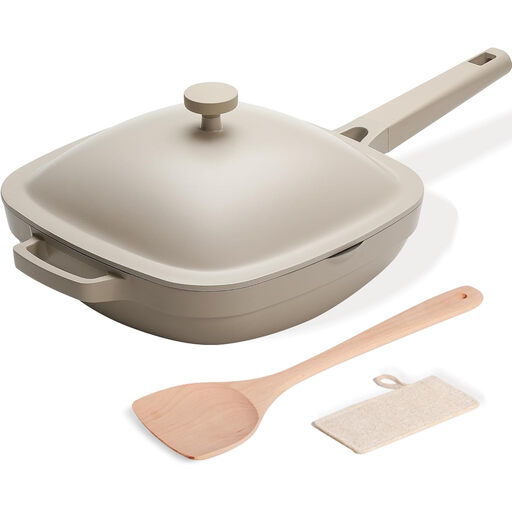
Why this fits the profile: This deep pan with a 3.8 quart capacity is described in the product information as suitable for sautéing, braising, stir-frying and meal prep. The model has a lid, pouring spouts and is suitable for all hobs.
The product information makes it clear that this pan is not dishwasher-safe and not oven-safe. This prevents a wrong purchase for anyone who specifically needs those features.
3.8 quart capacity, lid, two pouring spouts, ceramic coating and compatibility with all hob types according to the product description.
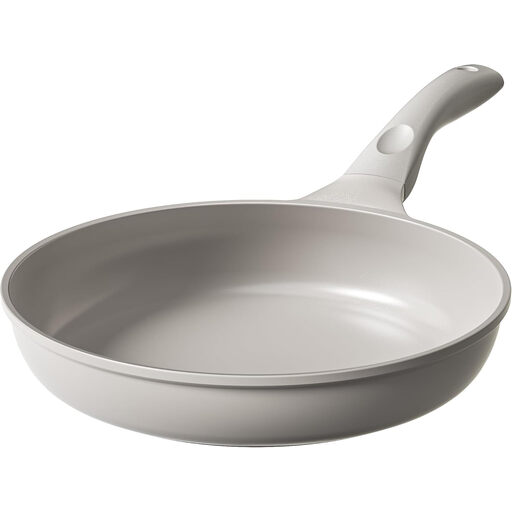
Why this fits the profile: The 28 cm diameter offers room for larger portions. According to the product description, the pan works on induction, gas and electric hobs and is dishwasher-safe.
The relevant heat sources, the material and the warning not to use metal utensils are all stated in the product information.
28 cm, ceramic coating according to the description without PTFE, PFOA and PFAS, ergonomic handle and dishwasher-safe.
We’ve put together a full, up-to-date list of products that fully meet these strict selection criteria and comply with current European safety regulations.
A ceramic non-stick pan generally stays more pleasant to use when you follow the manufacturer’s instructions. Keep these basic rules in mind:
A dishwasher-safe frying pan can be convenient, but hand washing with mild washing-up liquid can put less strain on the coating and handle. Also check whether a model is oven-safe; a ceramic coating alone does not automatically make a pan suitable for the oven.
That varies by model. Check the product information for an explicit mention of induction compatibility and, if available, look at the base construction. The Brabantia Dusk, Brabantia Onyx and Redchef models in this guide are described in their product information as suitable for induction.
The lifespan depends on temperature, frequency of use, utensils and maintenance. Overheating, metal spatulas and abrasive cleaning can damage the coating more quickly. An exact lifespan cannot be guaranteed in advance. Therefore, follow the brand’s care instructions and replace the pan when the coating visibly flakes or is damaged.
The running costs mainly consist of the purchase price, energy and possible replacement. A pan that heats evenly and fits your hob can be practical for daily use. Dishwasher-safe saves time, but hand washing can, according to many product instructions, help preserve the coating for longer. So don’t just check the price, but also the size, heat source and maintenance.
