
Vandaag of morgen in huis

Kwaliteit gegarandeerd

Welkomstaanbiedingen ontgrendelen: GRATIS bezorging | Tot 80% korting | Gratis 30 dagen JoyPlus-proefperiode
Download de app
A ceramic frying pan can be useful for eggs, vegetables, pancakes and quick meals. However, a smooth coating or the term “non-stick” does not tell you everything about everyday use. The right choice depends on your heat source, the size of the pan, cleaning requirements and the way you cook.
As a Joybuy Product Recommendation Officer, I filter the most important product specifications so that you can compare marketing claims with verifiable information more effectively.
A pan suitable for gas is not automatically suitable for induction. Induction hobs require a magnetically compatible base. Therefore, check whether the product information explicitly mentions induction, gas, electric hobs and, where applicable, ceramic or halogen hobs.
Also pay attention to the base diameter. A 28 cm pan may have a smaller induction base, which can result in less even heat distribution.
A product description may state that a ceramic coating is free from PFAS, PTFE and PFOA. This says something about the stated composition, but it does not mean that the pan will never show signs of wear. Ceramic non-stick coatings remain vulnerable to:
According to the product information provided by the brands mentioned, certain coatings are PFAS-free. Always check the current product specifications and instructions for use for the specific model before buying.
A dishwasher-safe frying pan can be placed in the dishwasher, but hand washing may help extend the life of the coating. Oven safety also has its limits. A handle made from Bakelite, silicone or stainless steel may have different temperature limits from the pan itself.
Therefore, check:
Many ceramic pans are made from aluminium with a ceramic non-stick coating and sometimes a stainless-steel induction base. Aluminium generally heats up quickly and is relatively lightweight. A thicker or forged base can help distribute heat more evenly.
If you are looking for a frying pan without PFAS and PTFE, read the product specification carefully. “Ceramic” on its own is not a complete material description. Look for an explicit statement that the product is free from PFAS, PTFE and, where applicable, PFOA. Claims about the coating’s performance, such as long-lasting scratch resistance, come from the brand and should be treated as product information rather than a guaranteed result.
A ceramic sauté pan is deeper than a standard frying pan and is better suited to sauces, stews and meals for several people. A lid is a useful addition.
For a ceramic induction frying pan, check that induction is explicitly mentioned. For everyday convenience, dishwasher safety and an oven-safe handle are also relevant. With ceramic coatings, wooden, silicone or plastic utensils are preferable.
Heat the pan gradually, cook mostly over a low to medium heat and allow the pan to cool before washing it. This helps minimise thermal shock and unnecessary strain on the coating.
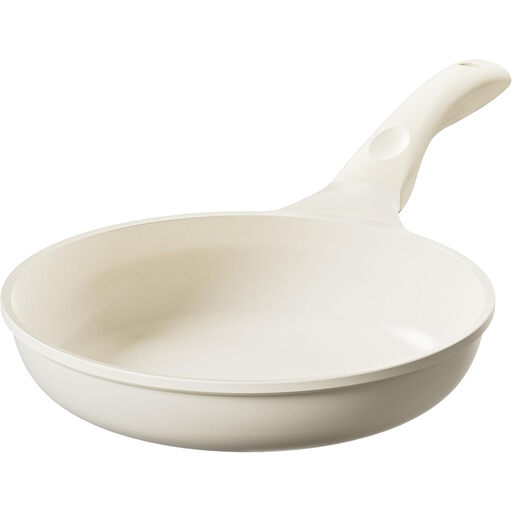
Why it suits this profile: The 24 cm size is easy to handle for everyday portions and smaller kitchens. According to the product information, this pan is suitable for induction, gas and electric hobs.
The specification explicitly mentions a PTFE-, PFOA- and PFAS-free ceramic coating and compatibility with several heat sources. Do not use metal utensils.
24 cm size, aluminium, ceramic and stainless steel construction and, according to the product information, dishwasher-safe.

Why it suits this profile: The set combines 20 and 24 cm pans for small and medium-sized portions. The stated construction consists of 100% recycled forged aluminium with RCS certification.
The product information states that it has a PFAS-free ceramic coating, is induction-compatible and has a maximum oven temperature of 200 °C.
Two sizes, dishwasher-safe according to the listing and suitable for gas, electric, ceramic, halogen and induction hobs.
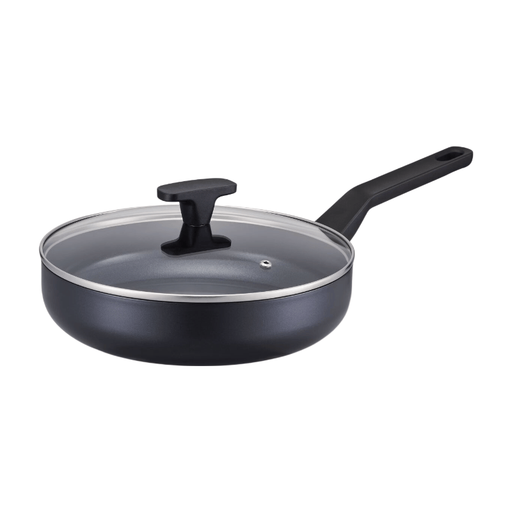
Why it suits this profile: The deep shape and lid are suitable for sauces, vegetables, slow-cooked dishes and meals for a family.
The listing states that it has a PFAS-free ceramic coating, is suitable for all common heat sources and can be placed in the dishwasher. Hand washing is recommended for a longer service life.
26 cm, glass lid, recycled aluminium and suitable for stewing and slow cooking.
We have put together a complete, up-to-date list of products that fully meet these strict selection criteria and the applicable European safety regulations.
A ceramic non-stick frying pan will generally remain usable for longer when you follow the instructions for use. Do not heat the pan empty on the highest setting and do not use metal utensils. Soak baked-on residue in lukewarm water first. A soft sponge and mild washing-up liquid are usually sufficient.
A ceramic frying pan set is practical if you need several sizes, but check that all the pieces have the same oven and dishwasher specifications. With a single pan, you only pay for the size you actually use. For a small kitchen, a set with a removable handle can save space.
It can be, but only if the product information states that it is induction-compatible. Also check that the base makes good contact with the diameter of the induction zone.
Its service life depends on the temperature, utensils, cleaning routine and frequency of use. Cook over a low to medium heat, avoid thermal shock and replace the pan when the coating is visibly damaged or has started to come away.
Some models are, according to their product specifications, including various Brabantia and Redchef models in this overview. However, hand washing with a soft sponge is often recommended to help preserve the coating for longer. Always check the instructions for the exact model.
