
Vandaag of morgen in huis

Kwaliteit gegarandeerd

Welkomstaanbiedingen ontgrendelen: GRATIS bezorging | Tot 80% korting | Gratis 30 dagen JoyPlus-proefperiode
Download de app
A ceramic frying pan might seem straightforward to choose at first glance. Yet pans vary widely in coating, heat distribution, size and maintenance. A low price can be tempting, but a pan that isn’t suitable for induction or quickly loses its non-stick coating will end up costing you more in the long run.
Pay particular attention to three common pitfalls:
If you’re looking for a PFAS-free frying pan or frying pan without PFAS, you need to read the product description carefully. Brands sometimes use different terms, such as ceramic non-stick coating, PTFE-free or PFAS-free. These don’t always mean the same thing.
According to the product information from Brabantia, the Dusk and Onyx pans feature a 100% PFAS-free ceramic coating. Tefal describes the Renewal frying pan as having a PFAS-free ceramic coating. According to the product information from Redchef, the coating is free from PTFE, PFOA and PFAS. This information comes from the brands’ own product specifications and should not be taken as a general statement about all ceramic pans.
A ceramic non-stick coating can be great for eggs, vegetables and pancakes, as you may need very little oil. Still, use the recommended amount of fat and avoid overheating an empty pan. This will help keep the coating in good condition for longer.
An induction frying pan needs a magnetically suitable base. If the specifications only say “suitable for gas and electric”, that’s not enough for induction.
According to the product information, many models in this selection are suitable for:
With induction, also check the base diameter. A 24 cm pan may have a smaller effective cooking zone. The Tefal Renewal lists a base diameter of 18 cm. The Brabantia Onyx saucepan has, according to the product specifications, a base diameter of 17 cm. A good fit on the cooking zone ensures more even heat transfer.
Diameter isn’t everything: a deep pan can hold more ingredients than a shallow frying pan of the same width. Use this guide:
A saucepan with lid is more practical for simmering, sauces and one-pot dishes. For stir-frying, a ceramic wok with high sides can offer more space. If you mainly want to cook meat or vegetables with grill marks, you could also consider a ceramic grill pan.
The term dishwasher-safe frying pan doesn’t mean the dishwasher is always the best cleaning method. Heat, dishwasher detergent and prolonged contact with water can put extra strain on handles and coatings.
Look out for these differences:
With a ceramic coating, it’s best to use wooden, silicone or plastic utensils. Let the pan cool down before washing it and avoid a sudden change from a hot pan to cold water. Also, always check the maximum oven temperature and how the handle is attached.

Why this fits the profile: The two sizes cover small portions and everyday meals. According to the product information, the set is suitable for induction, gas, electric, ceramic and halogen hobs.
The hob compatibility and PFAS-free ceramic coating are stated in the product specifications. Hand washing is still recommended, despite the stated dishwasher safety.
Two sizes, 100% recycled forged aluminium and oven-safe up to 200 °C.
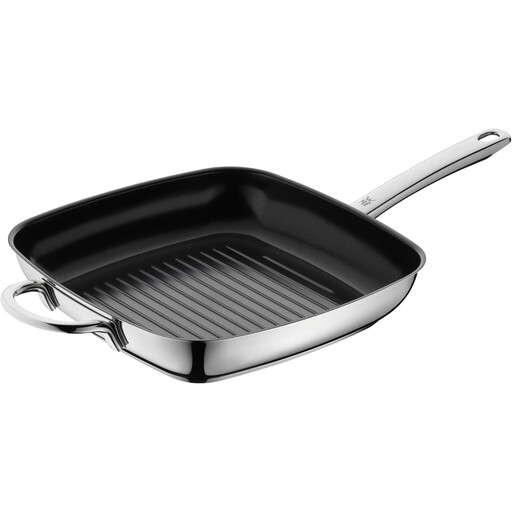
Why this fits the profile: This ceramic grill pan features a Cromargan 18/10 stainless steel body, a wide pouring rim and a 28 cm size for preparing larger meals.
The specifications clearly state suitability for all heat sources, including induction, and indicate that the pan should not go in the dishwasher.
Ceramic coating, stainless steel construction and a minimum two-year statutory guarantee, according to the product information.
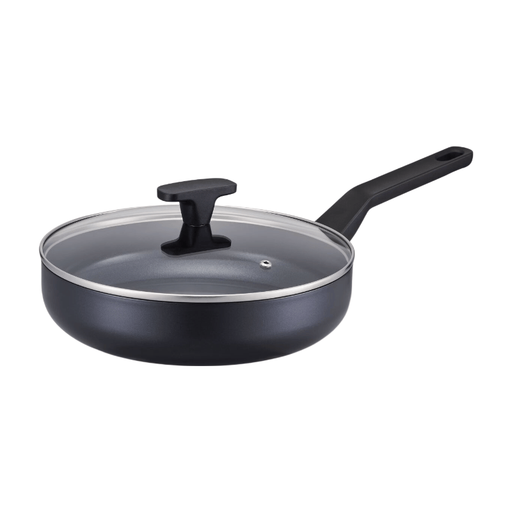
Why this fits the profile: The deep pan and glass lid are practical for simmering, sauces, stews and family meals.
The maximum fill level, base diameter and care advice are all specified. The pan should not be overfilled and must be allowed to cool down gently before cleaning.
26 cm size, PFAS-free ceramic double non-stick coating, induction compatibility and glass lid.
We’ve put together a full, up-to-date list of products that fully meet these strict selection criteria and comply with current European safety regulations.
That depends on the base. Only choose a model where induction is explicitly listed as a compatible heat source. If in doubt, also check the recommended base diameter and place the pan properly in the centre of the cooking zone.
The lifespan depends on use, temperature and maintenance. Don’t use metal utensils, don’t heat the pan when empty and avoid abrasive sponges. Hand washing is generally less harsh on the coating than regular dishwasher use, even when the pan is labelled as dishwasher-safe.
“Healthy frying pan” is not a technical quality classification. If you want a pan without PFAS, you need to check the specific product specifications. According to the product information from several of the brands mentioned, their ceramic coatings are PFAS-free, but this claim does not automatically apply to every ceramic pan. Also pay attention to safe use, the maximum temperature and maintenance.
