
Vandaag of morgen in huis

Kwaliteit gegarandeerd

Welkomstaanbiedingen ontgrendelen: GRATIS bezorging | Tot 80% korting | Gratis 30 dagen JoyPlus-proefperiode
Download de app
A ceramic frying pan might seem straightforward to choose at first glance. Yet pans vary greatly in coating, size, heat source compatibility and maintenance. A low price can be tempting, but a pan that doesn't work well on induction or quickly loses its non-stick properties will ultimately be a poor purchase.
For British households, these three pitfalls are particularly important:
A ceramic pan usually has a metal base, such as aluminium or stainless steel, with a ceramic non-stick coating. Aluminium generally heats up quickly. A multi-layer stainless steel base can distribute heat more evenly and is often suitable for different hobs.
If you are looking for a PFAS-free frying pan or a non-stick pan without Teflon, you need to read the material information carefully. On several models in this selection, the product information explicitly states that the coating is free from PFAS, PTFE and PFOA. Take this as a product specification: according to the brand's product information, the coating in question is free from these substances. That is different from a general guarantee about every ceramic pan on the market.
Also pay attention to the interior. The PURECOOK pans, for example, have a stainless steel inner surface without a chemical inner coating; the ceramic finish is on the outside. That is therefore a different design from a classic ceramic non-stick frying pan.
An induction frying pan needs a magnetic base. For gas and electric hobs, a flat base and good heat distribution are particularly important. So check before you buy whether the pan is suitable for:
For one person or small portions, 20 cm is practical. A 24 cm pan suits meals for roughly one to three people. With 28 to 32 cm you get more space for stir-frying, several pieces of meat or family portions. A frying pan for all heat sources is only useful if the size also fits your cooking zone.
A deeper ceramic sauté pan is more suitable for sauces, stews and dishes with a lot of liquid. A standard frying pan has a lower rim and is handier for eggs, pancakes and searing.
“Dishwasher-safe” does not automatically mean the coating will retain its properties for years. Manufacturers often recommend hand washing with a soft sponge to extend the lifespan. Do not use metal utensils on a ceramic layer and let a hot pan cool down before rinsing it.
Keep these usage rules in mind:
A coating is a wear-and-tear component. Even with a durable frying pan, the lifespan depends on temperature, utensils and cleaning method.
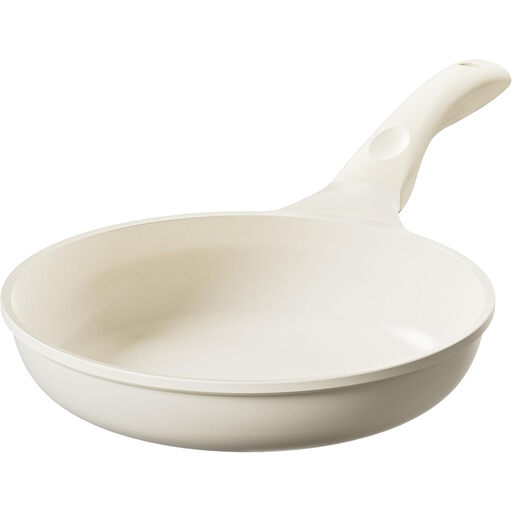
Why this fits the profile: The 24 cm size is suitable for everyday portions without the pan taking up unnecessary space. According to the product information, the pan is suitable for induction, gas and electric hobs.
The product specification mentions a PTFE-, PFOA- and PFAS-free ceramic coating and indicates the permitted heat sources. Do not use metal utensils to protect the layer.
Aluminium, ceramic and stainless steel; ergonomic Bakelite handle; according to the product description, dishwasher-safe.
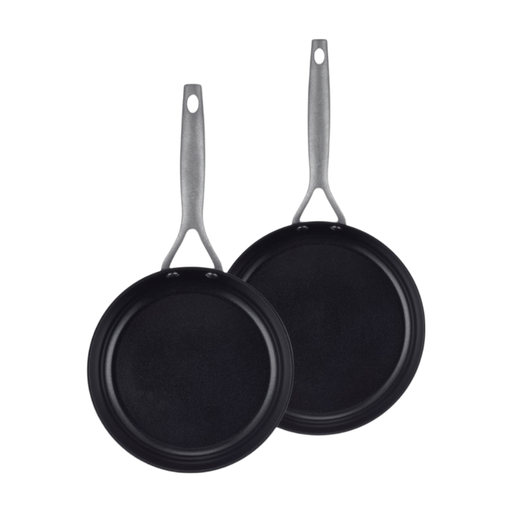
Why this fits the profile: The combination of 20 and 24 cm covers small portions and everyday cooking for one to three people. The set suits those who want to weigh up material, care and oven use together.
According to Brabantia, the set is made from 100% recycled forged aluminium and has a PFAS-free ceramic coating. Hand washing is still recommended to preserve the coating for longer.
Suitable for induction, gas, electric, ceramic and halogen; oven-safe up to 200 °C; dishwasher-safe according to the product specification.
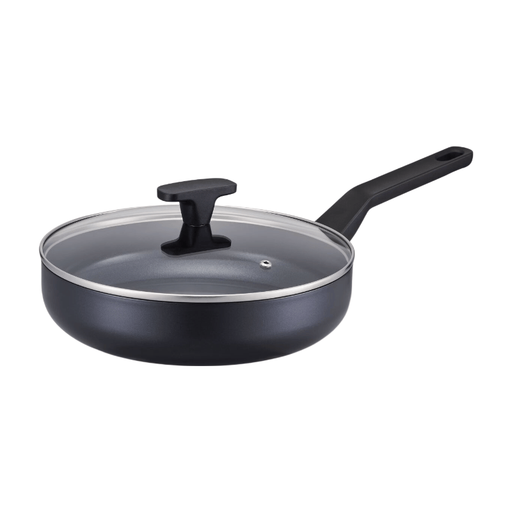
Why this fits the profile: The deeper shape and glass lid are practical for sauces, stews and stir-fry meals. This is an alternative for those who need more than a flat frying pan.
The product information mentions a PFAS-free ceramic double non-stick coating and suitability for multiple heat sources. The pan must be positioned correctly on the induction zone.
26 cm with glass lid; body made from 100% recycled aluminium according to Brabantia; suitable for induction, gas, electric, ceramic and halogen.
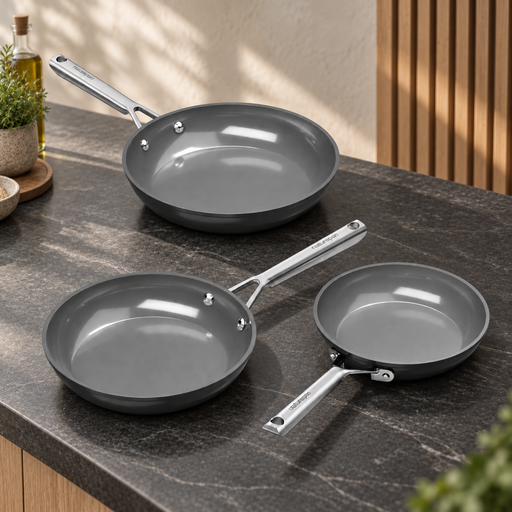
Why this fits the profile: Three diameters make it easier to divide portions and cooking tasks. The set is practical for households that regularly prepare eggs, vegetables and larger meals.
According to the product description, the ceramic layer is reinforced with diamond and titanium particles and is free from PTFE, PFAS and PFOA. Sharp metal tools are still not recommended.
20, 24 and 28 cm; suitable for induction, gas, ceramic and electric; according to the product information, oven-safe up to 260 °C and dishwasher-safe.
We have compiled a full, up-to-date list of products that fully meet these strict selection criteria and comply with current European safety regulations.
That depends on the base. Only choose a model where induction is explicitly listed as a compatible heat source. Place the pan in the centre of the cooking zone and check that the base diameter fits properly. A pan that is suitable for gas or electric hobs will not automatically work on induction.
The lifespan varies by product and usage. High temperatures, empty preheating, metal spatulas and abrasive cleaning can damage the coating more quickly. Hand washing with a soft sponge, moderate heat and wooden or silicone tools help preserve the properties for longer.
Some models are dishwasher-safe according to their product information, such as certain Redchef, Brabantia and Naturepan models. However, brands sometimes recommend hand washing to keep the coating and handles in good condition for longer. So always check the care instructions for the specific product.
