
Vandaag of morgen in huis

Kwaliteit gegarandeerd

Welkomstaanbiedingen ontgrendelen: GRATIS bezorging | Tot 80% korting | Gratis 30 dagen JoyPlus-proefperiode
Download de app
A ceramic frying pan might seem straightforward to choose at first glance. Yet pans vary considerably in coating, heat distribution, maintenance and suitability for induction hobs. A smooth cooking surface alone doesn’t tell you enough about its lifespan or everyday performance.
If you’re looking for a PFAS-free frying pan, a ceramic non-stick pan or a pan without Teflon, it’s worth checking the product information carefully. Below are the key points to consider, along with some suitable options for different households.
Ceramic coatings are often marketed as an alternative to traditional non-stick layers. However, you need to check whether the manufacturer explicitly states that the coating is PFAS-free, PTFE-free or PFOA-free. The word “ceramic” alone is not sufficient proof.
Also pay attention to the difference between:
According to the product information from brands including Redchef, Brabantia, Tefal and SENSARTE, the relevant coatings are PFAS-free. Always check the current specifications on the product page.
A dishwasher-safe frying pan can be practical, but repeated washing at high temperatures with strong detergents can put extra strain on the coating and handle. For many pans, hand washing is recommended to extend their useful life.
Always let a pan cool down before washing it. A sudden change from a hot pan to cold water can cause warping. With ceramic coatings, it’s best to use wooden, silicone or plastic spatulas.
A 24 cm ceramic frying pan is suitable for smaller portions and everyday use. A 28 cm ceramic frying pan offers more space for multiple ingredients, but also requires a compatible cooking zone and enough storage space.
With induction hobs, the base diameter is particularly important. A pan that is much larger than the cooking zone may heat less evenly. So check not only the rim diameter, but also information about the base and compatibility with your hob.
An aluminium pan generally heats up quickly and is relatively light. Some models combine aluminium with stainless steel for a different base construction or extra stability. The coating then determines how easily food releases and how carefully you need to handle the pan.
A PFAS-free frying pan is not automatically suitable for high temperatures, oven use or metal utensils. Always check:
Claims about “non-stick”, scratch resistance or long-lasting performance come from the brand’s product description. Treat them as product specifications, not as a guarantee of a certain lifespan.
Use this guide as a practical reference:
A deep pan with a lid is a different choice from a shallow frying pan. Such a model is more practical for simmering, braising and meal prepping, but less suitable if you mainly cook pancakes or thin omelettes.
For British kitchens, an induction frying pan is often desirable, but check whether the pan is also suitable for gas, electric, ceramic and halogen hobs. “All heat sources” should be stated in the specifications.
Also pay attention to the handle:
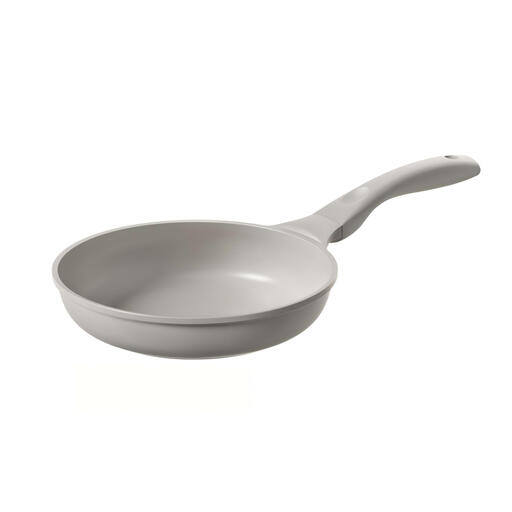
Why this fits the profile: The 24 cm size is practical for everyday portions and smaller kitchens. According to the product information, this pan is suitable for induction, gas and electric hobs.
The product description explicitly states a PTFE-, PFOA- and PFAS-free ceramic coating. Do not use metal utensils to minimise scratches.
24 cm diameter, ergonomic bakelite handle and, according to the specifications, dishwasher safe.
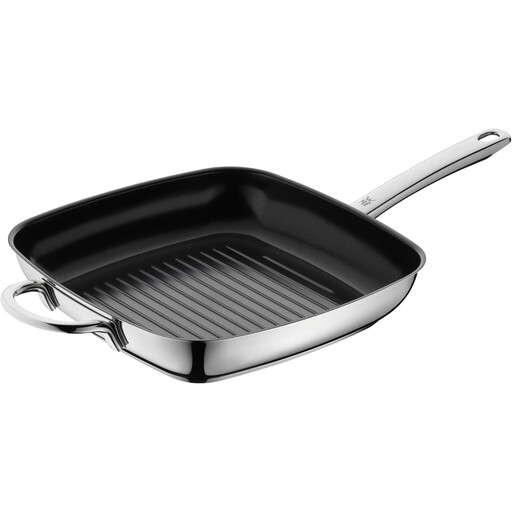
Why this fits the profile: This 28 x 28 cm grill pan is designed for grilling and preparing larger portions. The TransTherm base is, according to the product information, suitable for all heat sources, including induction.
The product page clearly states that the pan is not dishwasher safe. This prevents any misunderstanding about maintenance.
Cromargan 18/10 stainless steel, ceramic coating, wide pouring rim and oven use according to the product information.
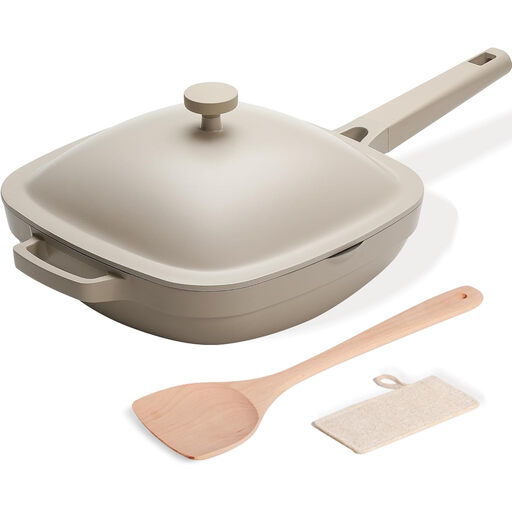
Why this fits the profile: The deep shape with a 3.8 quart capacity and matching lid is ideal for stir-frying, simmering, braising and meal prepping.
The specifications explicitly state that this pan is not dishwasher safe and not oven safe. So you know in advance that hand washing and hob use are required.
PFAS-free Ti-ceramic coating according to the product description, two pouring spouts, lid and wooden spatula included.
We’ve put together a full, up-to-date list of products that fully meet these strict selection criteria and comply with current European safety regulations.
A ceramic non-stick pan generally retains its properties better when you use it gently:
Even with a dishwasher-safe frying pan, hand washing can be a sensible choice if you want to preserve the coating for as long as possible. Do not continue using a pan if the coating is damaged or loose.
Not always. “Ceramic” describes the type of coating, while “without Teflon” usually refers to the absence of PTFE. Check the product information for explicit mentions of PFAS-, PTFE- and PFOA-free.
For one person or small portions, 20 or 24 cm is often sufficient. For a household of several people, 28 cm is more practical. A frying pan set with 20 and 24 cm offers flexibility for different quantities.
That depends on use, heating, cleaning and avoiding metal utensils. There is no fixed lifespan that applies to every model. So follow the manufacturer’s care instructions and replace the pan when the coating becomes clearly damaged.
