
Vandaag of morgen in huis

Kwaliteit gegarandeerd

Welkomstaanbiedingen ontgrendelen: GRATIS bezorging | Tot 80% korting | Gratis 30 dagen JoyPlus-proefperiode
Download de app
A ceramic frying pan might seem straightforward to choose at first glance. Yet pans differ greatly in coating, base, size and care. A low price can be tempting, but the wrong size or an unsuitable hob base will quickly lead to frustration.
Pay particular attention to these common pitfalls:
A PFAS-free frying pan is an important buying criterion for many households. Check whether the manufacturer clearly states this, and also verify which part of the pan has the coating. On some models, the ceramic is on the inside, while on others the outside is ceramic and the cooking surface is stainless steel.
According to their product information, the Brabantia Onyx and Dusk models come with a 100% PFAS-free ceramic non-stick coating. The Tefal Ceramic Renew set is also described as PFAS-free in the product information. That is a verifiable product specification, but it doesn’t mean the coating requires no maintenance.
With ceramic pans, it’s best to use:
Do not preheat an empty non-stick pan. The Cooker King Lingbai wok explicitly states this as important usage information: add oil or ingredients before heating the pan.
An induction frying pan needs a suitable magnetic base. So check whether the pan is compatible with your hob. The models in the selection below are, according to their product information, suitable for multiple heat sources, including induction, gas, electric, ceramic and halogen.
With induction, also pay attention to the base diameter. The Brabantia Onyx sauté pan, for example, has a base diameter of 17 cm, and the Onyx wok pan has a base diameter of 16 cm. Place the pan centred on a suitable induction zone. A 28 cm cooking surface doesn’t automatically mean the entire pan base is the same size.
An aluminium pan usually heats up quickly. A multi-layer construction, such as that of the PURECOOK pans made from 304 stainless steel, is designed to distribute heat through a conductive middle layer. According to the product information, these pans are suitable for induction and gas. Always check the current specifications of the chosen model before purchasing.
Choose the size based on portions and cooking habits:
A frying pan for all heat sources is flexible if you move house or use different hobs. A lid is useful for simmering and braising, but not essential for frying. A pan with a removable or heat-resistant handle can be easier to store, while a fixed metal handle may be suitable for oven use. Always check the maximum oven temperature.

Why this fits the profile: The 24 cm size is manageable for smaller households and everyday dishes. According to the product information, the pan is suitable for all heat sources and for the oven up to 200 °C.
The product information mentions the PFAS-free ceramic coating, hob compatibility and recommended hand washing. So you don’t have to rely solely on general marketing terms.
24 cm, 100% recycled forged aluminium according to product information, RCS marking and dishwasher safety.
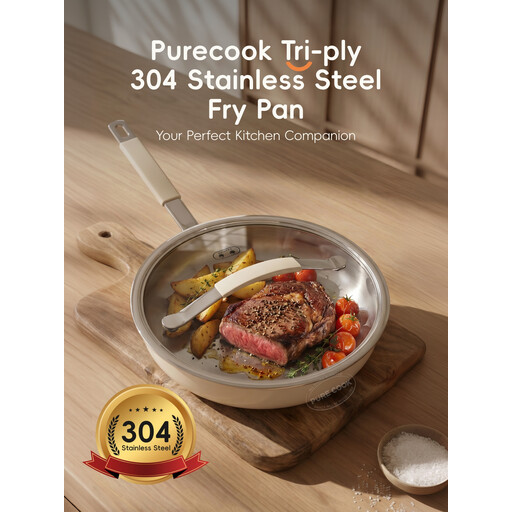
Why this fits the profile: This pan offers a 26 cm cooking surface, a glass lid and a three-layer construction for frying, sautéing, braising and simmering.
The cooking surface is made of sandblasted stainless steel and, according to the product information, has no chemical inner layer. Do not use metal utensils and avoid abrasive cleaners.
304 stainless steel, three-layer base, glass lid and suitable for induction and gas according to the product specifications.
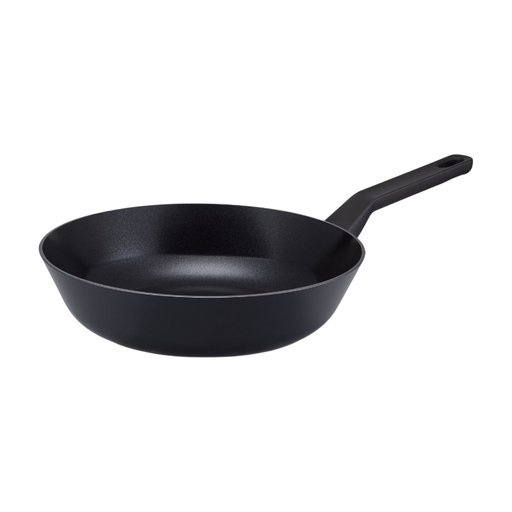
Why this fits the profile: The 28 cm shape offers room for vegetables, noodles and stir-fry dishes for several people. According to the product information, the wok is suitable for all heat sources.
The product information states the type of coating, the base diameter of 16 cm and a maximum food load of 2 kg. This makes the practical limits clearer than a general claim about large capacity.
28 cm, 100% recycled aluminium according to product information, PFAS-free ceramic coating and dishwasher safety.
We’ve put together a full, up-to-date list of products that fully meet these strict selection criteria and current European safety regulations.
A ceramic coating generally stays in better condition when you don’t put unnecessary strain on the pan. Follow this routine:
A frying pan set such as the Tefal Ceramic Renew with 24 and 28 cm pans can be handy if you prepare both small and large portions. According to the product information, this set is not dishwasher-safe; hand washing and wooden or silicone utensils are recommended.
That depends on the base, not just the ceramic coating. Choose a model where induction is explicitly stated. With an induction hob, also check whether the base diameter matches the cooking zone and place the pan centred.
The lifespan depends on heat, utensils, cleaning and storage. A coating that is frequently heated to high temperatures or used with metal can wear out more quickly. Hand washing, soft utensils and low to medium heat help keep the pan in good condition.
According to the product information, some models are dishwasher-safe, including several Brabantia pans and the Sanho frying pan. However, hand washing can help preserve the coating for longer. So always check the care instructions for the specific model before putting the pan in the dishwasher.
