
Vandaag of morgen in huis

Kwaliteit gegarandeerd

Welkomstaanbiedingen ontgrendelen: GRATIS bezorging | Tot 80% korting | Gratis 30 dagen JoyPlus-proefperiode
Download de app
Need a new frying pan? A ceramic frying pan is an easy choice if you're looking for a PFAS-free frying pan for healthier cooking. But the market is flooded with pans that promise the world. Many of those promises evaporate after just a few months in the kitchen.
As a Joybuy Product Recommendation Officer, I see daily which specifications truly matter and which marketing claims you're better off ignoring. Before you invest in a new pan, it's smart to know what to look for. Let's go over the three most common pitfalls.
To avoid these problems, focus on a few concrete specifications. These determine whether you're buying a pan for a few months or for years of cooking enjoyment.
The base is the most important part of your pan, especially if you cook on an induction hob. A good pan has a thick, multi-layered base that distributes heat efficiently and evenly.
A PFAS-free frying pan has become the standard, but not every ceramic non-stick coating is created equal. Its durability depends on its composition.
The handle not only determines ease of use but also whether you can use the pan in the oven.
Based on these criteria, we have selected a number of pans that suit different home cooks.
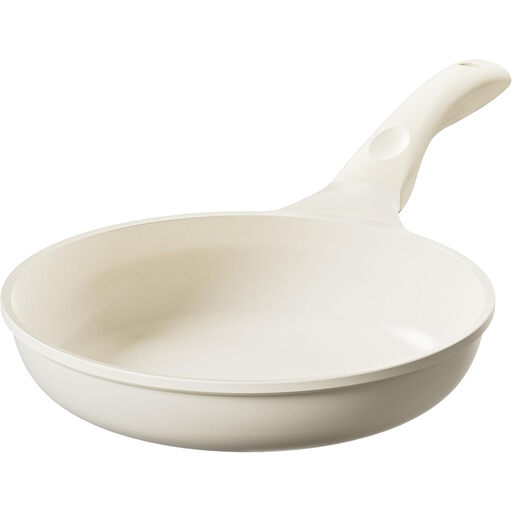
Why This Fits Their Persona: Perfect for those switching to PFAS-free cooking without a major investment. Ideal for daily, simple meals like an egg or pancake in a one or two-person household.
While many budget pans wear out quickly, this one offers a solid ceramic base for daily use. The Bakelite handle doesn't get hot, which prevents a common inconvenience with cheaper pans.
Fast, even heating on all heat sources, including induction. Very easy to clean; often, a wipe with a cloth is sufficient.
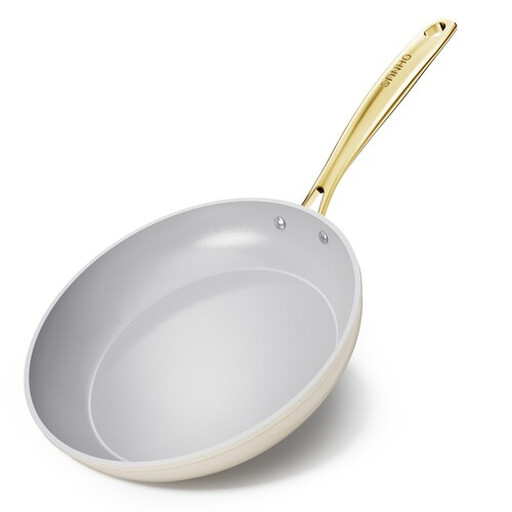
Why This Fits Their Persona: For the cook who demands more from a pan. The oven safety up to 260°C makes it possible to move dishes from the stove directly into the oven for browning or finishing.
The 'scratch-resistant' claim is backed here by a coating reinforced with diamond and titanium. According to the manufacturer, this provides noticeably higher durability than standard ceramic layers, if used correctly.
Oven-safe up to 260°C. The PVD handle stays cool on the stove, which increases safety and ease of use.
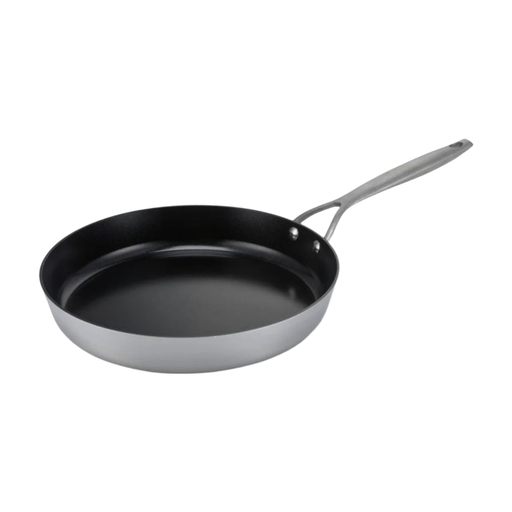
Why This Fits Their Persona: With a diameter of 28 cm, this pan is ideal for preparing meals for the whole family. Made from 100% recycled aluminium, it's a conscious choice for the eco-aware cook.
This pan combines a large size with a solid construction, preventing the base from warping and ensuring even heat distribution—a common problem with larger, cheaper pans.
Large cooking surface (28 cm) and oven-safe up to 200°C. Dishwasher safe (although hand washing is recommended for a longer lifespan).
We have compiled a complete, up-to-date list of products that fully meet these strict selection criteria and Dutch safety regulations.
The lifespan of a ceramic frying pan depends heavily on use and maintenance, but it typically ranges from 1 to 3 years. To maximise its lifespan:
The term healthy pan refers to the fact that a ceramic non-stick coating is free of potentially harmful chemicals like PFAS, PFOA, and PTFE. Additionally, a good non-stick coating allows you to cook with less oil or butter. In that sense, it is a conscious choice for those concerned about these substances.
This usually happens if the base of the pan is not (sufficiently) ferromagnetic or if the diameter of the pan's base does not match the cooking zone. When purchasing, always check that the pan is explicitly suitable for induction and that the base diameter fits your hob for efficient operation.
