
Vandaag of morgen in huis

Kwaliteit gegarandeerd

Welkomstaanbiedingen ontgrendelen: GRATIS bezorging | Tot 80% korting | Gratis 30 dagen JoyPlus-proefperiode
Download de app
A ceramic frying pan often seems straightforward on paper: a non-stick coating, suitable for induction and easy to clean. However, many poor purchases come down to small details. For example, a pan may have a ceramic coating but still be unsuitable for your hob. “PFAS-free” may also refer only to the coating, while the rest of the product information remains unclear.
The Joybuy Product Recommendation Officer has listed the key points to check. This allows you to compare ceramic frying pans based on specific features rather than marketing claims.
Most models are metal pans, often made from aluminium or stainless steel, with a ceramic coating on the inside. Heat distribution, weight and induction compatibility are therefore determined mainly by the pan base and the underlying material.
An aluminium pan generally heats up quickly. A steel construction may be heavier, but often feels more stable. Always check the combination of material, base and hob compatibility.
A PFAS-free frying pan can be a practical choice if you want to avoid these substances in cookware. According to the product information provided by the brands mentioned, various ceramic coatings are free from PFAS, PTFE and, in some cases, PFOA. This information comes from the product specifications or the manufacturer’s own claims and should not be interpreted as a medical or health claim.
Any non-stick coating can wear down due to overheating, metal utensils, abrasive scourers and sudden changes in temperature. “Scratch-resistant” therefore does not mean that the coating is immune to damage.
A 24 cm frying pan is not the same as a pan with a 24 cm cooking base. The diameter usually refers to the upper rim. Particularly with induction, the base diameter is important for good contact with the cooking zone.
Do not just look for “non-stick”. Also check:
A ceramic non-stick pan usually performs best at moderate temperatures and with a little oil, where recommended in the instructions. Allow the pan to cool before washing it to reduce thermal shock.
If you are looking for an induction frying pan, check that it has a magnetic base. “Suitable for all heat sources” is only useful when this is also clearly stated in the product specifications. Also check that the base diameter corresponds to the induction zone.
For gas and electric hobs, the fit is less critical, but a stable, flat base remains important. A pan with a wide base may also make more even contact with the hob.
A cool-touch plastic or Bakelite handle is practical when cooking on the hob, but is not automatically suitable for use in the oven. With an ovenproof pan, check the maximum temperature and the material used for the handle.
Care requirements also vary by model. Some pans can go in the dishwasher, while hand washing is recommended to keep the coating usable for longer. A durable frying pan therefore depends not only on its material, but also on how you use and clean it.
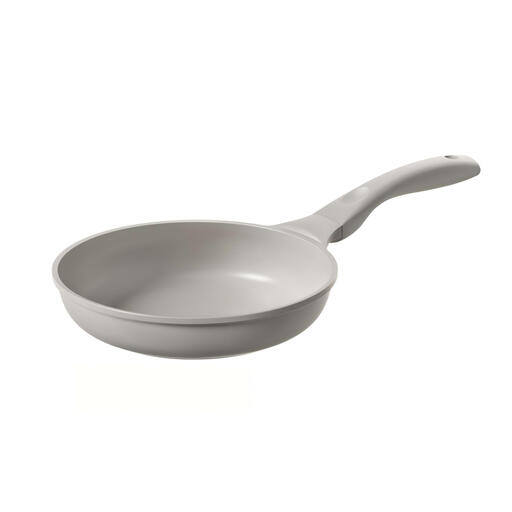
Why it suits this profile: This 24 cm pan is designed for everyday cooking in smaller households and, according to the product information, is suitable for induction, gas and electric hobs.
The specifications explicitly mention a ceramic coating without PTFE, PFOA or PFAS, as well as compatibility with multiple heat sources. Do not use metal utensils.
Aluminium, ceramic and stainless steel; ergonomic Bakelite handle; described as dishwasher-safe.
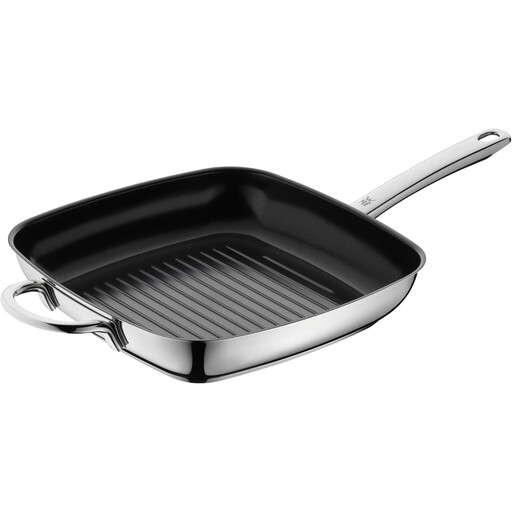
Why it suits this profile: The square shape and 28 cm size provide plenty of room for grilled dishes, while the stainless steel construction is suitable for different heat sources.
The product specifications mention a ceramic non-stick coating, induction compatibility and a wide pouring rim. The pan is not dishwasher-safe.
Cromargan 18/10 stainless steel; suitable for all heat sources; ovenproof and fitted with a wide pouring rim.
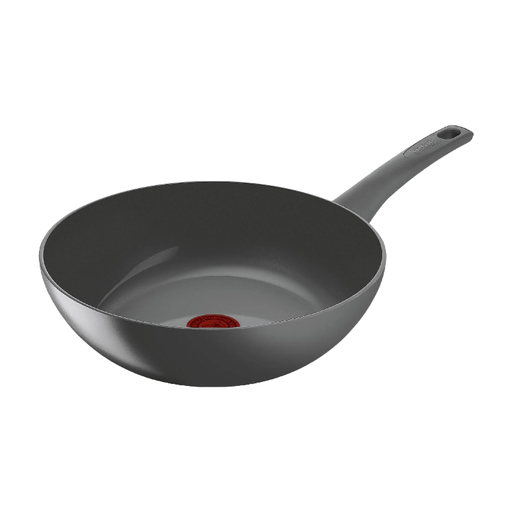
Why it suits this profile: This ceramic wok pan is designed for stir-frying, vegetables, noodles and meals for several people.
The product information mentions a PFAS-free Inoceram coating and suitability for induction, gas, electric, ceramic and halogen cooking. Hand washing is required.
28 cm diameter; 100% recycled aluminium according to the product description; Thermo-Signal indicator and improved induction base.

Why it suits this profile: The two sizes are practical when preparing a small portion and a family meal at the same time.
The specifications mention a PFAS-free ceramic coating, induction compatibility and an oven limit of 200 °C. Hand washing helps protect the coating.
20 and 24 cm set; 100% recycled forged aluminium according to the product information; dishwasher-safe and ovenproof up to 200 °C.
We have put together a complete, up-to-date list of products that fully meet these strict selection criteria and the applicable European safety regulations.
This varies by model. A ceramic coating says nothing about the base. Check that the product information explicitly states induction-compatible and pay attention to the base diameter. According to their product specifications, the models mentioned above are suitable for induction hobs.
Allow the pan to cool first, then use warm water, mild washing-up liquid and a soft sponge. Avoid steel wool, abrasive cleaners and metal spatulas. Even when a pan is dishwasher-safe, hand washing can help preserve the ceramic non-stick coating for longer.
Its lifespan depends on the temperature, frequency of use and care. Do not overheat the pan while it is empty, use suitable utensils and avoid sudden changes in temperature. Replace the pan when the coating begins to visibly peel, is badly damaged or the pan base becomes warped.
