
Vandaag of morgen in huis

Kwaliteit gegarandeerd

Welkomstaanbiedingen ontgrendelen: GRATIS bezorging | Tot 80% korting | Gratis 30 dagen JoyPlus-proefperiode
Download de app
A ceramic frying pan may seem straightforward to choose at first glance. However, pans vary considerably in hob compatibility, care requirements, size and how the non-stick coating should be used. A low price does not tell you everything, but a higher price is no guarantee of a longer lifespan either.
For UK households, three pitfalls are particularly important:
A ceramic pan usually has a coating applied to an aluminium, stainless steel or cast metal base. The term “ceramic” therefore does not mean that the entire pan is made of ceramic.
If you are looking for a PFAS-free frying pan, it is worth reading the full specifications. According to Redchef’s own product information, the Starlight pans are free from PTFE, PFOA and PFAS. Brabantia states that the Dusk and Onyx series feature a 100% PFAS-free ceramic coating. Naturepan describes a coating that, according to the manufacturer, is free from PTFE, PFAS and PFOA.
Also look out for terms such as “non-toxic” or “healthy cooking”. These are marketing statements made by the seller. On their own, they do not prove that a pan offers a health benefit for every user. Instead, focus on verifiable information: material, coating type, maximum temperature and care instructions.
The diameter determines how much food you can prepare at once and how much of the pan sits over the hob zone.
A 28 cm induction frying pan does not always have a 28 cm base. With induction in particular, the diameter of the magnetic base is important. A base that is too small may heat less efficiently, while an oversized pan may extend beyond the cooking zone.
An oven-safe frying pan is useful for dishes that are first seared on the hob and then finished in the oven. Always check both the maximum temperature and the handle material.
According to the product information, the Brabantia Dusk series is oven-safe up to 200 °C. The Naturepan set is listed with a maximum oven temperature of 260 °C. The Redchef Gemstone set states 842 °F, which is equivalent to approximately 450 °C. Always follow the instructions, including the guidance for removing detachable handles.
“Dishwasher-safe” does not mean that the coating will not experience wear. Brabantia states that its pans can go in the dishwasher, but recommends hand-washing them to extend their lifespan. According to the product information, the WMF Durado ceramic grill pan is not suitable for the dishwasher.
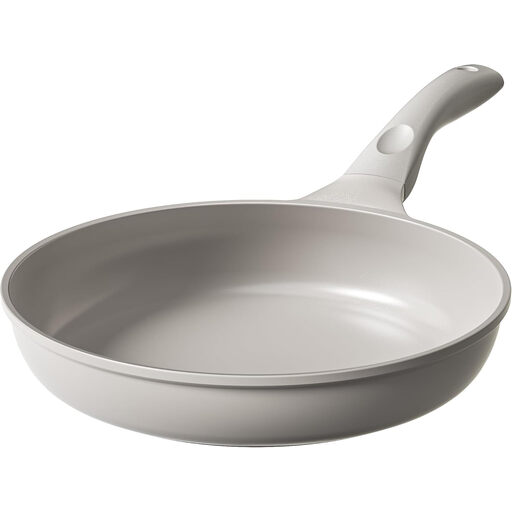
Why it suits this profile: The 28 cm size is well suited to everyday cooking for a family or several diners. According to the product description, the pan is suitable for induction, gas and electric hobs.
The specifications state that it is free from PTFE, PFOA and PFAS, and suitable for several heat sources. However, use wooden or silicone utensils and avoid heating the pan empty.
28 cm diameter, aluminium, ceramic and stainless steel construction, ergonomic Bakelite handle and, according to the product information, dishwasher-safe.
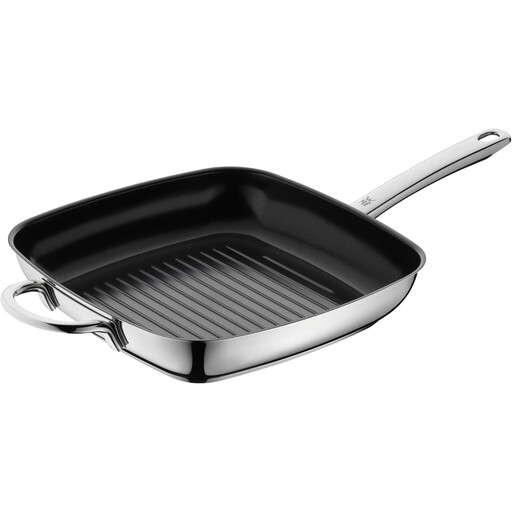
Why it suits this profile: This grill pan is designed for anyone who wants to prepare vegetables, meat or bread with distinctive grill marks and values a stainless steel Cromargan 18/10 body.
Hob compatibility is clearly specified, including induction. The pan is not dishwasher-safe, avoiding any incorrect expectations about care.
28 × 28 cm, ceramic coating, wide pouring rim, ergonomic handle and suitable for all the listed heat sources.
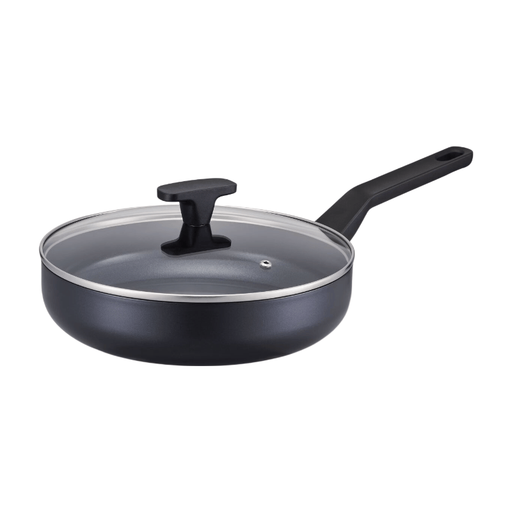
Why it suits this profile: The higher sides and glass lid are practical for sauces, casseroles, vegetables and one-pot meals for the family.
According to the product information, the ceramic coating is PFAS-free and suitable for induction, gas, electric, ceramic and halogen cooking. Hand-washing is still recommended.
26 cm size, glass lid, recycled aluminium, ceramic double non-stick coating and dishwasher compatibility according to the product specifications.
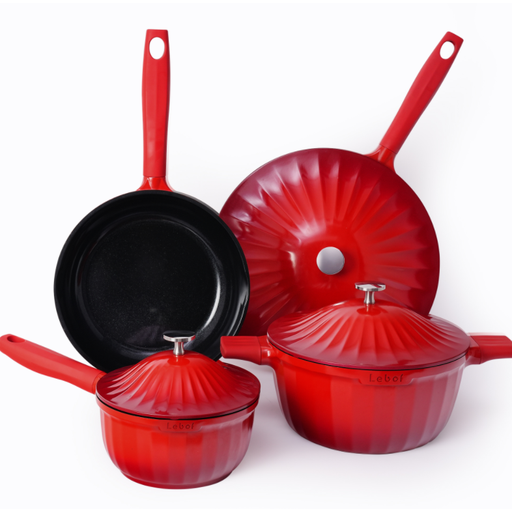
Why it suits this profile: The set contains two frying pans, two saucepans and a sauté pan with lids. This is practical when preparing several dishes at the same time.
The set is stated to be compatible with all hobs, including induction, and clearly indicates that the pans are not oven-safe.
Seven pieces, aluminium with Ti-Ceramic coating and, according to the product information, free from PFAS, PFOA and PTFE.
We have put together a complete, up-to-date list of products that fully meet these strict selection criteria and the applicable European safety regulations.
A ceramic non-stick frying pan will generally continue to perform well for longer when you follow the instructions for use:
A ceramic wok is suitable for stir-frying and larger quantities, while a ceramic sauté pan is better suited to sauces and casseroles. If you need several sizes, a ceramic cookware set may be more economical and practical than buying individual pans.
That depends on the base. Check that “induction” is explicitly stated in the product specifications. A pan may be suitable for gas and electric cooking but will not work on induction without a magnetic base.
Its lifespan depends on temperature, utensils, cleaning and frequency of use. There is no fixed timeframe that applies to every pan. Avoid heating it empty, do not use metal spatulas, and hand-wash it when recommended by the manufacturer to help preserve the coating.
Not necessarily. A dishwasher saves time, but heat, water pressure and dishwasher detergent can place greater strain on the coating and handle. Check whether the pan is dishwasher-safe and whether hand-washing is recommended to extend its lifespan.
