
Vandaag of morgen in huis

Kwaliteit gegarandeerd

Welkomstaanbiedingen ontgrendelen: GRATIS bezorging | Tot 80% korting | Gratis 30 dagen JoyPlus-proefperiode
Download de app
A ceramic frying pan may seem easy to choose at first glance. However, pans vary considerably in their coating, size, heat source compatibility and care requirements. A pan described in an advert as scratch-resistant or PFAS-free will not necessarily suit your hob or everyday cooking habits.
For UK households, three pitfalls are particularly important:
A ceramic frying pan usually consists of aluminium with a ceramic non-stick coating. Aluminium is lightweight and conducts heat quickly, while the coating helps food release more easily.
If you are looking for a PFAS-free frying pan or a PFOA-free frying pan, check the full product information. Claims such as PFAS-free, PFOA-free or PTFE-free are product specifications made by the brand and should not be confused with one another. According to the product information provided by various brands in this range, certain coatings are free from these substances or have been produced without intentionally added substances. If in doubt, check the packaging, manufacturer information and current product page.
A “healthy frying pan” is not a medical category. However, a coating may allow you to cook with little oil, according to the product description. This says nothing about the overall nutritional value of a meal.
A 24 cm frying pan is practical for eggs, an omelette, vegetables or a meal for one to three people. A 28 cm pan provides more cooking surface for families, but also requires more space on the hob and in the cupboard.
Do not look only at the diameter. The base diameter may be smaller than the top rim. With induction, the base must make sufficient contact with the cooking zone. For larger portions, a ceramic sauté pan with higher sides and a lid may be more useful than a shallow frying pan.
A model with a lid is useful for simmering, sauces and one-pan dishes. Do check whether the lid is included and whether the pan is oven-safe. These features vary from model to model.
A good induction frying pan has a magnetic base. Also check whether the pan is suitable for gas, electric hobs, ceramic hobs and halogen when you use multiple heat sources.
When assessing the handle, look for:
With ceramic coatings, hand washing is often the wiser choice, even if the product page says the pan is dishwasher-safe. Use low to medium heat, allow the pan to cool before cleaning it, and choose wooden, silicone or nylon utensils. Stop using the pan if the coating begins to peel or becomes visibly damaged.
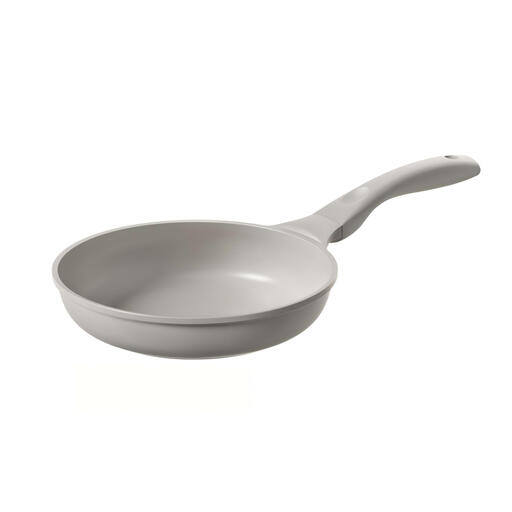
Why it suits this profile: A manageable size for everyday cooking, such as eggs, vegetables and small portions. According to the product information, this pan is suitable for induction, gas and electric hobs.
The product description mentions a ceramic coating without PTFE, PFOA and PFAS. Even so, do not use metal utensils to help prevent scratches.
24 cm, aluminium, ceramic and stainless steel construction, plus an ergonomic Bakelite handle. According to the specifications, the pan is dishwasher-safe.

Why it suits this profile: Suitable for those who care about material choice, a fixed handle and use on multiple heat sources. The pan is designed for meals for up to around three people.
The product specifications list 100% recycled forged aluminium, a PFAS-free ceramic coating and a riveted stainless steel handle.
Suitable for induction, gas, electric, ceramic and halogen cooking. According to the product information, the pan is oven-safe up to 200 °C.
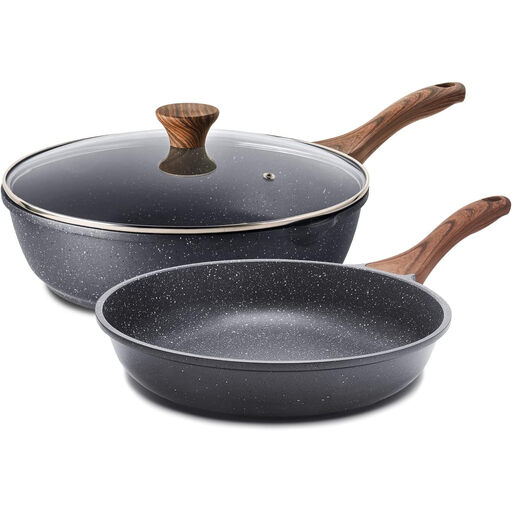
Why it suits this profile: This combination is suitable for anyone who wants to sauté, simmer and prepare larger portions as well as fry food. The glass lid is designed for the deep sauté pan.
The specifications mention a magnetic stainless steel base for induction. Hand washing is recommended to help preserve the non-stick coating for longer.
A 9.5-inch frying pan plus a 5-quart sauté pan with glass lid. According to the product information, both are suitable for gas, electric and induction hobs.
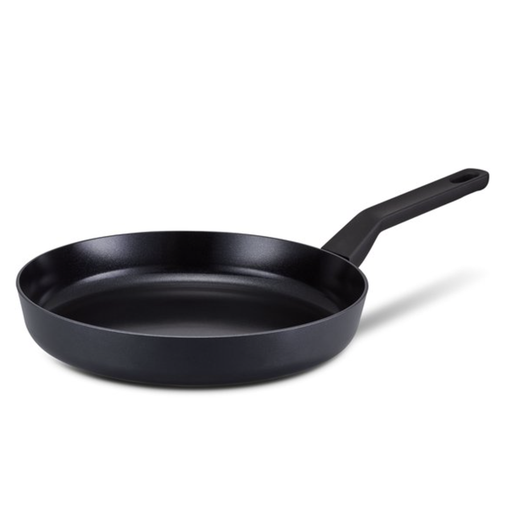
Why it suits this profile: A compact choice for one person, an omelette, fried egg or small side dishes. Its size takes up very little space.
Its small size means you do not need to buy a large pan for small portions. According to Brabantia’s product information, the coating is PFAS-free and the pan is made from recycled aluminium.
20 cm diameter, ceramic double non-stick coating and, according to the specifications, suitable for induction, gas, electric, ceramic and halogen hobs.
We have put together a complete, up-to-date list of products that fully meet these strict selection criteria and the applicable European safety regulations.
That depends on the base. Choose a model that is explicitly marked as suitable for induction. A magnetic stainless steel base is a common construction for this purpose. Also check whether the base diameter is suitable for the induction zone.
Its lifespan depends on use and care. Do not heat the pan empty at a high temperature for extended periods, do not use metal spatulas and avoid abrasive cleaning products. Hand washing with a soft sponge will generally help put less strain on the coating. Replace the pan if the coating starts to peel or becomes damaged.
The pan itself does not use any extra electricity or gas. Energy consumption is mainly determined by the hob, temperature and cooking time. According to the product specifications, an aluminium pan heats up quickly, but excessive heat can damage the coating. Using a suitable cooking zone and low to medium heat is therefore practical for everyday use.
