
Vandaag of morgen in huis

Kwaliteit gegarandeerd

Welkomstaanbiedingen ontgrendelen: GRATIS bezorging | Tot 80% korting | Gratis 30 dagen JoyPlus-proefperiode
Download de app
A ceramic frying pan may seem easy to choose at first glance. However, small differences in the coating, base and care requirements can determine whether your pan continues to perform well. This is particularly important for induction hobs, everyday family cooking or use with very little oil. It is worth looking beyond terms such as “non-stick” or “healthy”.
A PFAS-free frying pan may suit consumers who prefer to avoid certain substances. However, always check which materials are actually listed: ceramic coating, aluminium, stainless steel or a combination of these.
According to product information from Redchef, SENSARTE, Brabantia and Sanho, among others, the models mentioned are PFAS-free. These are claims made in the brands’ product information, so check the latest specifications, instructions for use and any relevant certifications before buying.
A ceramic coating is also vulnerable to:
A PFOA-free frying pan is therefore not automatically maintenance-free. How you use the pan has a significant effect on its non-stick performance.
A frying pan suitable for all hobs needs to have an appropriate base. Induction requires a magnetic stainless-steel layer. With gas and electric hobs, heat distribution and the stability of the pan are particularly important.
Pay attention to these points:
A 20 to 24 cm pan is practical for one or two people and smaller portions. A 28 cm ceramic frying pan offers more space for stir-fries, meat or several eggs, but it also requires a suitably sized cooking zone.
For households with an induction hob, the diameter of the base is more important than the diameter of the rim alone. On some pans, the cooking base is smaller than the stated size.
A ceramic coating is usually applied to an aluminium pan body. Aluminium heats up quickly, while a stainless-steel layer in the base can help with induction cooking. A frying pan with ceramic coating is particularly suitable for frying, sautéing and everyday cooking at low to moderate temperatures.
A fully stainless-steel surface does not have a non-stick coating. This may appeal to anyone wishing to avoid coatings, but cooking then requires more attention to preheating, oil and temperature.
A thicker or multi-layered base generally distributes heat more evenly than a very thin pan. According to the product description, PURECOOK pans with a triple-ply construction consist of stainless steel, an aluminium core and another layer of stainless steel. This is a verifiable material specification, but it does not mean that the pan offers the same non-stick performance as a ceramic pan.
Check whether the pan is dishwasher-safe. This does not always mean that the coating will provide the same performance after frequent dishwasher cycles. Washing by hand with a soft sponge is often the gentler option.
We recommend using:
A pan with a lid is useful for simmering and stewing. When using one, check the maximum oven temperature and whether the lid is oven-safe.
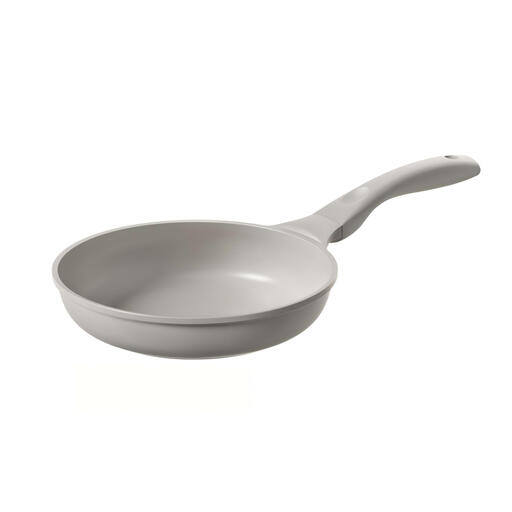
Why it suits this profile: A compact size for breakfast, an omelette or a meal for one to three people. According to the product information, the pan is suitable for induction, gas and electric hobs.
The product description states that it has a PTFE-, PFOA- and PFAS-free ceramic coating and a stainless-steel base for different heat sources. Do not use metal utensils.
24 cm size, ergonomic Bakelite handle and, according to the product information, dishwasher-safe.

Why it suits this profile: Suitable for anyone who pays attention to material selection, certification and use on multiple heat sources.
The product information states that it has a PFAS-free ceramic coating, an RCS mark for recycled aluminium and is oven-safe up to 200 °C.
Suitable for induction, gas, electric, ceramic and halogen hobs; made from 100% recycled forged aluminium according to the product description.
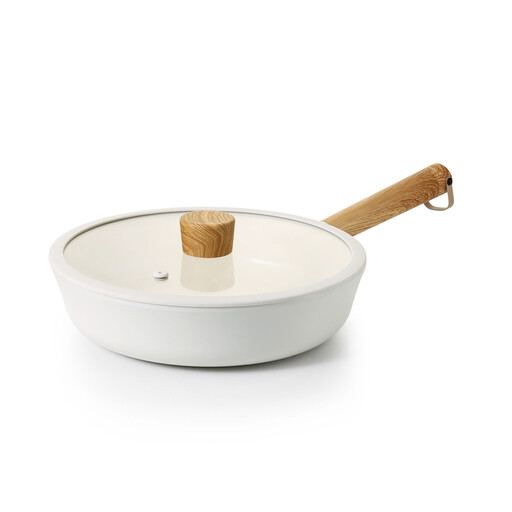
Why it suits this profile: The deep shape and glass lid are practical for stir-frying, sautéing and dishes with sauce for several people.
The specifications mention a magnetic stainless-steel base and compatibility with gas, induction, ceramic, electric and halogen hobs. Hand washing is recommended to help protect the coating.
28 cm diameter, lid included and, according to the product information, free from PTFE, PFAS, lead and cadmium.
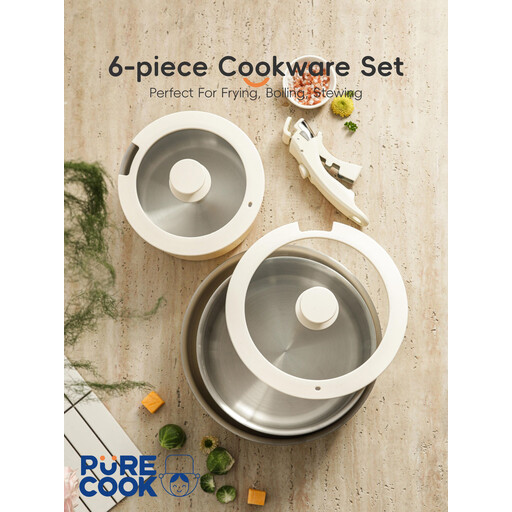
Why it suits this profile: A set with several pans for households that need saucepans and stew pots as well as a ceramic frying pan.
The set combines a ceramic-coated pan with 304 stainless-steel interiors and glass lids. Check the care and heat instructions for each individual item.
Several sizes, a removable handle and glass lids according to the product information; suitable for a range of cooking tasks.
We have compiled a complete, up-to-date list of products that fully meet these strict selection criteria and the applicable European safety regulations.
It can be, but not every ceramic pan works on induction. Look for “induction-compatible” in the product specifications and check whether the base is magnetic. A stainless-steel induction base or magnetic plate is relevant here.
Its lifespan depends on how it is used, the temperature and how it is cared for. Do not use metal utensils, do not heat the pan empty on a high setting and avoid abrasive cleaning. If food consistently starts sticking or the coating becomes visibly damaged, replacing the pan is the wiser option.
There is no general conclusion. A ceramic coating may appeal to anyone looking for a PFAS-free or PFOA-free frying pan, but check the specific product information. The term healthy frying pan is not, in itself, a technical standard. More important are the stated materials, correct use and compliance with the safety instructions.
