
Vandaag of morgen in huis

Kwaliteit gegarandeerd

Welkomstaanbiedingen ontgrendelen: GRATIS bezorging | Tot 80% korting | Gratis 30 dagen JoyPlus-proefperiode
Download de app
A ceramic frying pan may seem straightforward to choose at first glance. However, small differences in the coating, base, size and care requirements can determine whether the pan continues to perform well. Claims such as “PFAS-free”, “wear-resistant” and “suitable for all hobs” deserve particular scrutiny of the product details.
This buying guide will help you choose a pan that suits your hob, household and everyday cooking needs. The recommendations below are based on verifiable product specifications and information from the relevant product descriptions.
According to product information from various brands, including Brabantia, Tefal and Redchef, certain ceramic coatings are free from PFAS, PTFE or PFOA. Always check exactly which claim is being made: PFAS-free, PTFE-free and PFOA-free do not necessarily mean the same thing.
A ceramic non-stick pan can also become less smooth more quickly as a result of:
Therefore, do not treat “healthy frying pan” as a fixed product characteristic. It is wiser to look at the stated coating, materials, instructions for use and care requirements.
A pan may be suitable for gas, electric and ceramic cooking, but not for induction. For example, according to the product information, the Tefal Easy Cook & Clean in 28 and 32 cm is not suitable for induction. By contrast, the Redchef Starlight pans, Brabantia Onyx models and Tefal Renewal pans state that they are compatible with induction.
When buying for induction, do not look only for the word “induction”. The diameter of the magnetic base is important too. A 28 cm pan may have a smaller base, meaning that the entire cooking zone is not used.
A 28 cm frying pan provides room for several portions, but takes up more space on the hob and in the cupboard. A 24 cm frying pan is often more convenient for one to three people. For sauces, stews and dishes containing plenty of liquid, a ceramic sauté pan with higher sides and a lid is more suitable than a shallow frying pan.
Ceramic coatings are often applied to aluminium, cast aluminium or stainless steel. Aluminium generally heats up quickly. A thicker or multi-layer base can distribute heat more evenly, which is particularly relevant when cooking on induction.
Check the following points:
A claim about performance or durability should be read as information provided by the brand. According to Brabantia’s product description, for example, the Onyx range has a PFAS-free ceramic double non-stick coating and an aluminium body made from 100% recycled aluminium. These are product specifications; they do not guarantee that the coating will last equally long with every type of use.
Use this rule of thumb:
A frying pan with a lid or a sauté pan is more practical for simmering. A shallow pan works better for frying, turning food and allowing liquid to evaporate.
“Oven-safe” is only useful if the maximum temperature is also stated. According to the product information, the Brabantia Dusk is oven-safe up to 200 °C. The Redchef Gemstone set states a maximum of 842 °F, approximately 450 °C, but always check the manufacturer’s current instructions before use.
Dishwasher suitability also requires some nuance. Some models can be put in the dishwasher, but hand-washing with a soft sponge is often recommended to keep the ceramic layer looking its best for longer.
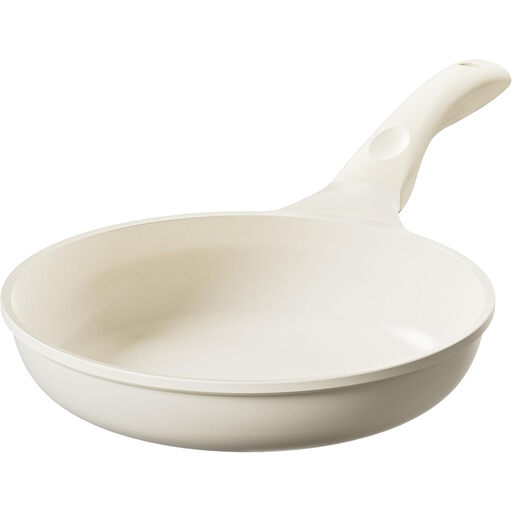
Why it suits this profile: The 24 cm size is easy to handle for everyday cooking and suitable for smaller households. According to the product information, this pan can be used on induction, gas and electric hobs.
The stated hob compatibility helps prevent the wrong purchase for induction cooking. The product description also mentions a ceramic coating without PTFE, PFOA or PFAS.
24 cm, aluminium, ceramic and stainless steel components, an ergonomic Bakelite handle and, according to the description, dishwasher-safe.
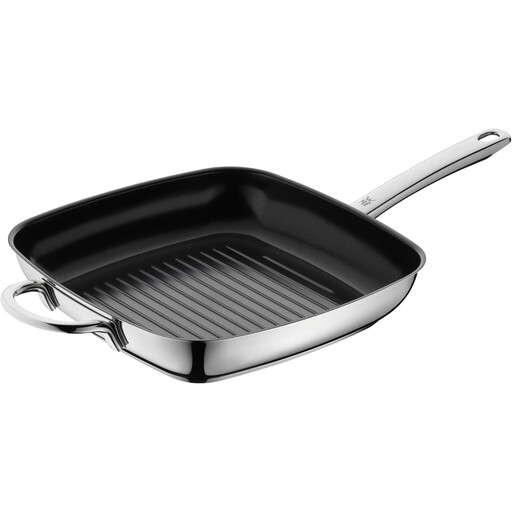
Why it suits this profile: This grill pan is designed for users looking for a heavier stainless steel pan for grilling and frying on different heat sources.
The product information explicitly states that it is suitable for induction and other heat sources. Hand-washing is required, so you can take the care requirements into account before buying.
28 x 28 cm, Cromargan 18/10 stainless steel, ceramic coating, wide pouring rim and oven-safe design according to the product details.
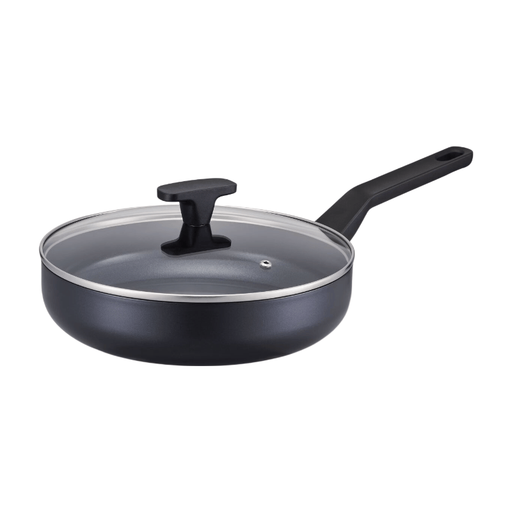
Why it suits this profile: The higher sides and glass lid are ideal for families preparing sauces, vegetables, stews and one-pan meals.
The product information states that the pan is suitable for induction, gas, electric, ceramic and halogen hobs. The stated recommendation to hand-wash also makes the care requirements clear in advance.
26 cm, glass lid, recycled aluminium and PFAS-free ceramic double coating according to Brabantia’s product information, plus suitability for cooking with little oil.
Heat a ceramic frying pan gradually over a medium heat and do not leave it empty on a high setting for extended periods. Use wooden, silicone or plastic spatulas. Allow the pan to cool before washing it and avoid thermal shock from cold water.
Wash it with a soft sponge and mild washing-up liquid, even if the pan is dishwasher-safe. Check the coating and handle regularly. If the coating starts to come away, deep scratches appear or the handle becomes loose, replacing the pan is wiser than continuing to use it.
We have put together a complete, up-to-date list of products that fully meet these strict selection criteria and the applicable European safety regulations.
It varies from model to model. Check whether the manufacturer explicitly states that it is suitable for induction, and also look at the diameter of the magnetic base. Not every pan with a ceramic coating works on induction.
Its service life depends on heat, frequency of use, utensils and cleaning. There is no fixed lifespan that applies to every pan. Hand-washing, low to medium temperatures and soft spatulas can help keep the coating usable for longer.
The pan itself does not use extra energy because of its ceramic coating. An aluminium body and a base that aligns well with the cooking zone can help it heat up quickly and evenly. Use the correct cooking zone and avoid preheating unnecessarily.
