
Vandaag of morgen in huis

Kwaliteit gegarandeerd

Welkomstaanbiedingen ontgrendelen: GRATIS bezorging | Tot 80% korting | Gratis 30 dagen JoyPlus-proefperiode
Download de app
A ceramic frying pan may seem straightforward to choose on paper. However, having the wrong expectations can leave you with a pan that does not work on your hob, is too small for your household or quickly becomes less enjoyable to cook with. Marketing terms such as “extra durable”, “oil-free” and “suitable for all hobs” only mean something once you have checked the technical details.
In this buying guide, you will find out what to look for in a ceramic non-stick frying pan. We also compare several models for different uses.
Most ceramic frying pans consist of an aluminium or steel pan with a ceramic coating. This is different from a pan made entirely from ceramic material. The underlying construction affects factors such as how quickly the pan heats up, how much heat it retains and how heavy it is.
An aluminium pan usually heats up quickly. A multi-layer stainless steel pan with an aluminium core may distribute heat differently and is often sturdier, but it can feel heavier.
If you are looking for a PFAS-free frying pan or a frying pan without PFAS, you should check the full product specification. A statement that a product is PFOA-free alone does not automatically mean that the entire coating is PFAS-free.
For the products in this selection, the claim appears in the brand’s or seller’s product information. The coatings on the Redchef and Brabantia models are described as being free from PTFE, PFOA and PFAS. According to the product information, the Tefal Easy Cook & Clean uses a titanium non-stick coating that is free from PFOA, lead and cadmium, but this model is not ceramic and is not suitable for induction.
Always check whether induction, gas, electric, ceramic and halogen are listed separately. A pan that is suitable for gas and ceramic hobs will not automatically work on induction.
Also pay attention to the base diameter. A 24 cm pan may have a smaller effective induction base. For example, the Tefal Renewal 24 cm lists a base diameter of 18 cm and recommends centring the pan properly on the induction zone.
A ceramic coating can be ideal for eggs, pancakes, vegetables and fish. However, the non-stick performance depends on how the pan is used and maintained. Preferably use low to medium heat, do not heat the pan empty for extended periods and choose wooden, silicone or plastic utensils.
“Dishwasher-safe” does not mean that the coating will remain unchanged over the long term. Several manufacturers recommend hand washing with a soft sponge and mild washing-up liquid for a longer service life. Allow the pan to cool down before washing it; a sudden change in temperature can cause it to warp.
A 24 cm frying pan is often a sensible first choice. If you regularly cook for several people, a 28 cm frying pan may be the better option. A larger pan is not automatically more efficient: on a small cooking zone, heat may be distributed less evenly.
As well as the coating, check:
A durable frying pan is therefore not just about a scratch-resistant claim. Its expected lifespan also depends on temperature, utensils, cleaning and storage.
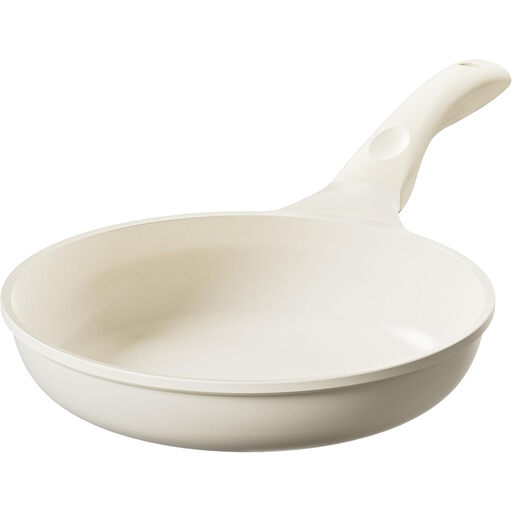
Why it suits this profile: The compact size is ideal for everyday cooking for one to three people. According to the product information, the pan is suitable for induction, gas and electric hobs and has an ergonomic Bakelite handle.
The product information states that it is free from PTFE, PFOA and PFAS and clearly lists its hob compatibility. Do not use metal utensils to help prevent scratches.
24 cm, ceramic coating, aluminium, ceramic and stainless steel construction and, according to the product information, dishwasher-safe.
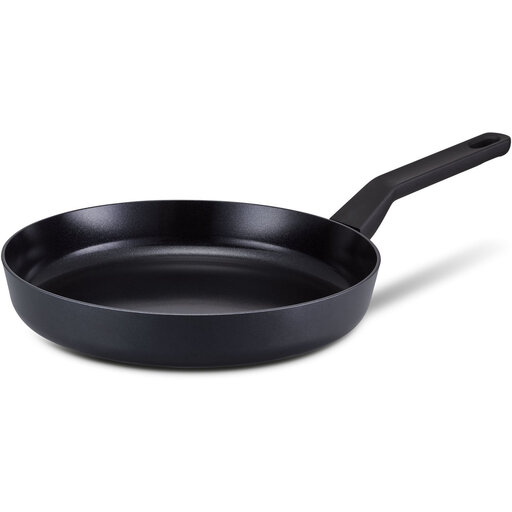
Why it suits this profile: This pan combines a 24 cm size with 100% recycled aluminium, a ceramic double non-stick coating and compatibility with induction, gas, electric, ceramic and halogen hobs.
According to Brabantia’s product information, the coating is 100% PFAS-free. Hand washing with a soft sponge is recommended to protect the coating for as long as possible.
100% recycled aluminium, PFAS-free ceramic coating, compatibility with all the hobs listed and dishwasher compatibility.
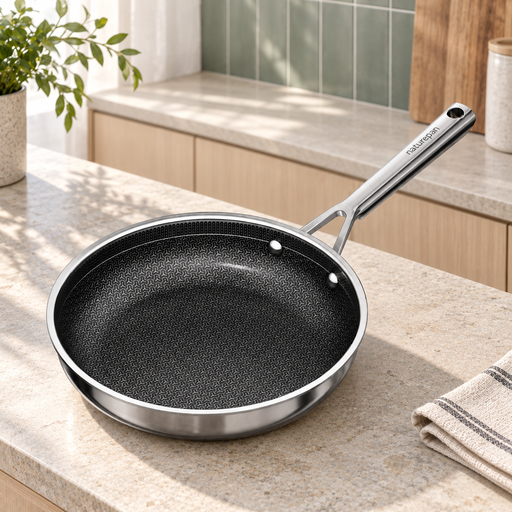
Why it suits this profile: The multi-layer stainless steel body with an aluminium core and etched honeycomb structure is designed for users who regularly fry and sear food.
The specifications list induction, gas, electric and ceramic cooking separately. For infrared or halogen hobs, the product information recommends checking compatibility beforehand.
Oven-safe up to 230 °C without the lid, suitable for several types of hob and dishwasher-safe; hand washing is still recommended.
We have put together a complete, up-to-date list of products that fully meet these strict selection criteria and the applicable European safety regulations.
A ceramic coating will generally remain more pleasant to use if you avoid putting unnecessary strain on the pan. Preheat it gradually, use medium heat and add a small amount of oil if recommended by the manufacturer. Do not stack pans without protection between them and regularly check whether the coating is damaged or coming loose.
Stop using a pan if the coating is visibly flaking or if the handle is not firmly attached. Also take the oven instructions into account: not every handle is heat-resistant, and some models may only be used in the oven without the lid.
This varies from model to model. Look for “induction suitable” or “induction compatible” in the product specifications. According to their product information, the Redchef, Brabantia and Naturepan models above are suitable for induction. If in doubt, also check whether the base diameter matches the induction zone.
There is no set lifespan. The cooking temperature, frequency of use, utensils and cleaning routine all affect performance. Hand washing, low to medium heat and soft spatulas can help protect the coating. A dishwasher option is convenient, but hand washing is often recommended to help extend the pan’s service life.
According to the product information, a PFAS-free frying pan may be suitable for cooking with little oil, but “without oil” is not a universal guarantee. The ingredients, temperature and condition of the coating all play a part. Therefore, follow the instructions for use and add a small amount of oil if necessary.
