
Vandaag of morgen in huis

Kwaliteit gegarandeerd

Welkomstaanbiedingen ontgrendelen: GRATIS bezorging | Tot 80% korting | Gratis 30 dagen JoyPlus-proefperiode
Download de app
A ceramic frying pan may seem simple to choose at first glance. However, pans vary considerably in size, coating, hob compatibility and maintenance. An attractive non-stick coating is not automatically suitable for everyday use. Especially with induction hobs, a dishwasher or a small kitchen, unrealistic expectations can lead to the wrong purchase.
So do not focus only on terms such as “non-stick” or “durable”. Check the product specifications and choose a pan that suits the way you cook.
If you are looking for a PFAS-free frying pan or a frying pan without PFAS and PTFE, read the product information carefully. Not every pan described as “ceramic” provides the same material information. Check whether the manufacturer explicitly mentions PFAS, PTFE and, where relevant, PFOA.
For the products below, these claims come from the brand’s product description. They are therefore not a general feature of every ceramic non-stick frying pan.
A pan may be suitable for gas but not for induction. Look for wording such as induction-compatible, gas, electric, ceramic or “all hobs”. Especially with an older electric hob or an induction zone, the diameter of the base can affect heat transfer.
A frying pan for induction hobs needs a magnetically compatible base. Also check that the base sits flat and matches the cooking zone. A 28 cm pan does not always have a base that is heated across its full width.
A dishwasher-safe frying pan is convenient, but repeated washing with detergent at high temperatures can affect the lifespan of a ceramic coating. Some brands therefore recommend hand washing, even when the pan is technically dishwasher-safe.
Ideally, use wooden, silicone or plastic utensils. Avoid metal spatulas and scouring pads. Allow the pan to cool before washing it and avoid moving it suddenly from high heat into cold water.
A ceramic coating is applied to a metal base, often aluminium. Aluminium heats up quickly and is relatively lightweight. The non-stick performance comes from the coating, not from the aluminium itself.
When checking a frying pan with a non-stick coating, consider the following:
According to the brands’ own product descriptions, certain models in this range are PFAS-, PTFE- and PFOA-free. Treat this as product-specific information and always check the current product page before buying.
The right size depends on the portion size:
A large pan requires more storage space and may heat less evenly on a small induction zone. For a compact kitchen, student accommodation or campervan, a frying pan with a detachable handle or a stackable pan set may be the more practical choice.
A fixed handle is straightforward and familiar to use. A detachable handle saves space and can be useful when moving the pan from the hob to the oven, fridge or table. Always check:
A “healthy frying pan” is not an official product category. This search term usually refers to a pan with a coating that, according to the product information, is free from certain substances and allows you to cook with little oil. It says nothing about the nutritional value or healthiness of a dish.
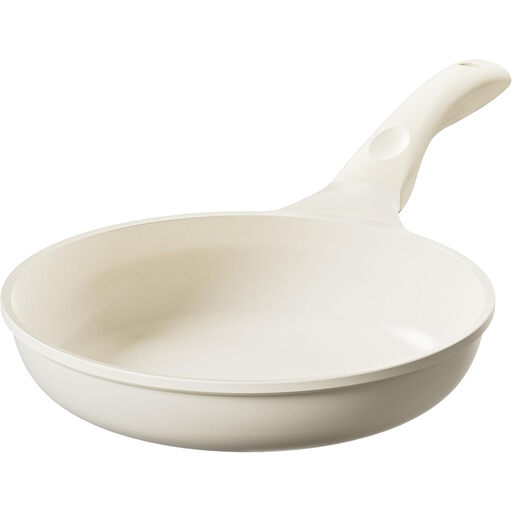
Why it suits this profile: The 24 cm size is suitable for everyday portions and takes up less space than a large family pan. According to the product description, this model is suitable for induction, gas and electric hobs.
The product information explicitly states that the ceramic coating is free from PTFE, PFOA and PFAS. Dishwasher use is also mentioned, although hand washing remains the cautious choice for a longer service life.
24 cm size, aluminium, ceramic and stainless-steel construction, plus an ergonomic Bakelite handle.

Why it suits this profile: The combination of 20 and 24 cm covers small portions and everyday meals. This set is aimed at buyers who want to assess material choice, finish and ease of use together.
The product description states that the pans are made from 100% recycled forged aluminium with RCS marking and have a PFAS-free ceramic coating. The specifications also state compatibility with induction, gas, electric and ceramic hobs.
Two sizes, oven-safe up to 200 °C and dishwasher-safe according to the specifications.
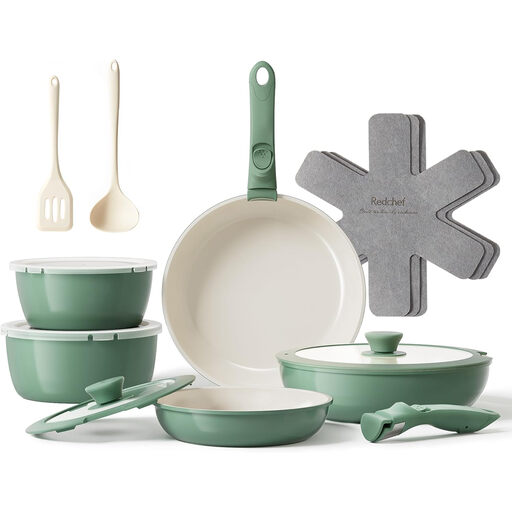
Why it suits this profile: This set is designed for people who use several pans, have limited cupboard space or want to store cookware in a campervan. The detachable handle makes stacking easier.
The product details state that the materials are free from PFAS, PTFE and PFOA, and that the set is compatible with gas, electric and induction hobs, as well as being dishwasher-safe. The handle must be securely attached before lifting and must not be exposed to a direct flame.
16-piece set, stackable design and oven use with the handle removed, according to the product description.
We have put together a complete, up-to-date list of products that fully meet these strict selection criteria and the applicable European safety regulations.
A ceramic non-stick coating will generally continue to perform better when you do not put unnecessary strain on the pan. Follow these basic rules:
That depends on the base. Only choose a model that explicitly states that it is suitable for induction. According to the product information, many models in this selection are suitable for all hobs, but check the current specifications of the product you choose.
The lifespan depends on use, temperature, utensils and cleaning. A ceramic coating can wear more quickly through overheating, metal spatulas and harsh cleaning. Replace the pan when the coating is visibly damaged or peeling, or when the pan no longer sits securely on the hob.
Hand washing with a soft sponge is usually the gentler care option. If a pan is listed as dishwasher-safe, this can be convenient, but follow the manufacturer’s care instructions. With some models, the handle must be removed first.
