
Vandaag of morgen in huis

Kwaliteit gegarandeerd

Welkomstaanbiedingen ontgrendelen: GRATIS bezorging | Tot 80% korting | Gratis 30 dagen JoyPlus-proefperiode
Download de app
A ceramic frying pan may seem easy to choose on paper. In practice, pans can vary considerably in coating, heat distribution, maintenance and induction compatibility. A low price may look attractive, but a pan that warps, does not work properly on your hob or quickly loses its non-stick performance offers little value.
So do not focus only on terms such as “ceramic”, “PFAS-free” or “scratch-resistant”. Above all, check the product specifications and choose a size that suits your household.
Ceramic coatings are often marketed as an alternative to traditional non-stick coatings. However, you should check which substances the manufacturer actually excludes. Look specifically for statements such as PFAS-free, PTFE-free and PFOA-free. A general claim such as “healthy cooking” says little about the composition on its own.
According to the product descriptions of various brands, certain models are free from these substances. Treat this as a manufacturer’s product specification, not as a medical or health claim.
An induction frying pan needs a magnetisable base. You should also check the base diameter: a 28 cm pan does not always have a base that is the same size as the induction zone. Some models therefore specify a particular base diameter.
If you cook on gas, you also need to pay attention to the flame. A flame rising around the base can unnecessarily heat the handle or coating. On an electric or ceramic hob, a flat base is important for even contact.
A dishwasher-safe frying pan can go in the dishwasher after use, but washing it by hand with a soft sponge can help keep the coating in good condition for longer. Avoid metal utensils, abrasive sponges and sudden temperature changes. Allow the pan to cool before washing it; cold water on a hot pan can cause warping.
With a frying pan featuring a detachable handle, you should also check that the handle is securely attached before use and whether it may be used in the oven or over a direct flame.
A ceramic non-stick pan usually consists of an aluminium or metal base with a ceramic coating. Aluminium heats up relatively quickly, while a multi-layer metal base can contribute to stability and heat distribution.
Check the following points:
A ceramic pan without Teflon can be suitable for eggs, vegetables and fish cooked with little oil, but its non-stick performance still depends on use, temperature and maintenance. Claims about a longer lifespan or scratch resistance come from the manufacturer, so treat them as product specifications and follow the instructions for use.
A 20 cm pan is suitable for an omelette, a single portion or small side dishes. A size of 24 to 28 cm is more versatile for everyday cooking for two to four people. For larger quantities, stir-fries or meal preparation, a 28 or 30 cm ceramic wok pan may be more convenient.
A high rim is useful for sauces and stir-frying, while a low rim makes it easier to flip pancakes. A lid is handy for simmering, stewing and keeping dishes warm.
For every pan, check the following individually:
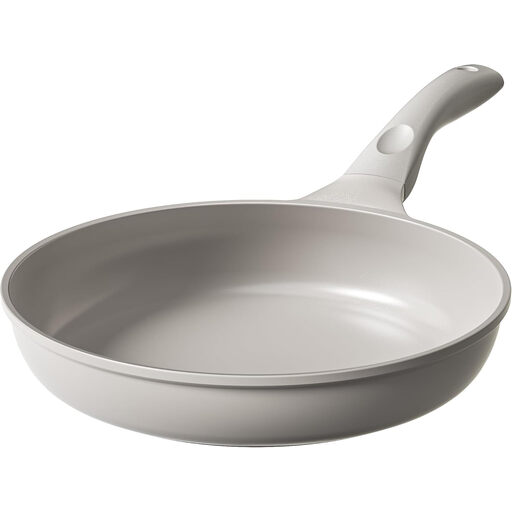
Why it suits this profile: A versatile size for everyday frying, compatible with induction, gas and electric hobs.
The product information states that it has a ceramic coating without PTFE, PFOA or PFAS, as well as compatibility with several types of hob. Do not use metal utensils.
28 cm diameter, Bakelite handle and, according to the product description, dishwasher-safe.

Why it suits this profile: A compact pan for households that care about material choice, oven use and a fixed handle.
The specifications mention PFAS-free material, compatibility with all common hobs and a clearly stated maximum oven temperature of 200 °C.
Made from recycled aluminium, oven-safe up to 200 °C and, according to the product information, suitable for the dishwasher.
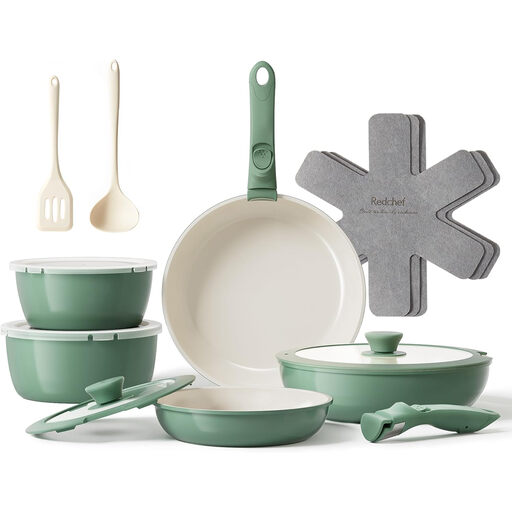
Why it suits this profile: Handy for anyone who needs several pans and wants to save cupboard space with stackable components.
The set explicitly states that it has a PFAS-, PTFE- and PFOA-free coating, induction compatibility and a detachable handle. Check the handle instructions before using it in the oven.
16 pieces, stackable design and, according to the product description, dishwasher-safe once the handle has been removed.
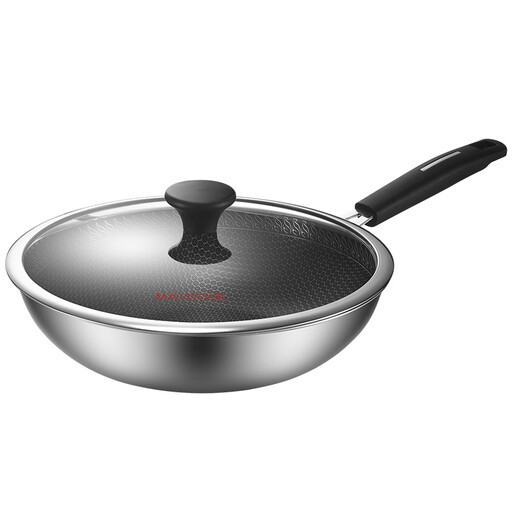
Why it suits this profile: A spacious option for stir-frying, stewing and cooking for several people on different types of hob.
The product information mentions a flat magnetic base for induction, gas, electric and ceramic cooking. The manufacturer recommends hand washing instead of using the dishwasher.
30 cm size, three-layer stainless steel construction, ceramic inner coating and glass lid.
A PFAS-free frying pan is therefore not automatically maintenance-free. The correct cooking temperature and suitable utensils have a direct impact on the lifespan of the ceramic coating.
We have put together a complete, up-to-date list of products that fully meet these strict selection criteria and the applicable European safety regulations.
This varies by model. Check whether “induction” is explicitly listed among the compatible hobs. Also pay attention to the diameter of the magnetic base and position the pan correctly in the centre of the induction zone.
Its lifespan depends on temperature, utensils, cleaning and storage. A ceramic coating can wear more quickly when exposed to metal utensils, high temperatures, dry heating and harsh cleaning products. Hand washing and medium heat help keep the coating in good condition.
According to the product descriptions of the models mentioned, cooking with little oil is possible thanks to the non-stick coating. The amount of oil required depends on the dish, the temperature and the condition of the coating. Always follow the manufacturer’s instructions and avoid overheating.
