
Livraison le jour même et le lendemain

Qualité garantie

Débloquez vos offres de bienvenue: Livraison GRATUITE | Jusqu'à -80 % | 30 jours d'essai gratuits à JoyPlus
Téléchargez l'application
A ceramic frying pan may seem easy to choose at first glance. However, attractive marketing claims, the wrong size or unclear information about the non-stick coating can lead to disappointment later on. If you cook every day on an induction, gas or electric hob, it is worth focusing mainly on specifications you can verify.
Not every pan with a ceramic appearance has the same coating. Check whether the product information explicitly states that the pan is PFAS-free, PTFE-free or PFOA-free. These terms refer to different substances and are not completely interchangeable.
A ceramic non-stick frying pan can perform well with little oil, but the coating’s lifespan also depends on how it is used. Wooden, silicone or plastic utensils are preferable. Metal spatulas can cause scratches, even when a manufacturer describes the coating as scratch-resistant.
A 28 or 32 cm pan offers more space, but it will not automatically heat evenly if the hob zone is smaller. On induction hobs, the diameter of the magnetic base is particularly important. So check not only the top rim, but also the base size.
For one person or small portions, a 20 cm frying pan is often more practical. A 24 cm pan is suitable for many everyday meals for one to three people. If you cook larger quantities, consider a 26, 28 or 32 cm pan.
A dishwasher-safe frying pan can be cleaned in the dishwasher, but repeated washing at high temperatures with dishwasher detergent can put more strain on the coating. Hand-washing with a soft sponge is usually the gentler option. Allow a hot pan to cool before rinsing it; a sudden change in temperature can cause warping.
Also look out for contradictory product information. Some pans are dishwasher-safe but not oven-safe. Others have a removable handle, making them more versatile, but you need to check that it is properly secured before lifting the pan.
An aluminium frying pan generally heats up quickly and is relatively lightweight. A steel or composite base can make the pan suitable for induction cooking. So look at the complete material construction: aluminium alone is not enough for induction.
For a PFAS-free frying pan, the claim should be clearly stated in the product description. According to its own product information, Redchef uses a ceramic coating that is free from PTFE, PFOA and PFAS. Tefal states that the Ceramic Renew range has a PFAS-free ceramic non-stick coating. Brabantia also states that the Nocta, Onyx and Dusk models have a PFAS-free ceramic coating. These are product claims made by the brands; always check the current product specifications before buying.
Look for wording such as induction suitable, gas suitable, electric suitable or “all hobs”. A pan for gas and induction cooking usually has a magnetisable base or a special composite base.
Pay close attention to exceptions. According to the product information, the 32 cm Tefal Easy Cook & Clean is suitable for gas, electric, ceramic and glass-ceramic cooking, but not for induction. This makes it particularly suitable for households without an induction hob.
A shallow 20 or 24 cm pan is handy for eggs, pancakes and smaller portions. A deep sauté pan is more practical for stir-frying, simmering and larger quantities. A lid can be useful, but it also makes the set heavier and requires more storage space.
Also check whether the handle is oven-safe. A plastic or Bakelite handle may remain comfortable to hold on the hob, but it is not always suitable for use in the oven. With a removable handle, make sure it is firmly attached before moving the pan.
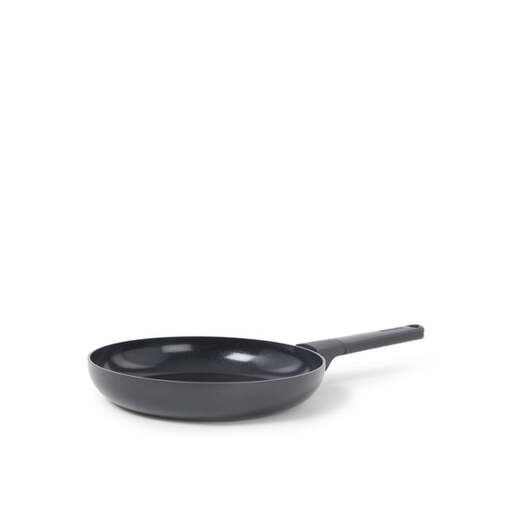
Why it suits this profile: A manageable size for everyday cooking, compatible with electric, gas, induction and ceramic hobs.
The product information states both that it is PFAS-free and dishwasher-safe. This clearly covers important buying criteria.
24 cm diameter, aluminium body, ceramic coating and a three-year guarantee according to the product details.
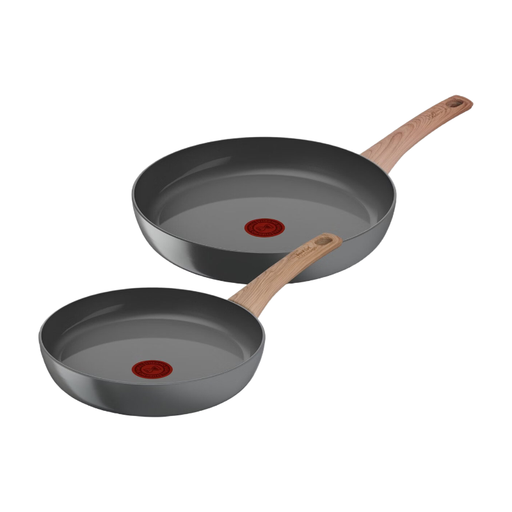
Why it suits this profile: Two sizes offer flexibility for smaller and larger preparations, while the Thermo-Signal indicator helps with preheating.
According to Tefal, the set is suitable for all hobs, including induction. Hand-washing is still recommended; the pans are not dishwasher-safe.
Two PFAS-free ceramic pans made from 100% recycled aluminium, with a heat indicator.
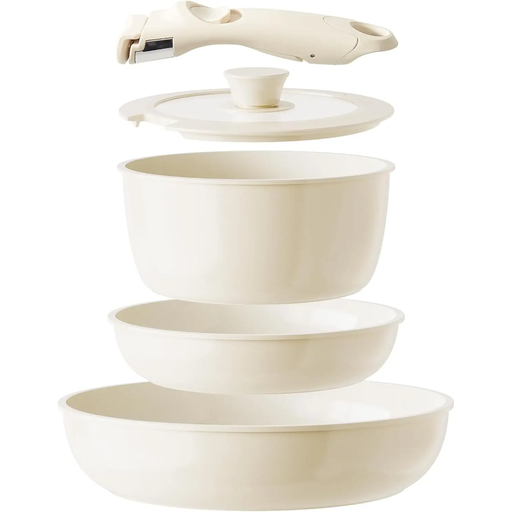
Why it suits this profile: Handy for households that need several sizes, have limited cupboard space or regularly move between the hob, oven and table.
The removable handle saves storage space. However, always check that it is correctly secured before lifting a full pan.
Set containing two frying pans, a saucepan, lid and removable handle; according to Redchef, free from PFAS, PTFE, PFOA, lead and cadmium.
We have compiled a complete, up-to-date list of products that fully meet these strict selection criteria and the applicable European safety regulations.
A healthy frying pan is not a medical product category. In practice, the choice mainly comes down to the coating you want, using the pan correctly and having clear information about the materials. If you are looking for a PFAS-free frying pan, check the claim in the product specifications rather than relying solely on terms such as “natural” or “non-stick”.
That varies by model. A ceramic coating in itself says nothing about induction compatibility. Check whether the product information explicitly mentions induction and, if possible, look at the construction of the base.
Its lifespan depends on the temperature, utensils and care. Overheating, metal spatulas and large changes in temperature can damage the coating more quickly. Hand-washing and cooking at moderate temperatures generally help keep the pan usable for longer.
Not necessarily. The purchase price may vary, but daily energy consumption is mainly affected by the hob, the size of the base and the temperature selected. A pan that matches the cooking zone well may heat more efficiently than a much larger pan.
