
Vandaag of morgen in huis

Kwaliteit gegarandeerd

Welkomstaanbiedingen ontgrendelen: GRATIS bezorging | Tot 80% korting | Gratis 30 dagen JoyPlus-proefperiode
Download de app
A ceramic frying pan may seem easy to choose on paper: look at the colour, diameter and non-stick coating. In practice, the key differences lie in the coating, heat source and maintenance. A pan suitable for induction is not automatically oven-safe. And “dishwasher-safe” does not always mean that the ceramic coating will remain in optimal condition in the long term.
For UK households, three things are particularly important: a base suitable for your hob, clear information about PFAS and a size that suits your everyday meals.
The terms non-stick frying pan, non-stick and healthy frying pan do not automatically describe which material is used in the coating. Therefore, check whether the product information explicitly states that the pan is PFAS-, PTFE- and PFOA-free. “Teflon-free pan” is an understandable search term, but always check the official material specifications rather than relying solely on marketing copy.
A ceramic coating can also wear down through the use of metal utensils, abrasive sponges or prolonged cooking at high temperatures. No coating is immune to incorrect use.
An induction frying pan needs a magnetically compatible base. Also check the diameter of the base, not just the top rim of the pan. For example, a 28 cm pan may have a smaller effective induction base. This can affect heat distribution and energy consumption.
Place the pan centrally on the cooking zone and check compatibility with gas, electric, ceramic and halogen hobs if you use multiple heat sources.
A pan may be oven-safe even if the handle is not. For models with a detachable handle, check whether it needs to be removed before using the pan in the oven. Also pay attention to the maximum temperature.
Even with a dishwasher-safe frying pan, hand-washing is often the wiser choice for extending the coating’s lifespan. Allow a hot pan to cool first and avoid a sudden change from hot to cold water.
Look at the full list of materials. Many ceramic pans have an aluminium base for rapid heat conduction, covered with a ceramic coating. Some models use multiple layers or a titanium-reinforced ceramic coating.
Look out for these verifiable points:
According to the product information from the brands mentioned, the selected models are designed without certain substances such as PFAS, PTFE, PFOA, lead or cadmium. This is a manufacturer’s product specification; always check the current product page and user manual before buying.
A diameter of 20 cm is suitable for small portions or a one-person household. A 24 cm pan is practical for meals for around one to three people. For families or larger portions, 26 to 28 cm is usually more convenient. A 28 or 30 cm ceramic wok offers more room for stir-fries, but also requires a cooking zone that properly supports the base.
A ceramic pan set can offer better value when you need a saucepan and several frying pans at the same time. However, check that all the pieces will be used regularly and consider how much storage space the set takes up.
A fixed metal handle is sturdy, but can become hot. According to the product description, Bakelite handles often remain easier to handle for longer on the hob, but they are not heat-resistant without limits. With detachable handles, secure locking is important before lifting the pan.
Also compare:
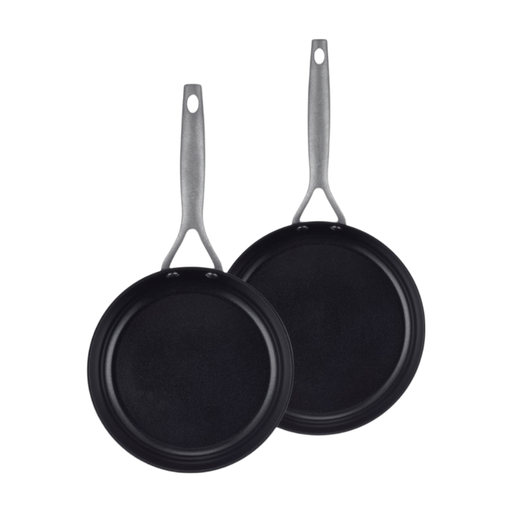
Why it suits this profile: The set combines two popular sizes for everyday meals and is suitable for induction, gas, electric, ceramic and halogen hobs.
The product information states that it has a PFAS-free ceramic coating and an oven limit of 200 °C. This makes the usage limits clearer than with a pan labelled only “non-stick”.
Two sizes: 20 and 24 cm; made from 100% recycled forged aluminium according to the product description; dishwasher- and oven-safe.
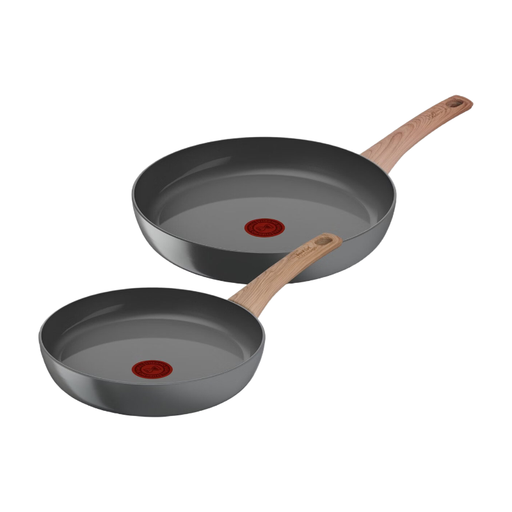
Why it suits this profile: The two sizes are suitable for different portion sizes. According to the product information, the Thermo-Signal indicator shows when the pan has reached the correct temperature.
The product page clearly states that the set is not dishwasher-safe. This prevents a disappointing purchase for anyone who wants to wash up exclusively in the dishwasher.
24 and 28 cm pans; PFAS-free ceramic coating; suitable for induction and other heat sources; Thermo-Signal temperature indicator.
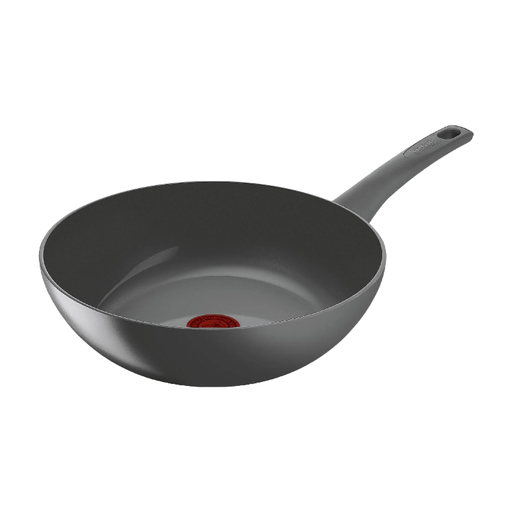
Why it suits this profile: This ceramic wok is designed for stir-frying for several people and suits households that often cook vegetables, noodles or meat in a single pan.
The specifications state both induction compatibility and hand-washing. This makes it clear that being easy to clean is not the same as being dishwasher-safe.
28 cm diameter; Thermo-Signal indicator; suitable for induction, gas, electric, ceramic and halogen hobs; made from 100% recycled aluminium according to the product description.
A ceramic frying pan can perform well when used with care, but the non-stick performance of any coating gradually declines. The right cooking temperature and maintenance routine are therefore at least as important as the material stated on the packaging.
We have put together a complete, up-to-date list of products that fully meet these strict selection criteria and the applicable European safety regulations.
That depends on the base. Only choose a model that is explicitly labelled induction-compatible. Also check that the diameter of the base matches the induction zone on your hob.
Lifespan varies depending on the product and how it is used. With low to medium temperatures, gentle utensils and hand-washing, the coating will generally remain usable for longer. Metal utensils, heating the pan while empty and thermal shock can reduce its performance more quickly.
No. PFAS-free describes the coating or material composition; dishwasher suitability is a separate product specification. Check both points separately on the product page.
