
Vandaag of morgen in huis

Kwaliteit gegarandeerd

Welkomstaanbiedingen ontgrendelen: GRATIS bezorging | Tot 80% korting | Gratis 30 dagen JoyPlus-proefperiode
Download de app
A ceramic frying pan can be useful for everyday frying, sautéing and stir-frying. However, a smooth coating alone says little about whether it is right for your kitchen. A pan that works well on gas may be less suitable for induction. An appealing product description can also leave important information about care, oven use or the lifespan of the non-stick coating unclear.
Joybuy Product Recommendation Officer selects products based on verifiable specifications. This helps you avoid paying solely for a marketing promise.
According to the product descriptions of various brands, certain ceramic coatings are free from PFAS, PTFE and PFOA. This does not mean that the pan is resistant to scratches or heat. Ideally, use wooden, silicone or nylon utensils and avoid heating the pan empty for extended periods.
A PFAS-free non-stick pan still requires careful use. If the coating becomes damaged, food may be less likely to release easily. You should therefore also check whether hand washing is recommended, even when a product is advertised as dishwasher-safe.
The stated diameter is usually the pan’s outer measurement. The actual cooking surface may be smaller, particularly with a deep frying pan with sloping sides. For induction cooking, the diameter of the magnetic base is what matters. A base that is too small may heat less efficiently on a large induction zone.
For one or two people, 24 cm is often practical. Families and fans of one-pan dishes may benefit more from a 28 cm model or one with a generous capacity.
You should check “suitable for all hobs” against the product specifications. Look for explicit compatibility with induction, gas, electric and ceramic hobs. Oven use is a separate feature: a pan may be suitable for all hobs but not for use in the oven.
Also pay attention to the lid and handle. Some models may only be used in the oven without the lid. With a removable handle, check that it is securely locked before moving the pan.
Ceramic cookware is often not made from solid ceramic. It usually consists of aluminium or stainless steel with a ceramic coating. Aluminium conducts heat quickly and keeps the weight low. Stainless steel can feel sturdier and is less prone to warping, depending on the construction.
A ceramic non-stick frying pan can release food easily, but the non-stick performance of many coatings gradually declines. Manufacturers may mention features such as scratch resistance or a long service life. These should be treated as brand claims: according to the brand’s own research or according to the product description. Do not treat them as a guarantee for every cooking style.
A frying pan for induction requires a magnetic base. One simple check is to see whether a magnet sticks to the underside, but you should always consult the official specifications. For gas cooking, a stable base and a handle that does not extend over the flame are practical features. On electric and ceramic hobs, a flat base helps ensure even contact.
Want to use one pan on several heat sources? Choose a model for which the manufacturer explicitly lists all the hobs you need.
A ceramic sauté pan with a lid has higher sides than a classic frying pan. This helps reduce splashes and provides room for vegetables, pasta or stew-like dishes. A lid makes a pan more versatile, but it also increases the weight and storage space required.
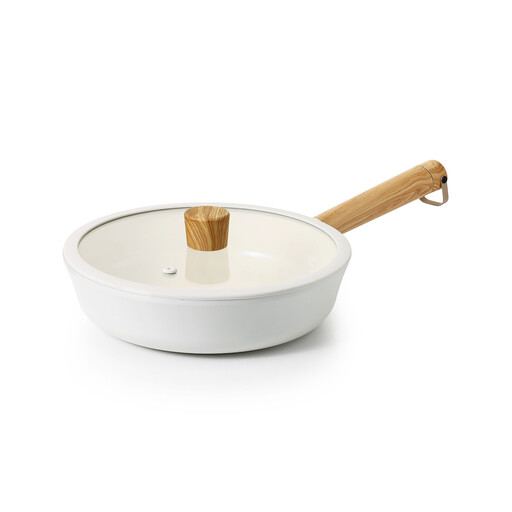
Why it suits this profile: Its manageable size is ideal for smaller households and everyday dishes such as stir-fried vegetables, omelettes and one-pan meals.
The specifications state 24 cm, a magnetic stainless steel base and compatibility with gas, induction, halogen, ceramic and electric hobs. Hand washing is recommended to help protect the coating.
Ceramic coating according to the product description, a glass lid and broad hob compatibility.
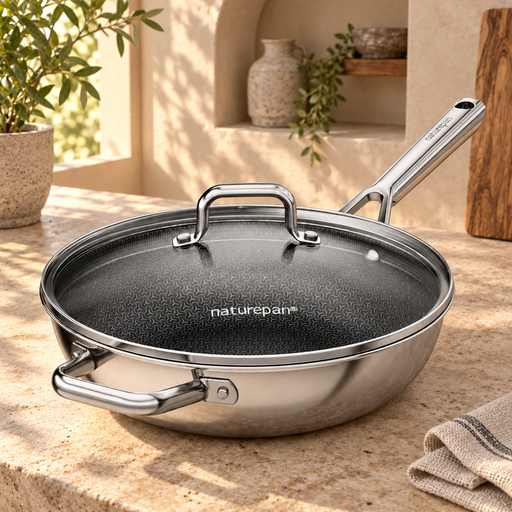
Why it suits this profile: The high sides and lid are ideal for anyone wanting to use one pan for frying, simmering and dishes with sauce.
The hybrid cooking surface is clearly described as a combination of stainless steel ribs and coated sections. The pan is suitable for induction, gas, electric and ceramic hobs.
28 cm diameter, included lid and oven use up to 230 °C without the lid, according to the product specifications.
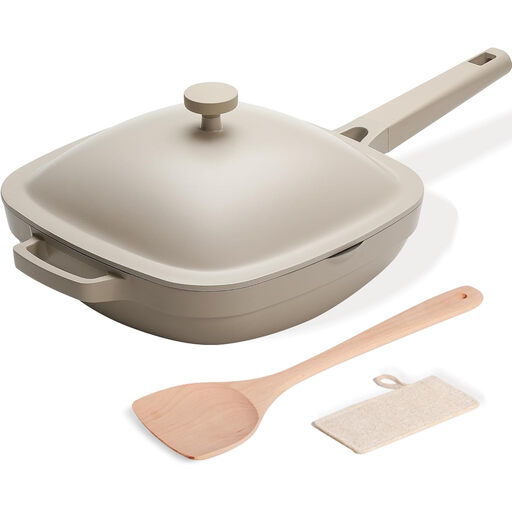
Why it suits this profile: The 3.8 QT capacity and deep design are practical for larger portions, sautéing, roasting, stir-frying and meal prep.
The product information explicitly states that it is PFAS-free, suitable for all hobs, and that dishwasher and oven use are not recommended. These limitations are important when making a realistic choice.
Generous cooking surface, two pouring spouts, raised lid, and included wooden spatula and scrubber.
We have compiled a complete, up-to-date list of products that fully meet these strict selection criteria and the applicable European safety regulations.
The lifespan of a ceramic coating depends on use, temperature and cleaning. These habits can help:
A dishwasher can be convenient, but hand washing is the safer choice for preserving the coating of many ceramic pans. Always check the specific care instructions for your chosen model.
It can be, but only if the pan has a magnetic base and the manufacturer states that it is induction-compatible. A pan with just a ceramic coating is not automatically suitable for induction. Also check the base diameter in relation to your induction zone.
This varies by product and use. High temperatures, metal utensils, abrasive cleaning and thermal shock can damage the coating more quickly. Use low to medium heat, suitable spatulas and hand washing when recommended. Stop using the pan when the coating is clearly coming away or damaged.
“Healthy cooking pan” is not a fixed technical product category. According to brands’ own research, some coatings may be free from PFAS, PTFE or PFOA, but you should check the specific product information and any supporting documentation. A pan without these substances still depends on correct use and care. Therefore, look at the material, hob compatibility, dimensions and care requirements rather than relying solely on the product name.
