
Vandaag of morgen in huis

Kwaliteit gegarandeerd

Welkomstaanbiedingen ontgrendelen: GRATIS bezorging | Tot 80% korting | Gratis 30 dagen JoyPlus-proefperiode
Download de app
A ceramic frying pan is a good choice for households looking to cook with little oil and wanting a pan for induction, gas or a ceramic hob. However, a smooth coating alone doesn’t tell you everything. A pan’s lifespan also depends on its base, size, care and how you use it.
If you focus only on terms such as “scratch-resistant”, “healthy” or “durable”, you could end up buying a pan that isn’t right for your kitchen. Below, you’ll find the key things to consider, followed by some popular options for different cooking needs.
A ceramic pan isn’t automatically an induction frying pan. Induction requires a magnetic base. So check that induction is explicitly listed and, if the information is available, look at the diameter of the base. A large pan with a relatively small induction base may not heat as evenly.
For a frying pan suitable for all hobs, it should also be clear that the pan is compatible with your type of hob: induction, gas, electric, ceramic or halogen.
According to the product description, a textured surface or extra layer may help reduce direct contact between food and metal. That doesn’t make a pan indestructible, though. Sharp edges, sliding the pan across the hob and stacking it without protection can damage the coating.
For a frying pan with a ceramic coating, it’s best to use wooden, silicone or plastic spatulas. Always follow the manufacturer’s care instructions, even when a product is advertised as a scratch-resistant frying pan.
For some models, the manufacturer explicitly states that the coating is PFAS-free. This is verifiable product information, but it doesn’t mean the non-stick performance will stay the same forever. Ceramic coatings can wear down through overheating, harsh cleaning and metal utensils.
“Healthy cooking” isn’t a guaranteed outcome either. According to the product description, a smooth ceramic coating may mean you need less oil and find the pan easier to clean. Your cooking experience will ultimately depend on the temperature, ingredients and care.
Look out for the differences between:
A PFAS-free frying pan isn’t necessarily the same thing as a ceramic pan. Check both features separately in the product specifications.
A 20 to 24 cm pan is often practical for one or two people. A 28 to 30 cm pan gives you more room for family meals, stir-fries and vegetables. Bear the cooking zone in mind, though: a wide pan will heat most evenly when its base fits the zone well.
For stir-frying, a ceramic wok or induction wok may be more practical than a shallow frying pan. A 30 cm wok is suitable for larger portions, but check its weight, handle and maximum recommended load.
Before buying, check:
Many ceramic pans last longer when hand-washed with a soft sponge. Let a hot pan cool down first, and don’t put it straight under cold water. Avoid steel wool, abrasive cleaners and sudden temperature changes.
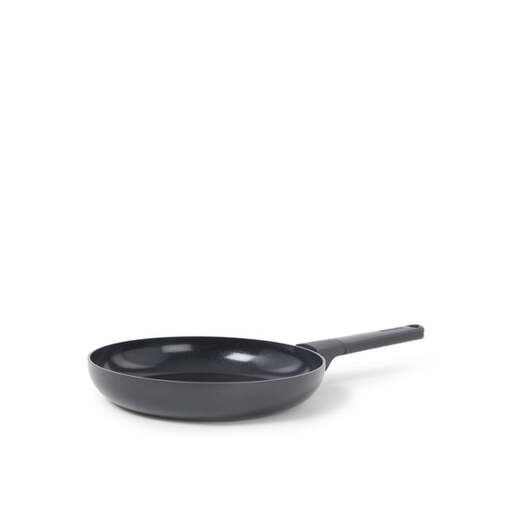
Why it suits this profile: The 24 cm size is practical for everyday portions, and the product description states that it’s suitable for electric, gas, induction and ceramic hobs.
The stated compatibility makes it easier to check that the pan suits your hob. The coating is described as ceramic and PFAS-free; gentle cleaning will help limit wear.
24 cm, ceramic PFAS-free coating and, according to the product information, dishwasher-safe.

Why it suits this profile: According to the product information, this pan combines 100% recycled formed aluminium, an RCS certification and a stainless steel handle with oven use up to 200 °C.
The manufacturer specifies a two-layer PFAS-free ceramic coating. The oven temperature limit and hand-wash recommendation are clearly stated.
Suitable for all the listed heat sources, oven-safe up to 200 °C and fitted with a riveted stainless steel handle.
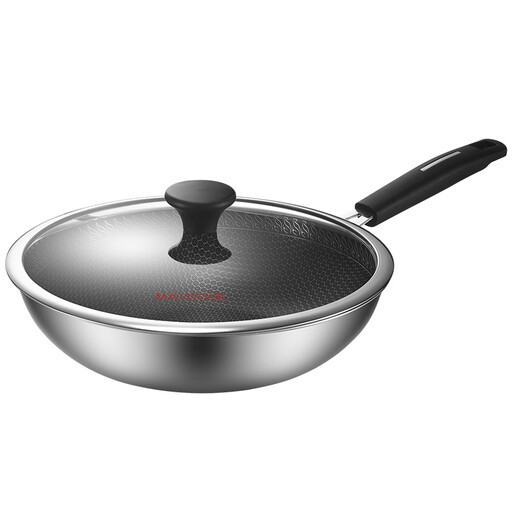
Why it suits this profile: The 30 cm wok is designed for stir-frying, braising, boiling and deep-frying for several people. Its tri-ply stainless steel construction and glass lid make it a versatile choice.
The flat magnetic base is listed as suitable for induction, gas, electric and ceramic hobs. The manufacturer recommends hand-washing and using suitable utensils.
30 cm capacity, glass lid, insulated handle and a ceramic non-stick coating with a honeycomb structure, according to the product description.
We’ve put together a complete, up-to-date list of products that meet these strict selection criteria and the applicable European safety regulations.
These habits help prevent unnecessary wear:
A durable frying pan depends on more than just its material. Good care and a suitable size also help determine how long you can use it in practice.
It can be, but always check the product specifications. The pan needs a magnetic base. Look for an explicit statement that it’s “induction-compatible” and check that the base diameter suits your cooking zone.
There’s no set lifespan. Frequent cooking at high temperatures, preheating the pan while empty, metal spatulas and using the dishwasher can all reduce its non-stick performance more quickly. Hand-washing, gentle utensils and moderate temperatures help keep the coating in good condition for longer.
No. PFAS-free describes the stated composition of the coating, while ceramic describes the type of coating. A product can be both ceramic and PFAS-free, but check each feature separately on the product page.
